Aluminium 6061, 7075 or stainless: choosing a material
Strength, weight, machinability and cost per kilo: how the common grades compare for a milled housing.
Aerospace and automotive work · First-article samples in 10 working days
SF 214, SIDCO Industrial Estate, Kurichi, Coimbatore 641021
Mon–Sat · 8.30 am – 6 pm · two shifts
Five-axis machining costs more per hour and can still be cheaper per part.
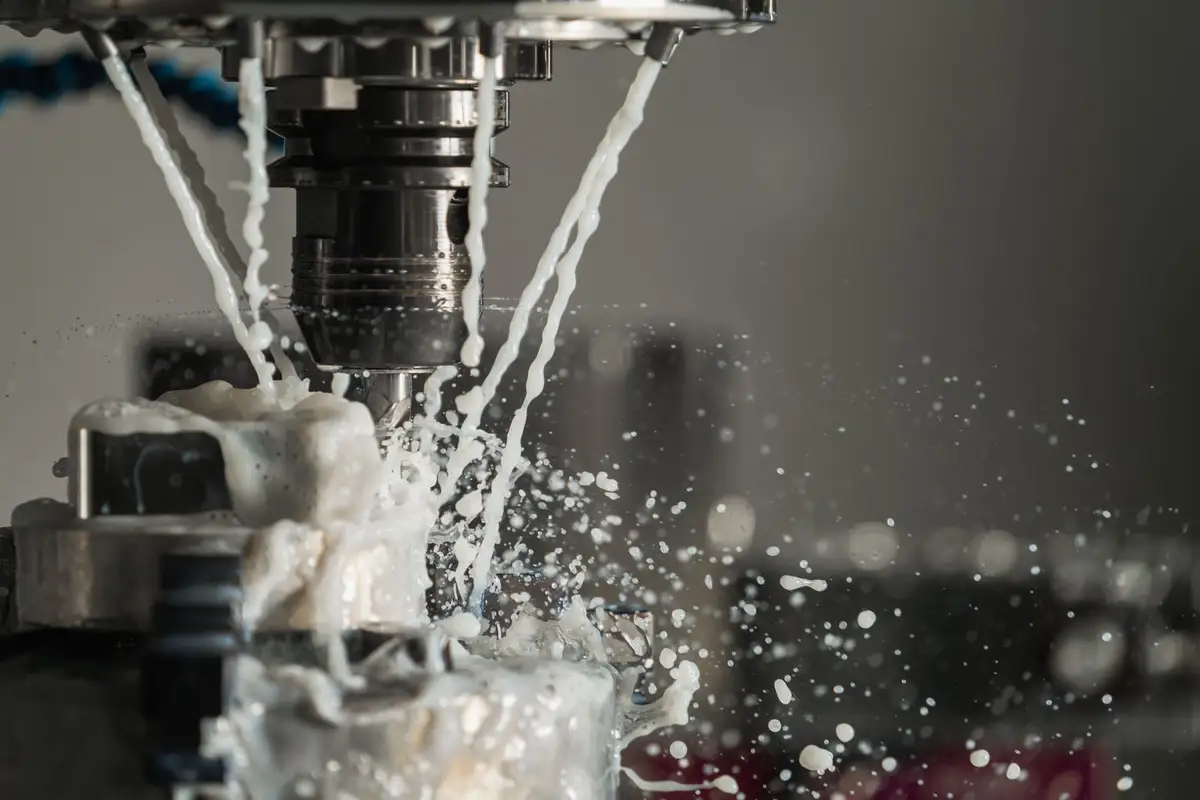
A 3-axis machine moves the cutter in X, Y and Z. To machine another face, an operator unclamps the part, turns it and clamps it again. Each new set-up adds time and a small error in position.
A 5-axis machine also tilts and rotates the part, so the cutter can reach five faces in one clamping. The hourly rate is higher, but for complex housings it often removes three or four set-ups, and the features on different faces line up better because the part never moved.
That makes 5-axis the right choice for aerospace housings, impellers, manifolds with angled ports and anything with features on many faces that must relate to each other.
For flat plates, simple brackets and parts with features on one or two sides, 3-axis is cheaper and just as accurate. Turned parts with a few milled flats belong on a lathe with live tooling.
If you are unsure, send the model. We quote both routes when there is a real choice, and tell you which we would pick.
Keep reading
Strength, weight, machinability and cost per kilo: how the common grades compare for a milled housing.
Material, programming, set-up, cycle time, inspection and finishing: the six lines behind every price we send.
What to include, how long a quote takes, and what happens between your drawing and the first sample on your desk.