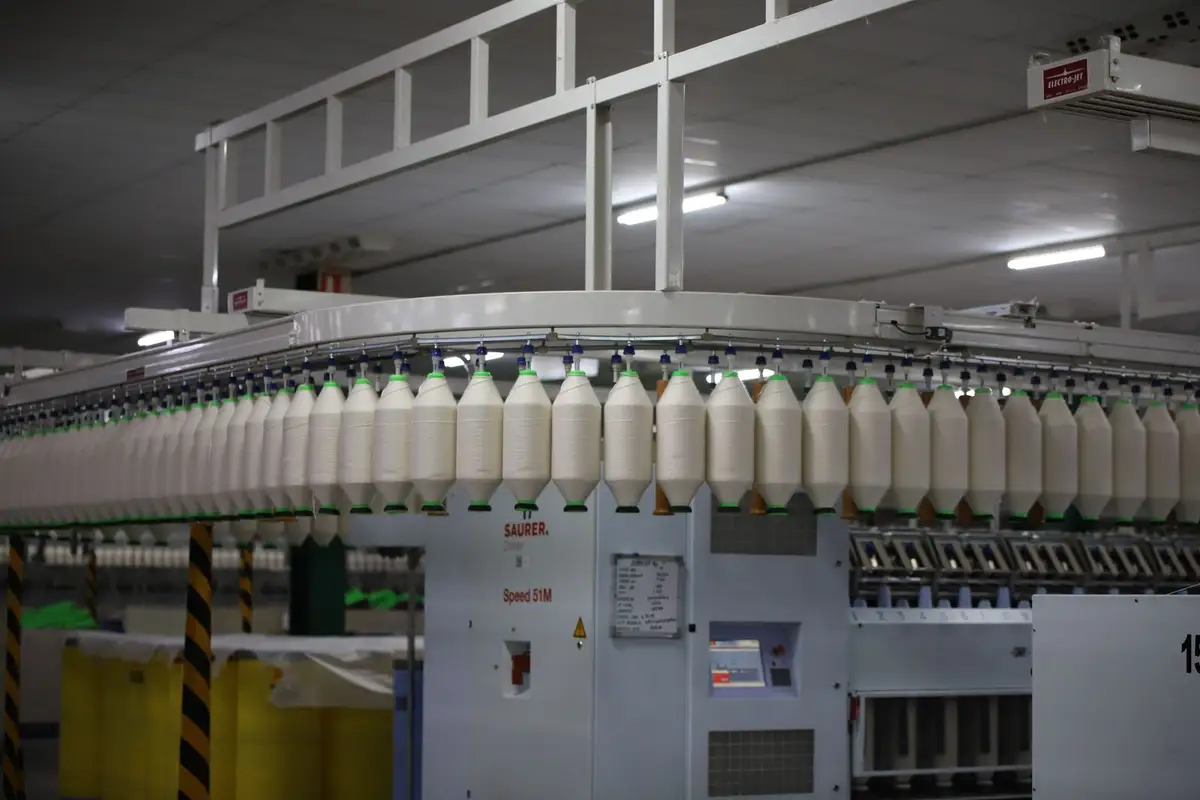
Ring-spun, compact and open-end yarn compared
Three ways to spin cotton, how the yarns differ in strength, hairiness and cost, and which suits your fabric.
Mill-direct yarn for knitters and weavers · Minimum order 1 tonne · Despatch from Salem
SF 118/2, Omalur Main Road, Karuppur, Salem 636012
Office Mon–Sat · 9 am – 6 pm · mill runs 24 hours
Moisture, sunlight and stacking height: how to keep yarn running well between delivery and the knitting floor.
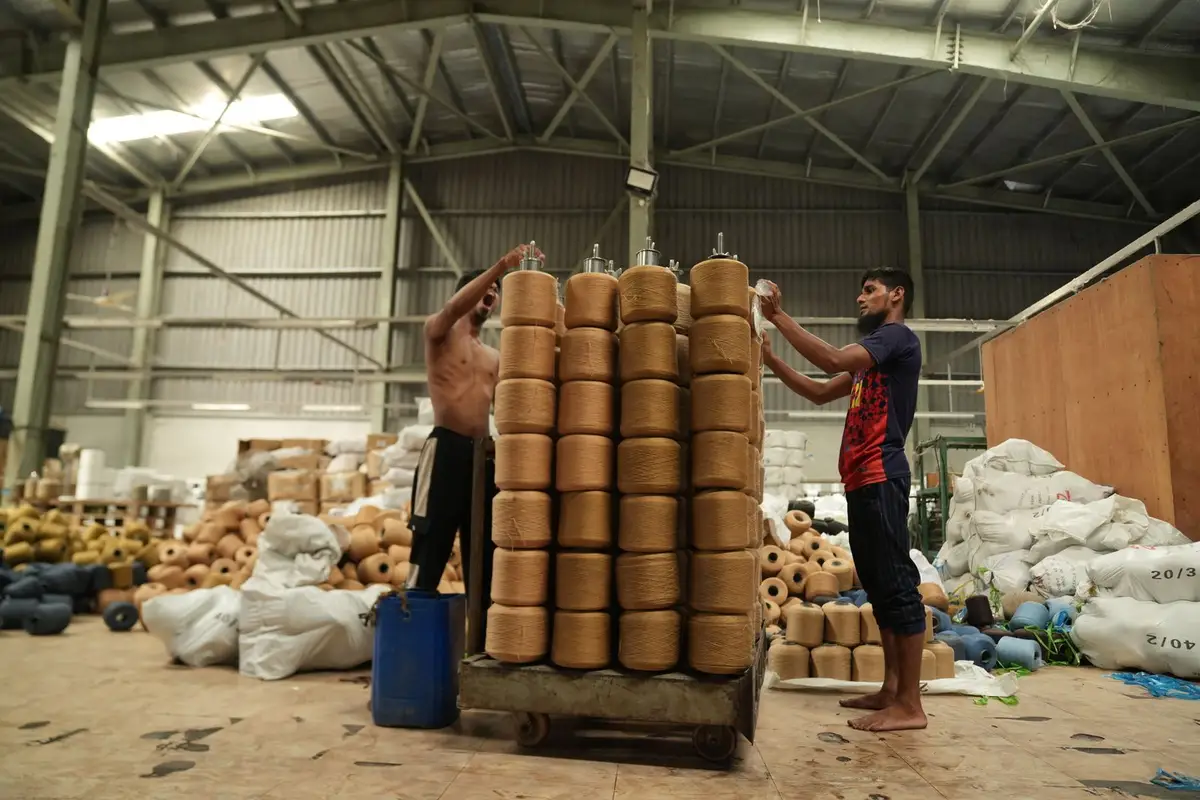
Yarn leaves our mill at a controlled moisture level, close to 8 per cent regain for cotton, packed in HDPE bags or cartons. What happens in the weeks between delivery and use decides whether it still runs as cleanly as the lot sheet suggests. Here is what we advise customers in Tiruppur, Erode and beyond.
Keep it off the floor. Store bags or cartons on wooden or plastic pallets at least 10 cm high, away from walls, so damp cannot rise into the bottom layer. In the monsoon months and during the north-east rains from October to December, concrete floors in the Kongu region stay damp for days.
Keep it out of the sun. Direct sunlight through godown windows yellows cotton and weakens it over time, and the heat dries the outer layers of the cones unevenly. Cover windows or stack yarn on the shaded side. Do not stack cartons more than six high, or the bottom cones can be crushed out of shape, which causes tension problems on the machine.
Condition before use. If yarn has been stored somewhere dry and hot, move it into the knitting or weaving hall 24 hours before use, still in its bags but with the tops opened, so it takes up the humidity of the hall. Yarn that is too dry generates more fly and breaks more often. Finally, use it in order. Keep lots together, label each pallet with the lot number, and finish one lot before starting the next. Mixing lots on the same fabric can cause visible shade or texture bars after dyeing, even when both lots are within specification.
Keep reading
Three ways to spin cotton, how the yarns differ in strength, hairiness and cost, and which suits your fabric.
When knitters in Tiruppur buy, when mills slow down, and how to avoid a gap in supply in October and November.
Blow room, carding, combing, drawing, roving, ring frames and winding: how cotton becomes a cone of yarn.