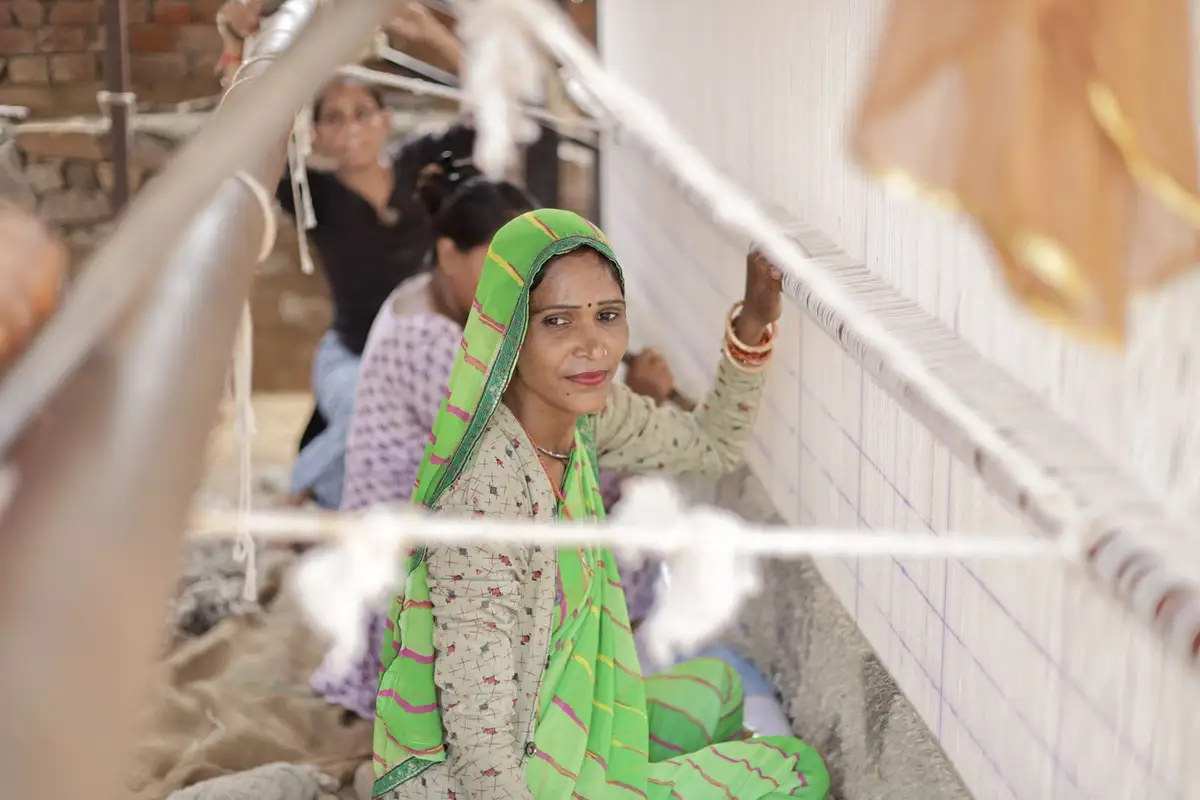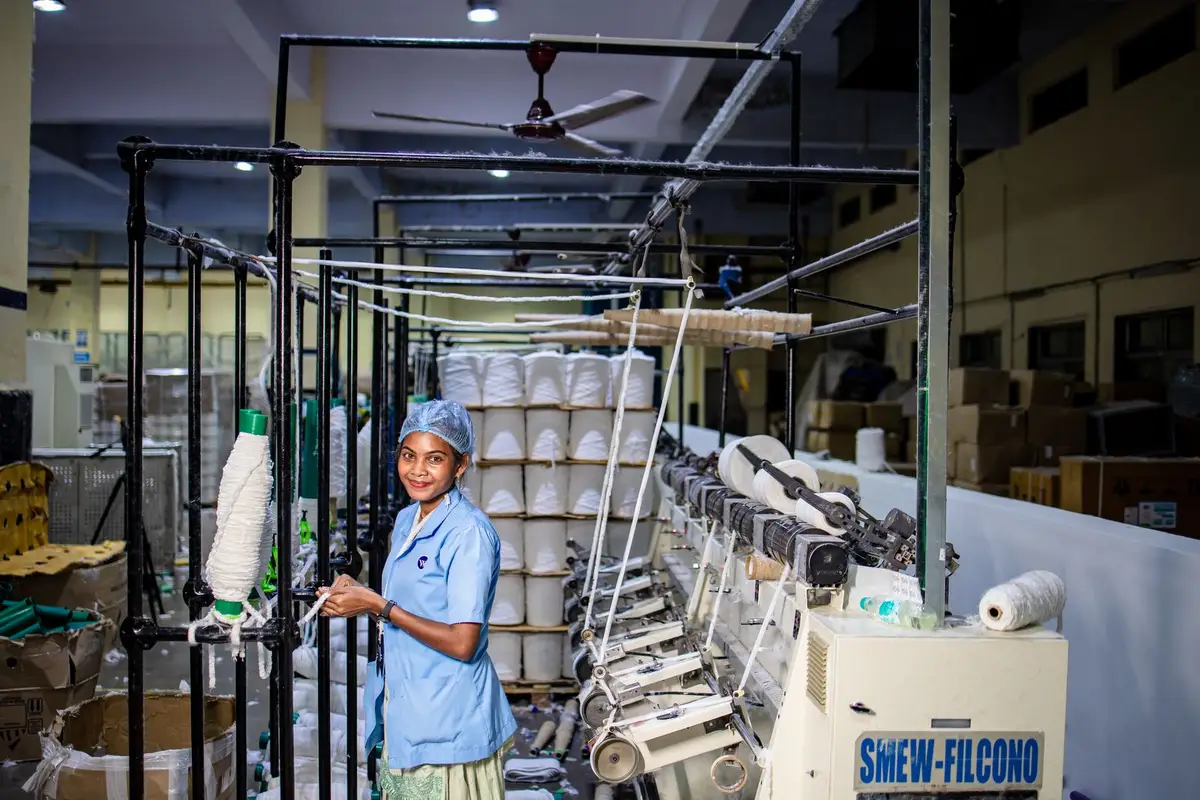
From bale to cone: a day on our spinning floor
Blow room, carding, combing, drawing, roving, ring frames and winding: how cotton becomes a cone of yarn.
Mill-direct yarn for knitters and weavers · Minimum order 1 tonne · Despatch from Salem
SF 118/2, Omalur Main Road, Karuppur, Salem 636012
Office Mon–Sat · 9 am – 6 pm · mill runs 24 hours
When knitters in Tiruppur buy, when mills slow down, and how to avoid a gap in supply in October and November.
Demand for cotton yarn in the Kongu belt follows a clear yearly rhythm, and buyers who plan for it pay less and wait less. Here is how the year usually looks from our office on the Omalur road. From March to June, knitters in Tiruppur are busy with orders for autumn and winter in Europe and North America. Demand for combed compact counts, 30s and 40s, is high, and despatch times for dyed yarn stretch towards 21 days. Book dyed shades at least a month ahead in these months.
July to September is busy in a different way. Domestic garment makers build stock for Deepavali, Durga Puja and the wedding season, so demand shifts towards carded hosiery yarn. Many units run extra shifts in August.
Deepavali itself brings a pause. Most workers in mills and knitting units go home for a week or more, and many units in Tiruppur, Erode and Salem slow down or stop. We run at reduced capacity for about ten days around the festival. If you need yarn in the first half of November, place your order by the end of September and take delivery before the holiday.
From December, new cotton from the season’s harvest arrives at the ginneries, and prices often soften. This is a good time for contract buyers to fix monthly prices for the first quarter. Pongal in mid-January brings another short pause of three to four days. We send our regular buyers a short note each quarter with expected lead times and our view on cotton prices. Ask to be added to the list.
Keep reading
Blow room, carding, combing, drawing, roving, ring frames and winding: how cotton becomes a cone of yarn.
Where cotton is spun, knitted, woven, dyed and traded in western Tamil Nadu, and how yarn moves between towns.
Why Ne 60s is not automatically better than Ne 30s, and how to pick the count your fabric actually needs.