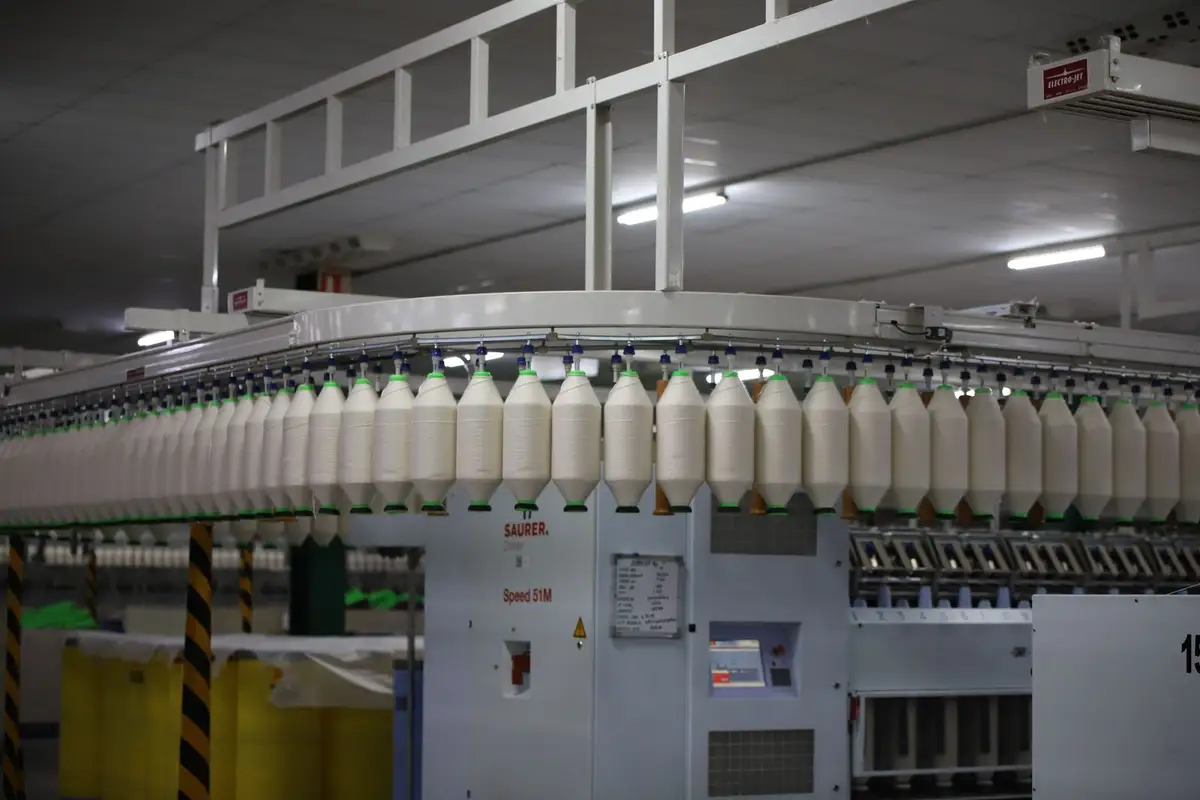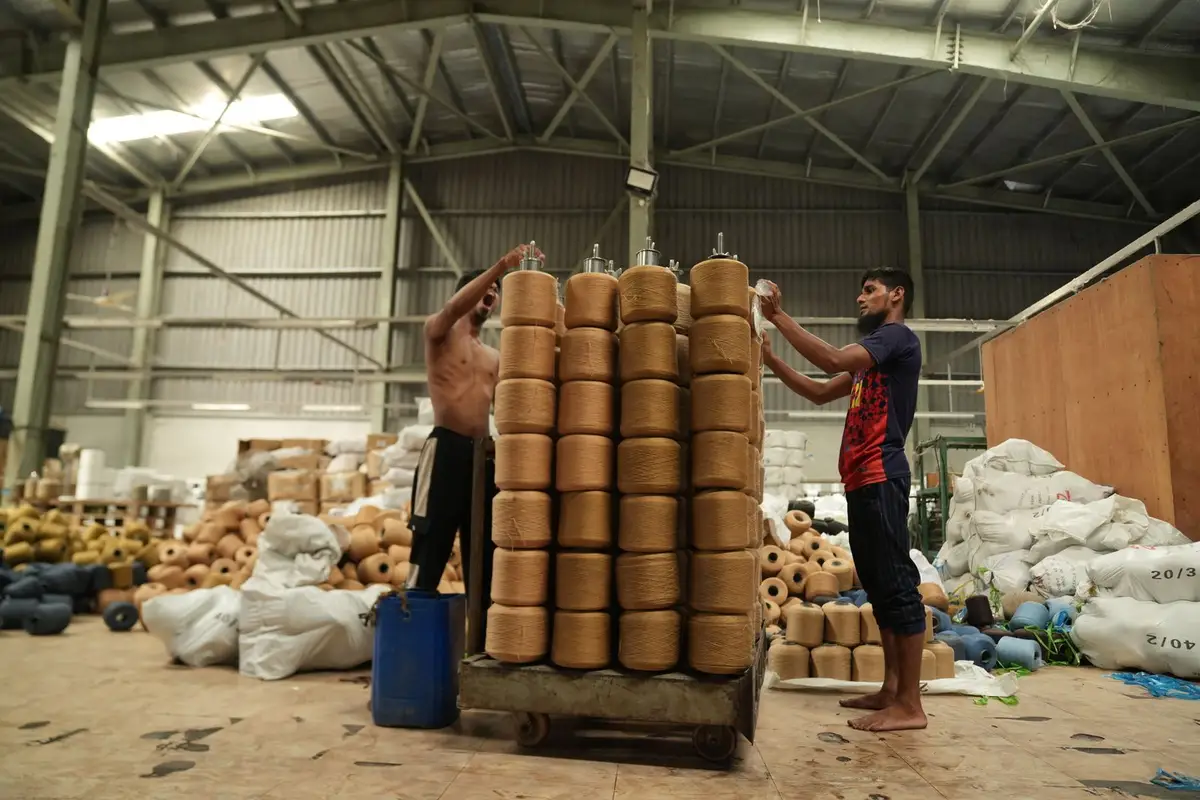
Storing cotton yarn cones in a humid godown
Moisture, sunlight and stacking height: how to keep yarn running well between delivery and the knitting floor.
Mill-direct yarn for knitters and weavers · Minimum order 1 tonne · Despatch from Salem
SF 118/2, Omalur Main Road, Karuppur, Salem 636012
Office Mon–Sat · 9 am – 6 pm · mill runs 24 hours
Why yarn prices move between October and March, and how to plan around it.

Cotton in India is picked from October to March. Ginneries press it into bales of 170 kg, and mills like ours buy through the season. What we pay for those bales decides most of the price of the yarn you buy.
Early in the season, arrivals are high and prices usually soften. By April the best lots have been bought, and mills that did not stock up pay more. Monsoon reports, export demand and the minimum support price all push the market one way or the other.
For buyers, this means two things. First, quotes are short: ours hold for 7 days because cotton can move several per cent in a week. Second, regular buyers can fix a price for a month or a quarter if they commit to a quantity, and we cover it from cotton we have already bought.
If you run a steady programme, talk to us in November. That is when we plan our cotton buying for the year, and when we can offer the most stable prices for the months ahead.
Keep reading
Moisture, sunlight and stacking height: how to keep yarn running well between delivery and the knitting floor.
Three ways to spin cotton, how the yarns differ in strength, hairiness and cost, and which suits your fabric.
When knitters in Tiruppur buy, when mills slow down, and how to avoid a gap in supply in October and November.