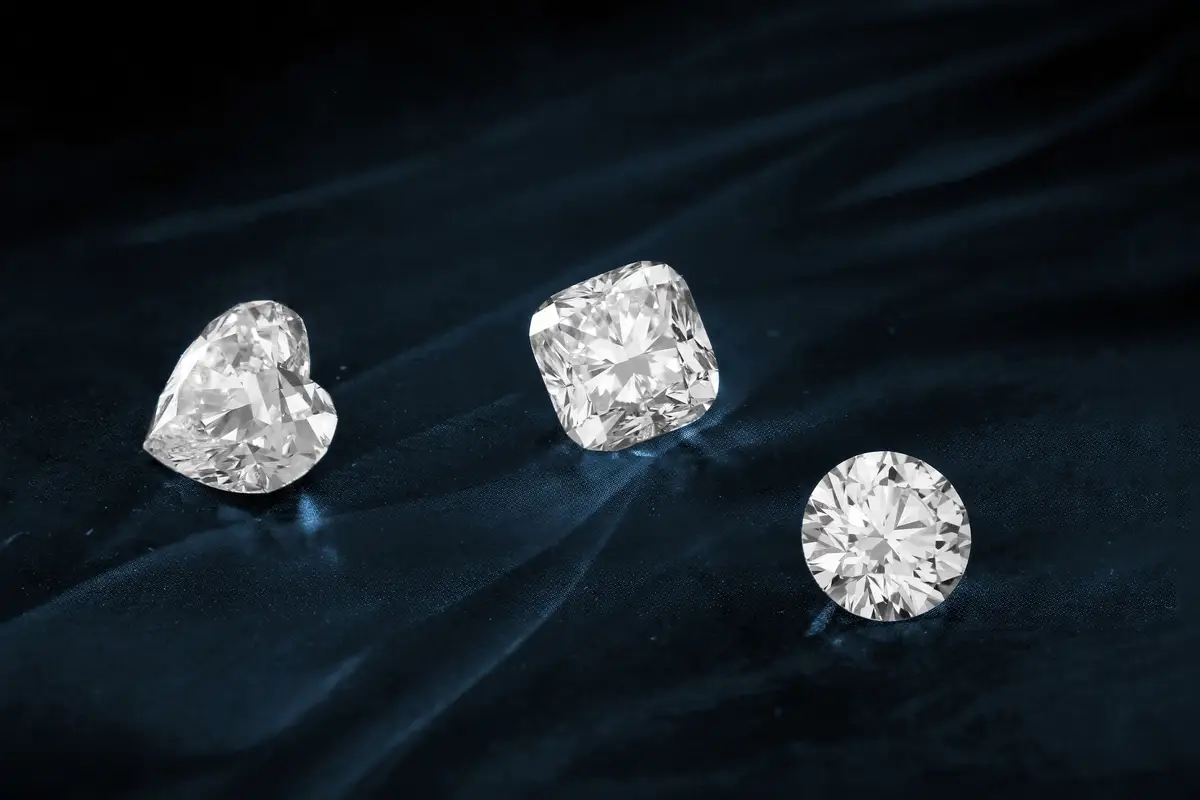
The four Cs, explained plainly
Carat, colour, clarity and cut: what each means, and which one to spend on.
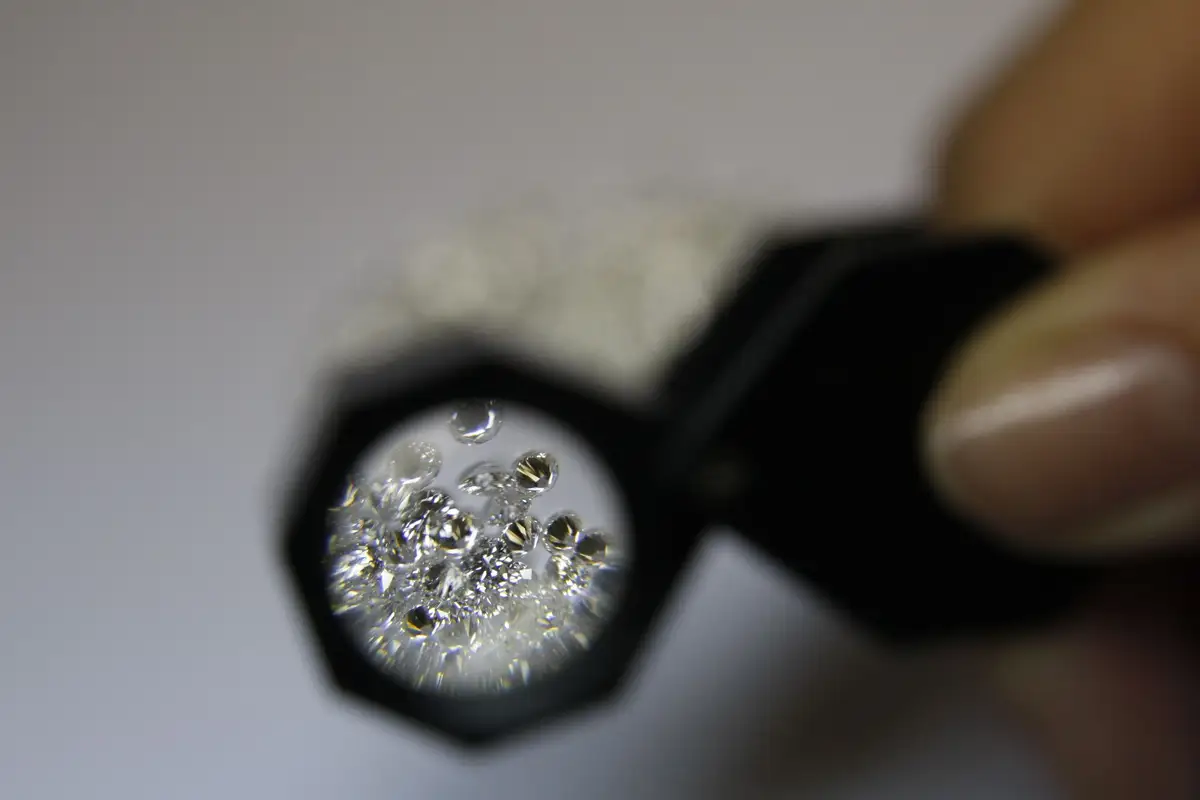
Every stone shown under a loupe before you pay · Natural and lab-grown, clearly labelled
14 Ghod Dod Road, Athwalines, Surat 395007
Mon–Sat · 11 am – 8 pm · Sun by appointment
How a ring price splits between stone, gold and making, and what one lakh gets you in natural and lab-grown.
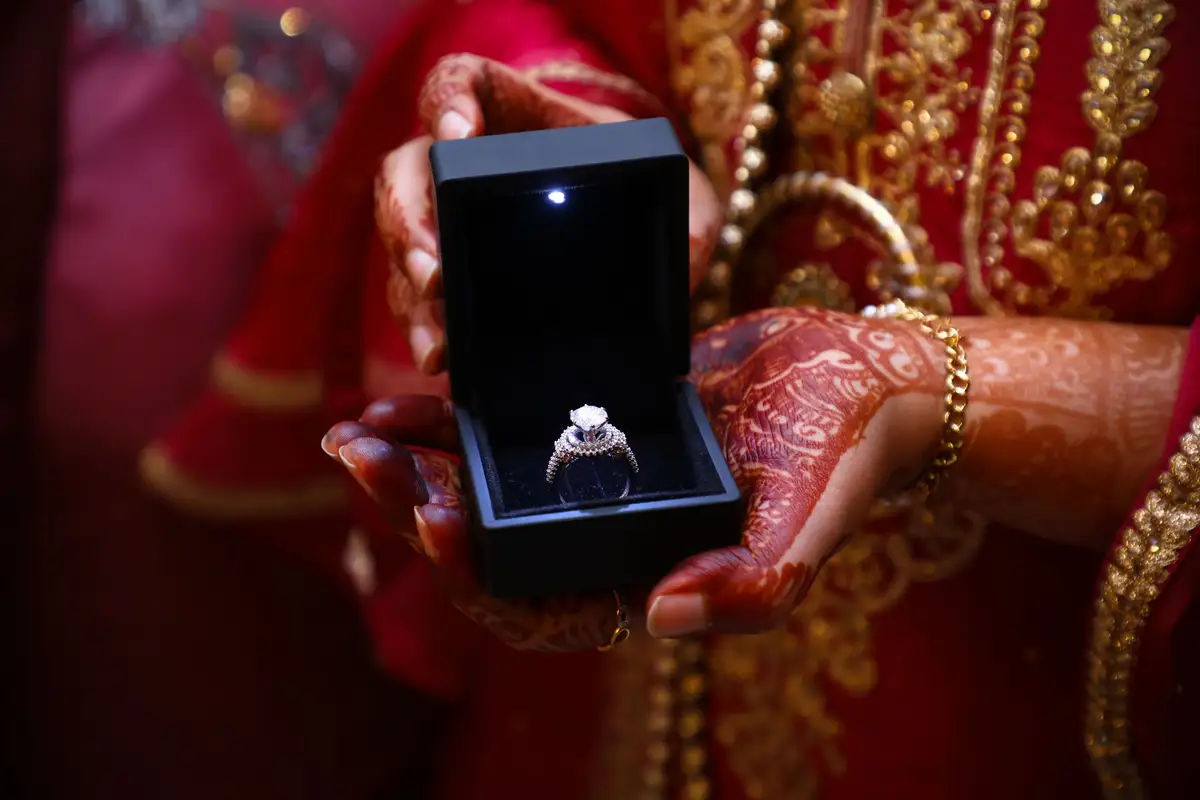
One lakh rupees is a common budget for an engagement ring, and it can buy very different rings depending on a few choices. Here is how we break down a ring price, and what that budget looked like in our trays this season.
Every ring bill has three parts. The stone is usually 65 to 80 per cent of the total. The gold is charged by weight at the day’s 18K rate; a slim solitaire band weighs about 2.5 to 3 grams, a halo ring 3.5 to 4.5 grams. Making charges cover casting, setting and polishing, and for us run between ₹4,500 and ₹9,000 depending on the design. GST is added on the whole.
With natural diamonds, ₹1,00,000 buys a solitaire of around 0.30 to 0.35 ct in G or H colour and VS2 or SI1 clarity, with an excellent cut, in a simple four-prong 18K setting. It is a small but bright stone that looks clean on the hand.
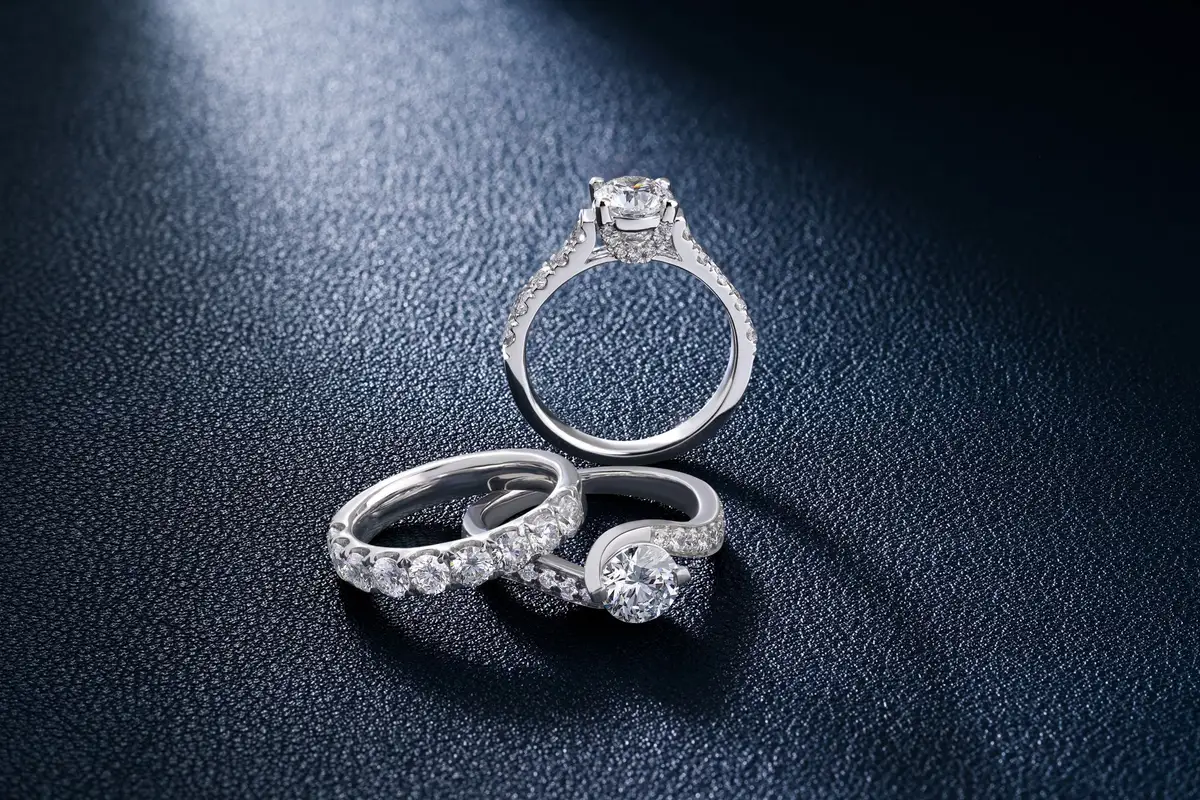
With lab-grown, the same budget stretches a long way. Our pear halo ring with a 1.00 ct F VS1 stone is ₹92,500, which leaves room for a matching plain band. Alternatively, a 1.20 to 1.50 ct round lab-grown solitaire fits the budget. There is no right answer, only a trade-off between size and rarity. If you are unsure, see a 0.33 ct natural and a 1.00 ct lab-grown stone side by side on the same hand. That comparison usually settles it.
Keep reading
Carat, colour, clarity and cut: what each means, and which one to spend on.
Both are real diamonds. Here is how they differ, and how to decide between them.
Diamonds are hard, but settings are not. A little care keeps both safe for decades.