Caring for diamond jewellery
Diamonds are hard, but settings are not. A little care keeps both safe for decades.
Every stone shown under a loupe before you pay · Natural and lab-grown, clearly labelled
14 Ghod Dod Road, Athwalines, Surat 395007
Mon–Sat · 11 am – 8 pm · Sun by appointment
Both are real diamonds. Here is how they differ, and how to decide between them.
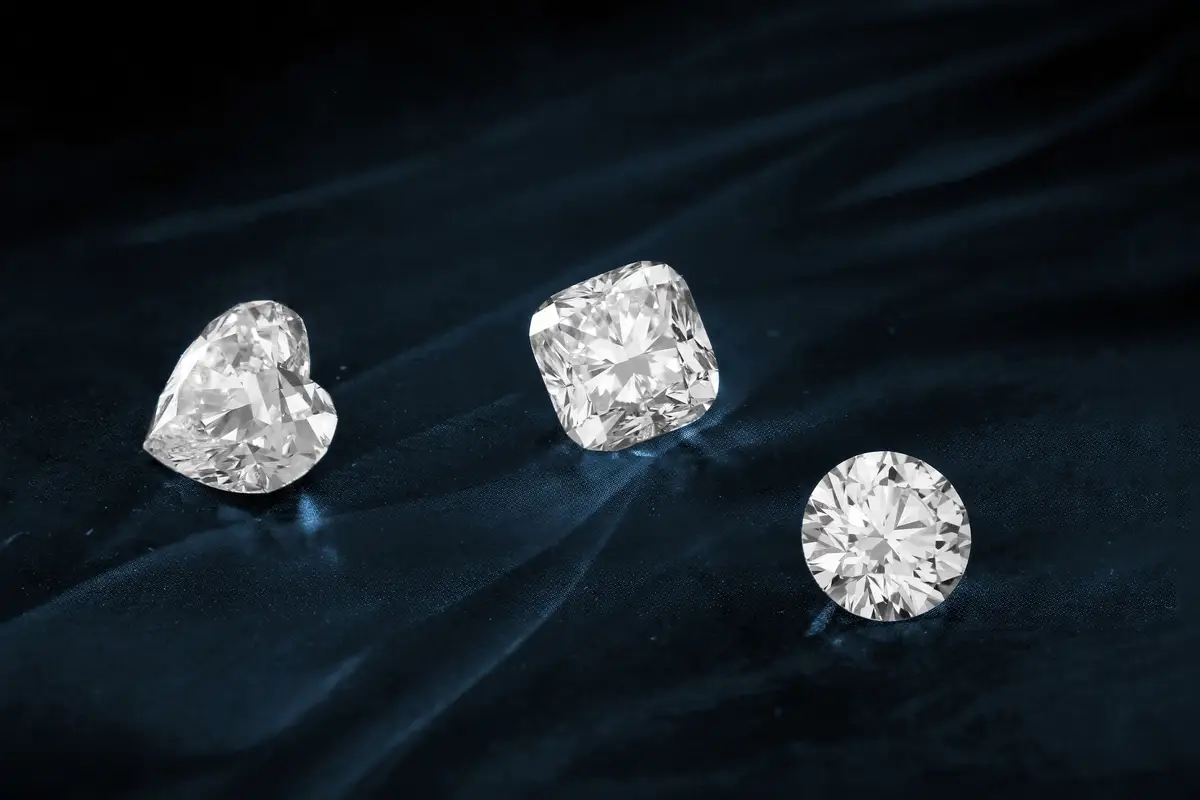
A lab-grown diamond is made by recreating, in a few weeks, the heat and pressure that form diamonds underground over millions of years. The result is carbon in the same crystal structure. It is as hard, as brilliant and as durable as a mined diamond.
The difference is origin and price. A lab-grown diamond costs roughly a third to a half of a natural stone of the same size and quality. Natural diamonds are rarer, which is why they have historically held resale value better.
Surat cuts and polishes most of the world’s diamonds of both kinds, so we see them side by side every day. Without lab equipment, no one can tell them apart by eye.
Our advice is simple. If the stone’s rarity and long-term value matter most to you, choose natural. If you want a larger or finer stone for your budget, choose lab-grown. Either way, insist on being told in writing which it is. We label both clearly, on the tag and the invoice.
Keep reading
Diamonds are hard, but settings are not. A little care keeps both safe for decades.
The same carat weight can look bigger or smaller depending on shape. Here is what each shape gives you and costs.
From a loose stone in a paper parcel to a finished ring in ten days: the steps our four setters follow.