Ordering a bag with initials: what to expect
How embossing works, which fonts and sizes suit each bag, and when your order leaves the workshop.
Free initials embossed on every bag · Insured delivery across India in 4 days
9 Free School Street, Park Street area, Kolkata 700016
Mon–Sat · 11 am – 8 pm · Sun closed
Leather, thread, brass and about eleven hours of hand work: a plain breakdown of what our satchel costs to make.
People often ask why a leather satchel costs ₹7,450 when bags that look similar sell for ₹2,000. Here is roughly where the money goes in our chestnut school satchel.
Leather is the largest single cost. The satchel uses about 9 square feet of 2.2 mm full-grain buffalo, and once we cut around scars and thin spots, we pay for nearly 12. At current prices that comes to about ₹2,100. The padded sleeve, cotton lining, waxed linen thread, edge paint and solid brass buckles and rings add about ₹650.
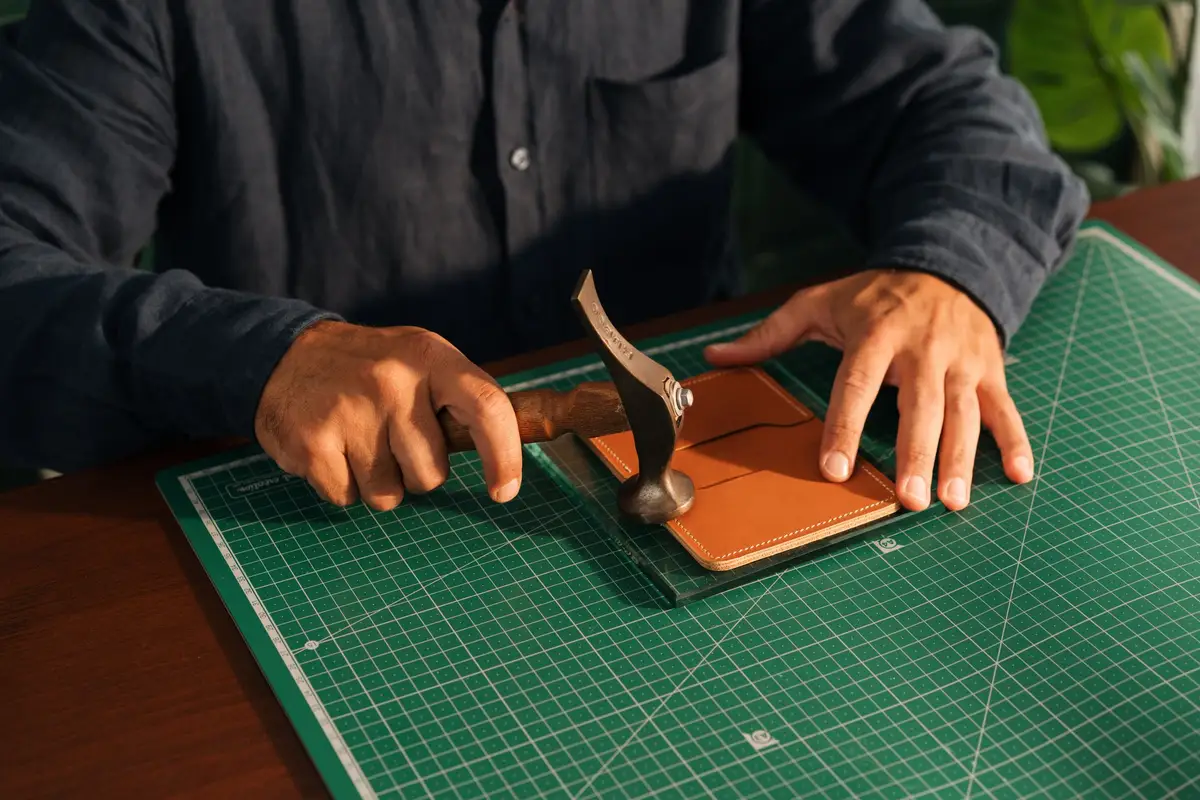
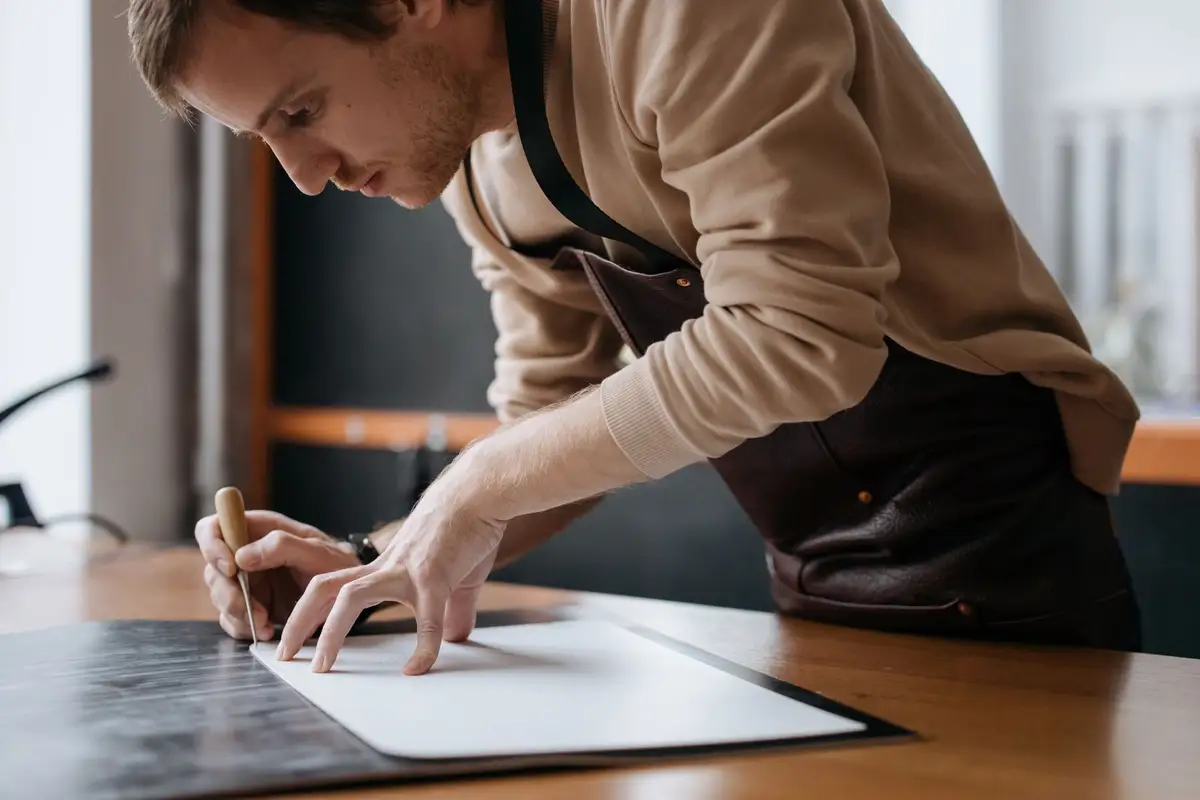
Labour is next. Cutting, skiving the edges thin where they fold, punching stitch holes, saddle-stitching, burnishing every edge and fitting the hardware takes one craftsman about eleven hours across two days. With fair wages, paid leave and the workshop rent in Topsia, that is about ₹2,000 a bag.
The rest covers the store on Free School Street, insured delivery, the care kit, the free initials and repairs for the life of the bag, which we budget at around ₹300 a bag over its lifetime. What is left is our margin, a little under a fifth of the price. A ₹2,000 bag usually uses split or coated leather, a machine lock stitch and plated buckles. It is not a cheat; it is a different product, built for a few years rather than a few decades.
Keep reading
How embossing works, which fonts and sizes suit each bag, and when your order leaves the workshop.
Three phrases on bag labels, and what each one really means for how a bag ages.
Humidity, not rain, is what damages leather in Kolkata. Here is how to keep a bag through July and August.