Teej and Gangaur: festival food in a Jaipur kitchen
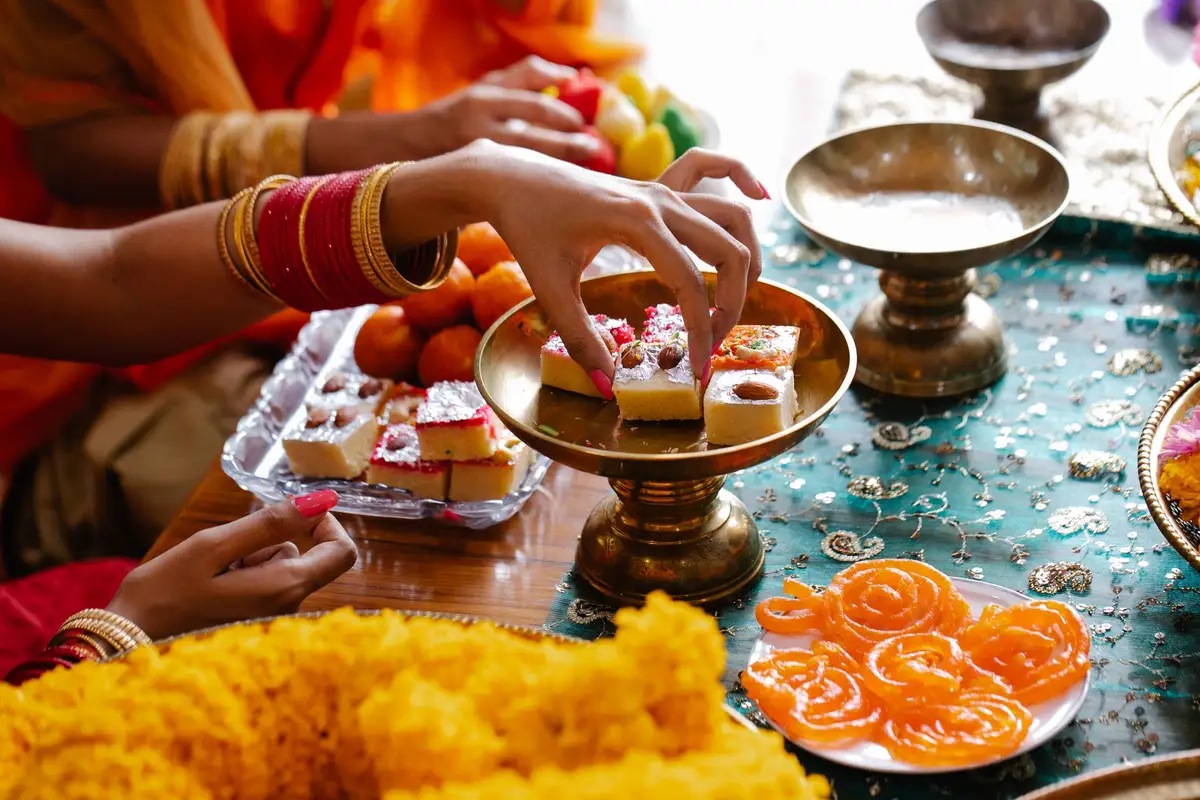
Ghevar, gunas and the dishes cooked for the two great women’s festivals of Rajasthan, and how they reach our menu.
Dinner Wednesday to Sunday · Bookings open 30 days ahead · 28 seats
C-14 Bhawani Singh Road, C-Scheme, Jaipur 302001
Wed–Sun · dinner 7 and 9 pm · Sun lunch 12.30 pm
What each of the six glasses does alongside the menu, and why many of our regulars choose sherbet even when they drink.
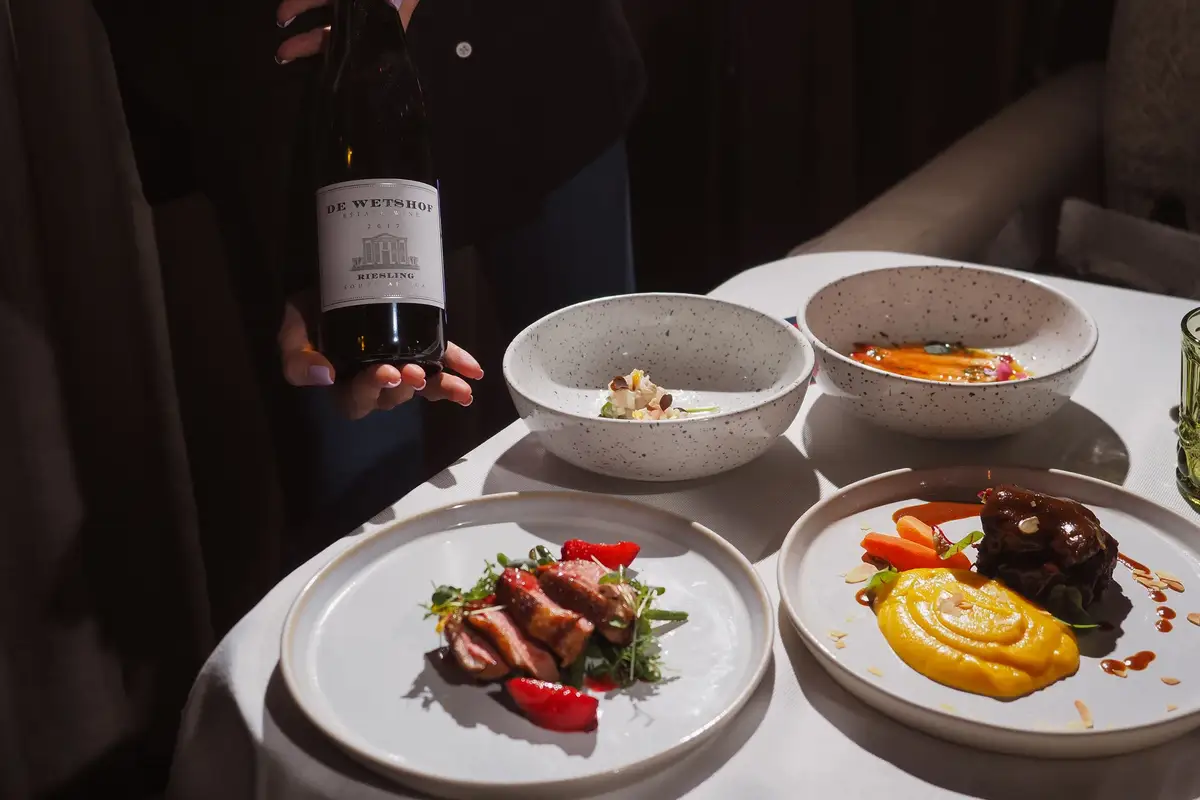
Our pairing costs ₹3,200 either way, and the sherbet pairing is not an afterthought for those who do not drink. Each of the six glasses is planned against a course with the same care, and about a third of our guests now choose sherbet even when they do drink wine. Here is how to decide.
The wine pairing is mostly Indian: whites and a rosé from Nashik, reds from Karnataka, and two bottles from abroad that change with the season. Our Rajasthani dishes lean on smoke, chilli and sour notes such as ker, kachri and dried mango, and the wines are chosen to stand up to them. Expect about 90 ml per glass, which over three hours comes to a little over half a bottle per person.
The sherbet pairing is made in our kitchen the same morning. Kokum with black salt comes with the first course and cleans the palate. Bel with jaggery sits beside the laal maas, cooling the mathania chilli. Rose with sabja seeds arrives with dessert. The other three change each month. They are not sweet drinks; most are tart, spiced or lightly salted, and they are built to make the next bite taste brighter.
If you are unsure, choose by the evening ahead. Driving home, an early start, or a long celebration that will carry on elsewhere are all good reasons for sherbet. A slow anniversary dinner with no plans after it suits wine. You can also order a single glass of either with any course, at ₹650, if you would rather not commit to six.
Keep reading
Ghevar, gunas and the dishes cooked for the two great women’s festivals of Rajasthan, and how they reach our menu.
A live coal, a spoon of ghee and a lid: the old Rajasthani smoking technique behind several dishes on our menu.
Where our cooks buy chillies, millets, brass and vegetables in the walled city, and how to visit the same markets yourself.