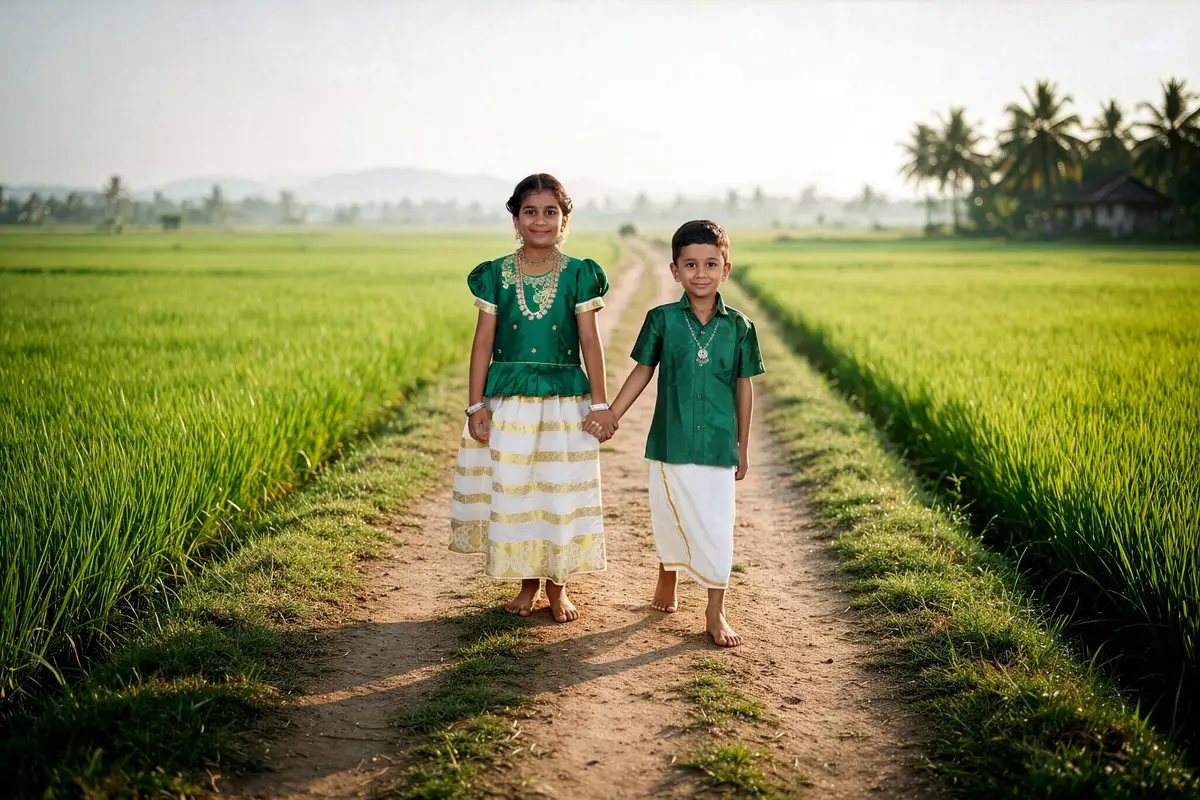
Mundu or pyjama: dressing small boys for festivals
A side-by-side look at kasavu mundu sets and kurta pyjamas for boys aged one to ten.
Onam edit is here · Free delivery across Kerala on orders above ₹1,499
44 MG Road, Pulimoodu, Thiruvananthapuram 695001
Mon–Sat · 10 am – 8 pm · Sun 11 am – 5 pm
Why a silk pavadai need not mean a sweaty child, and when we would choose cotton or linen instead.
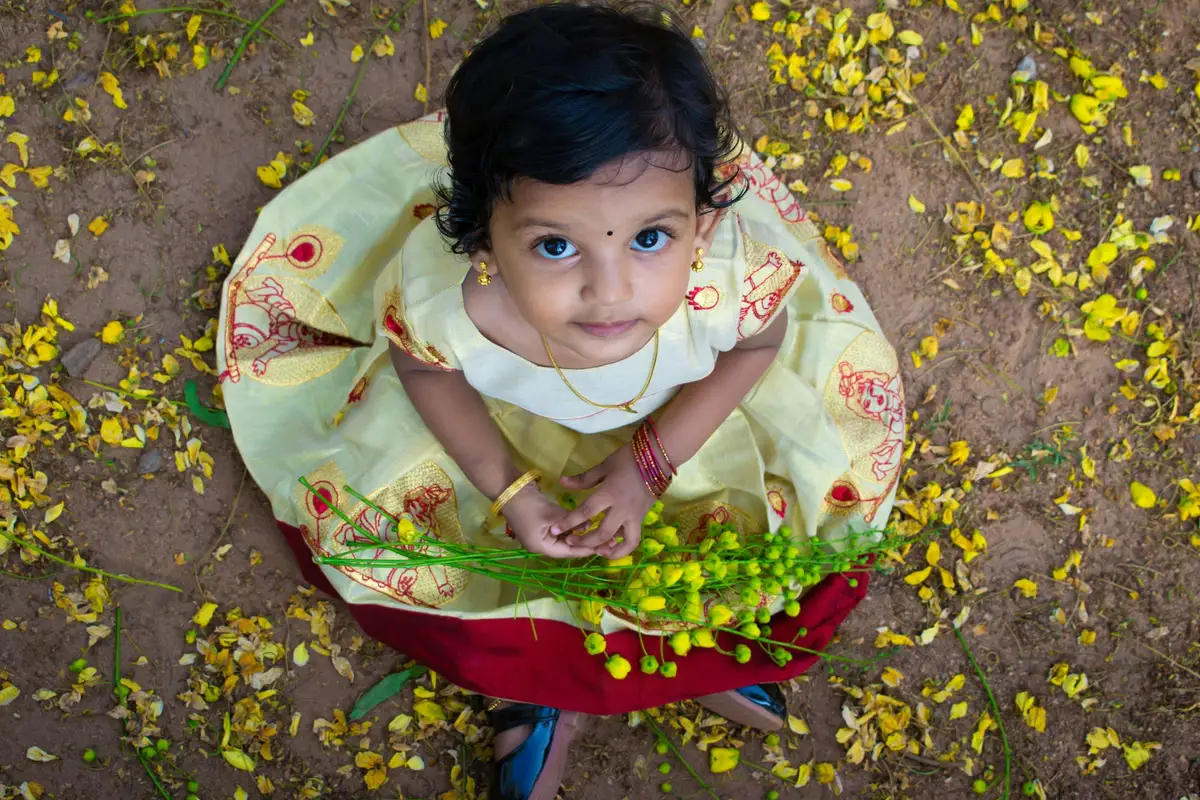
Parents often tell us they love silk pavadai but worry their child will be hot and sticky through a long function. It is a fair worry in a city where afternoon humidity sits above 75 per cent for much of the year. The answer depends less on the silk and more on what is under it.
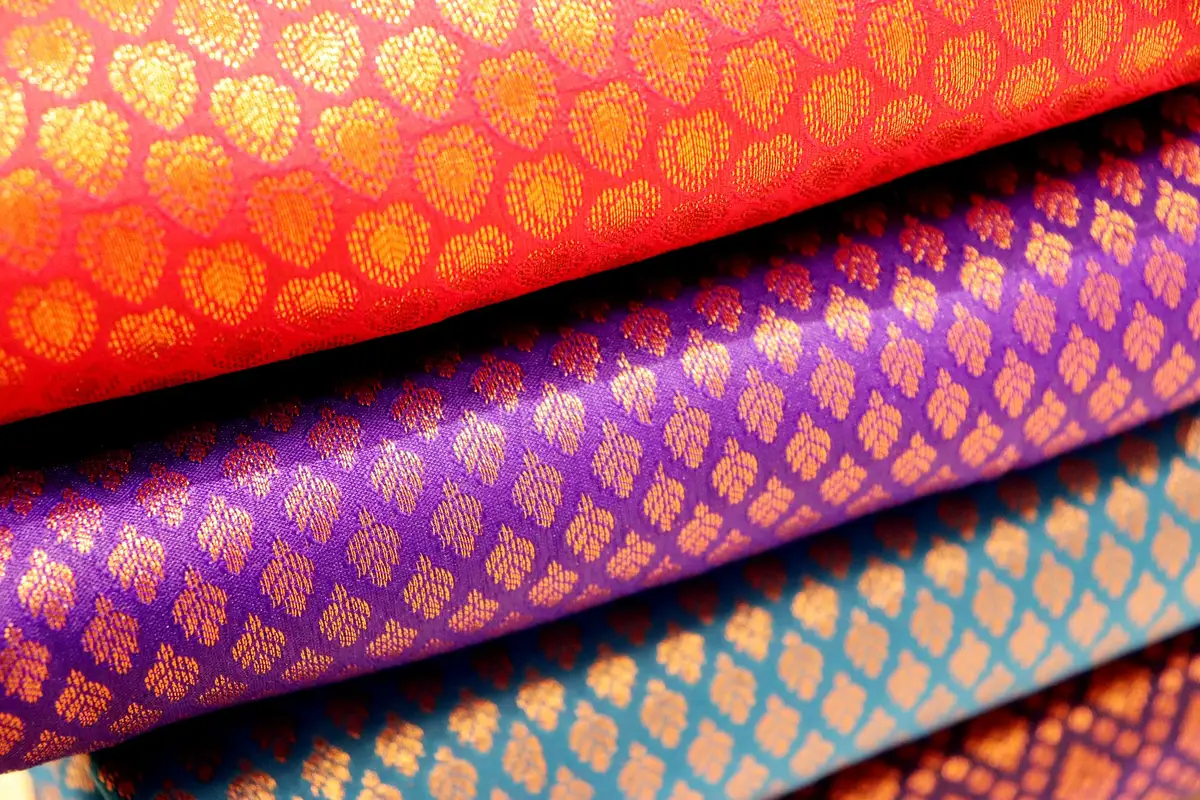
Silk on its own is quite breathable, but the art silk and brocade used in most festive children’s wear are woven tightly and often backed with a stiff synthetic lining. That stiff layer, not the silk, is what traps heat. A full lining in thin cotton changes things: it absorbs sweat, keeps the silk off the skin and lets air move between the two layers.
Cut matters too. A pavadai that sits on an elastic waist with a full, flared skirt lets air move around the legs. A blouse with short puff sleeves is cooler than one with long fitted sleeves. Avoid anything tight under the arms.
There are times we would still choose cotton or linen. For an outdoor afternoon event in April or May, a long car journey, or a child under two, our linen-cotton frock or the muslin romper is kinder. Silk is best kept for mornings, evenings and air-conditioned halls. Whichever you choose, put a thin cotton vest underneath for boys’ kurtas, keep the child out of direct sun between noon and 3 pm, and offer water often. A child who drinks enough rarely complains about clothes.
Keep reading
A side-by-side look at kasavu mundu sets and kurta pyjamas for boys aged one to ten.
Fabric, lining, zari border, tailoring hours and delivery: a plain breakdown of what a festive set costs us.
Comfort first: what to check on the inside of a festive outfit before you buy it.