Is a dhurrie too thin for a living room?
A common worry answered: where flatweaves work best, how to make them comfortable and when to choose a pile rug.
Showroom open in Mansarovar · Custom sizes in 14–20 weeks · Insured delivery across India
24 Kiran Path, Mansarovar, Jaipur 302020
Mon–Sat · 10 am – 7.30 pm · Sun by appointment
How we price a rug by the square foot, what changes the price and where the money goes.
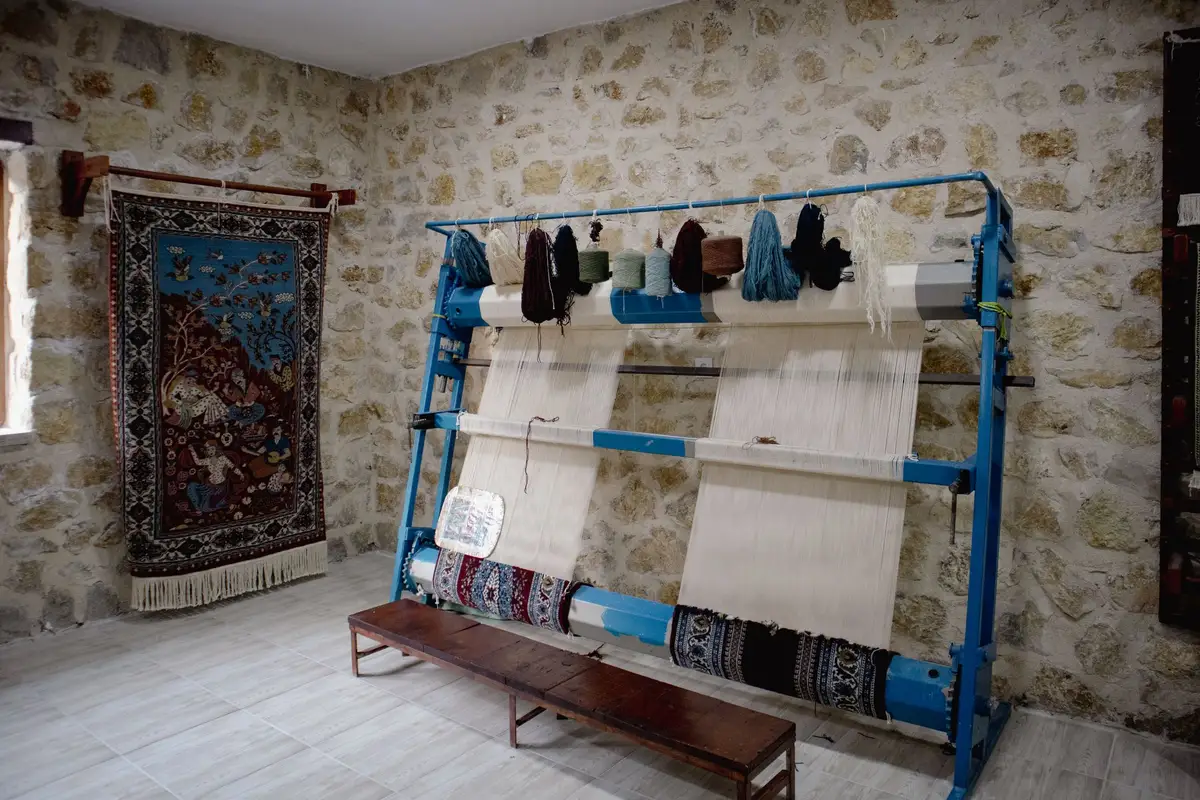
Most custom rug orders start with one question: how much will it cost? Here is how we work it out, using a 6 × 9 ft hand-knotted wool rug as the example.
We price by area. At about 100 knots per square inch, wool hand-knotted costs ₹1,650 per square foot. A 6 × 9 ft rug is 54 square feet, so the price is ₹89,100 before GST. Rugs at 150 knots cost around ₹2,600 per square foot, because they take half as long again on the loom.
Where does it go? The largest share, about 45 percent, is the weavers’ wages for five months on the loom. Wool, dyeing and the cotton foundation are about 20 percent. Washing, shearing, finishing and the label take about 10 percent. Design, sampling, showroom costs and our margin make up the rest.
Things that change the price: silk in the pattern adds about 30 to 60 percent, depending on how much. Natural dyes add around 10 percent. Very large sizes need wider looms and more weavers, so they cost slightly more per foot. Before we start, you approve a drawing and a small woven strike-off in your colours, which costs ₹3,500 and is adjusted against the order. Then you pay half to start the loom, and the balance when the rug is finished and photographed. GST on rugs and dhurries is shown on your invoice.
Keep reading
A common worry answered: where flatweaves work best, how to make them comfortable and when to choose a pile rug.
When to roll up a pile rug, how to store it safely and what to do if a rug gets damp in the rains.
Two ways of making a pile rug, why one costs three times the other, and how to tell them apart.