How to read the label on a Gaanth rug
Knot count, fibre, size, dye and the weaver’s name: what each line on our label means.
Showroom open in Mansarovar · Custom sizes in 14–20 weeks · Insured delivery across India
24 Kiran Path, Mansarovar, Jaipur 302020
Mon–Sat · 10 am – 7.30 pm · Sun by appointment
Two ways of making a pile rug, why one costs three times the other, and how to tell them apart.
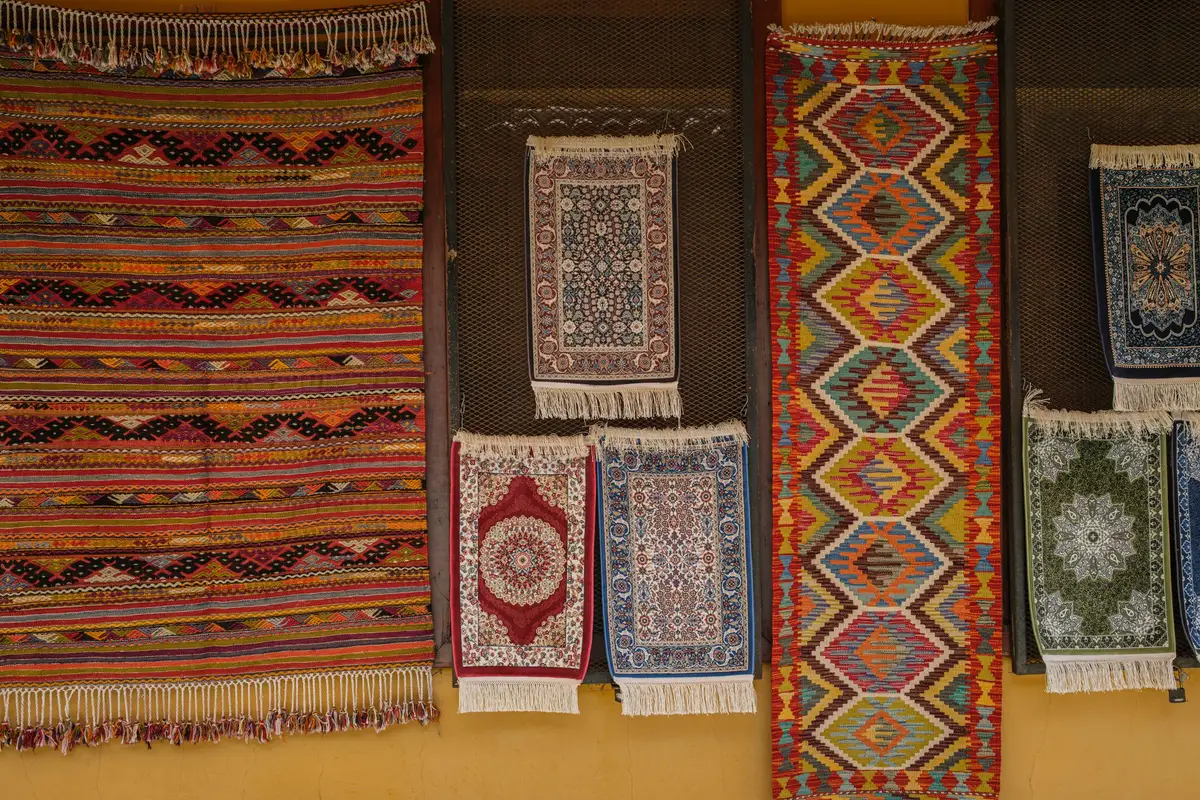
Walk into any rug shop and you will see hand-knotted and hand-tufted rugs side by side, often looking similar from the front. The difference is in how they are made, and it shows in the price and the life of the rug.
A hand-knotted rug is made on a vertical loom. The weaver ties each knot of wool or silk around two warp threads, row by row, and beats each row down. A 6 × 9 ft rug at 100 knots per square inch has about 7.7 lakh knots, and takes two weavers around five months.
A hand-tufted rug is made by pushing loops of wool through a stretched cotton canvas with a hand-held tufting gun. The back is then coated with latex and covered with a cloth. A tufted rug of the same size takes about two weeks.
To tell them apart, turn the rug over. A knotted rug shows the pattern clearly on the back, with every knot visible, and the fringe is the end of the warp threads. A tufted rug has a plain cloth backing, and any fringe is sewn on. Both are honest products. A tufted rug is soft, colourful and good value for a family room for ten years or so. A knotted rug costs more but can last generations, and can be washed and repaired many times.
Keep reading
Knot count, fibre, size, dye and the weaver’s name: what each line on our label means.
Legs on or off, how much floor to leave and the three sizes that suit most Indian living rooms.
Vacuum gently, turn it twice a year and deal with spills quickly: a short guide to keeping a rug for decades.