Hand-knotted or hand-tufted: what you are paying for
Two ways of making a pile rug, why one costs three times the other, and how to tell them apart.
Showroom open in Mansarovar · Custom sizes in 14–20 weeks · Insured delivery across India
24 Kiran Path, Mansarovar, Jaipur 302020
Mon–Sat · 10 am – 7.30 pm · Sun by appointment
When to roll up a pile rug, how to store it safely and what to do if a rug gets damp in the rains.

In Jaipur, many families still follow the old habit of rolling up heavy rugs for the summer and laying dhurries instead. It is a good habit, as long as the rugs are stored well.
Before storing a pile rug, have it cleaned, or at least vacuum it well on both sides. Moths and carpet beetles are drawn to dirt and sweat in wool, not to clean wool. Make sure the rug is completely dry.
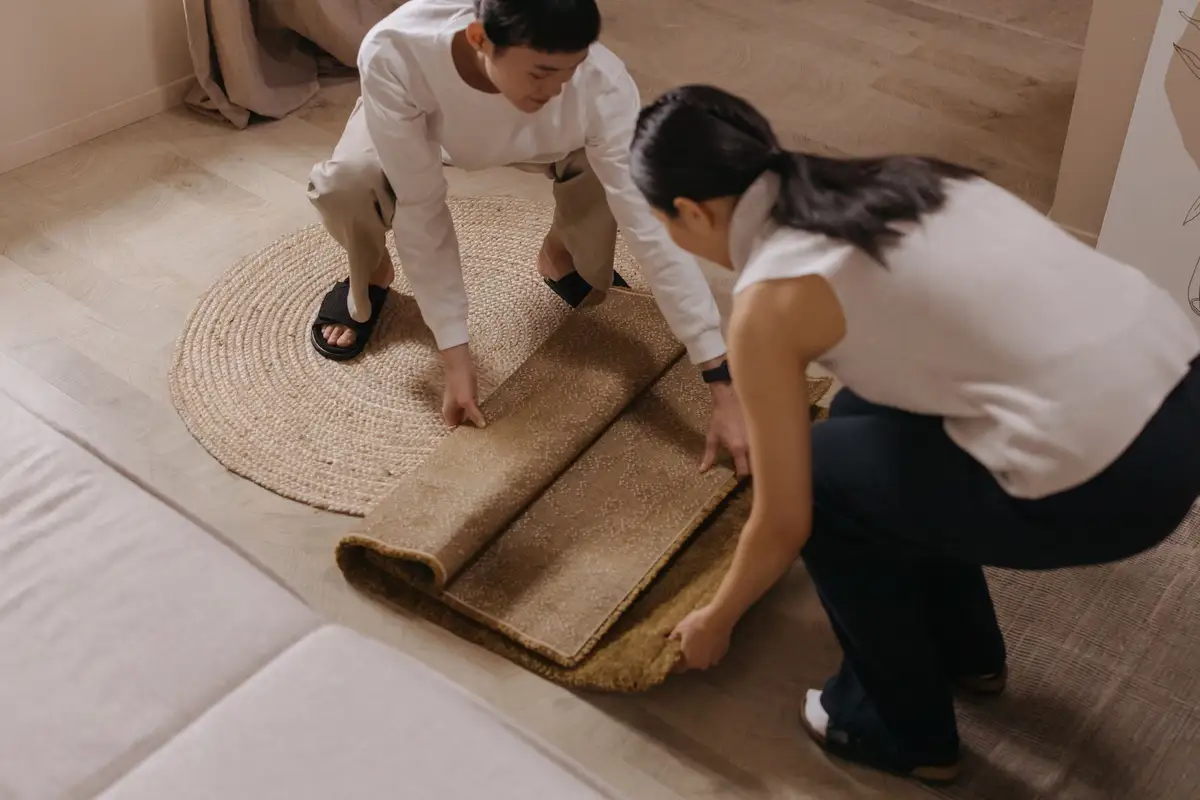
Roll it, never fold it. Roll with the pile facing inwards, along the length, around a cardboard tube if you have one. Wrap it in cotton sheeting or a breathable cloth. Do not use plastic, which traps moisture. Store it flat, off the floor, in a dry room. A few neem leaves or cedar blocks in the roll help keep insects away. Take the rug out once in the middle of the season, unroll it and let it air in the shade for a few hours.
In the monsoon, damp is the main danger. If a rug gets wet, lift it off the floor at once and dry both sides with fans or in indirect sun. Do not put it back on the floor until the foundation is dry, which can take two days. A damp foundation can rot and develop a smell. If a rug comes out of storage with damage, bring it to us for a look.
Keep reading
Two ways of making a pile rug, why one costs three times the other, and how to tell them apart.
Knot count, fibre, size, dye and the weaver’s name: what each line on our label means.
Legs on or off, how much floor to leave and the three sizes that suit most Indian living rooms.