Exchanging old gold for new kundan
How we test, weigh and value your old jewellery, and what you can expect to receive for it.
Weighed gold · Insured delivery across India · Video viewing on request
118 Johari Bazaar, near Haldiyon ka Rasta, Jaipur 302003
Mon–Sat · 11 am – 8 pm · Sun by appointment
Why Jaipur kundan is enamelled on the reverse, and how our meenakar fires each colour in turn.
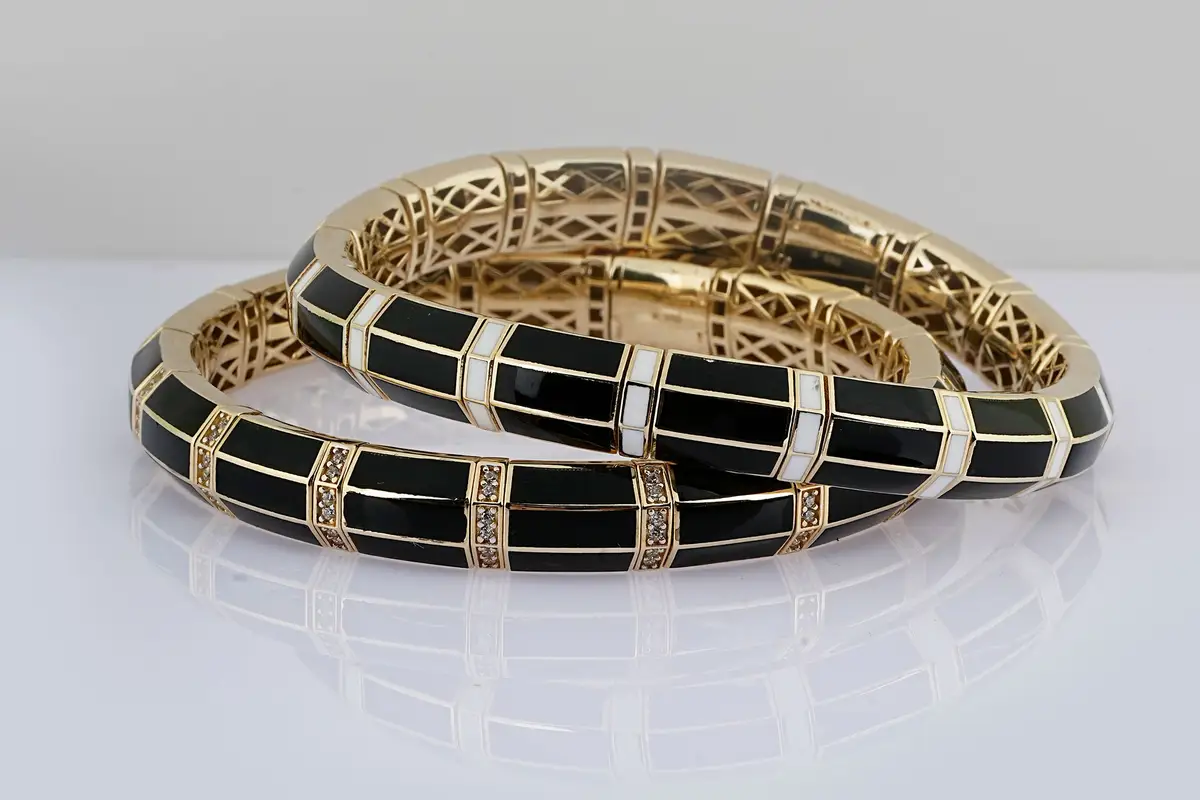
Turn over a good piece of Jaipur kundan and you will find the back almost as beautiful as the front. Red, green and white enamel fills patterns of birds, flowers and leaves. This is meenakari, and it is done by a separate karigar before any stone is set.
Our meenakar, Habib, works at a small kiln in the karkhana upstairs. Once the ghaarha has shaped the gold and cut channels into the back with a graver, Habib grinds glass enamel into powder, mixes it with water and lays it into the channels with a thin metal pen. Each colour is fired separately, at between 700 and 850 °C, starting with the colour that needs the most heat. White goes first, then green and blue, then red last of all, because red burns away if fired too long.
A pair of earrings may go into the kiln five or six times. Between firings the enamel is filed flat and checked for bubbles. When the colours are complete, the piece passes to the kundansaz, who sets the stones on the front in pure gold foil.
Meena is not only decorative. It protects the back of the piece, keeps skin away from the solder and makes the jewellery comfortable to wear. If old meena has chipped on an heirloom piece, we can usually redo it. Bring it in and Habib will show you which colours can be matched.
Keep reading
How we test, weigh and value your old jewellery, and what you can expect to receive for it.
Booking early, fixing the rate and choosing smaller pieces: how to plan festival gold in Jaipur.
How the jewellers’ street is laid out, when to come and what to ask in any shop you enter.