Your first framing visit
What happens in the 30 minutes, what to bring, and how the written quote works.
New show opens 14 November · Framing ready in 10 days · Insured delivery across India
9 Rue Suffren, White Town, Puducherry 605001
Tue–Sun · 10 am – 1 pm, 4 – 8 pm · Mondays closed
A common question, answered plainly: what UV glass protects, and when ordinary glass is enough.
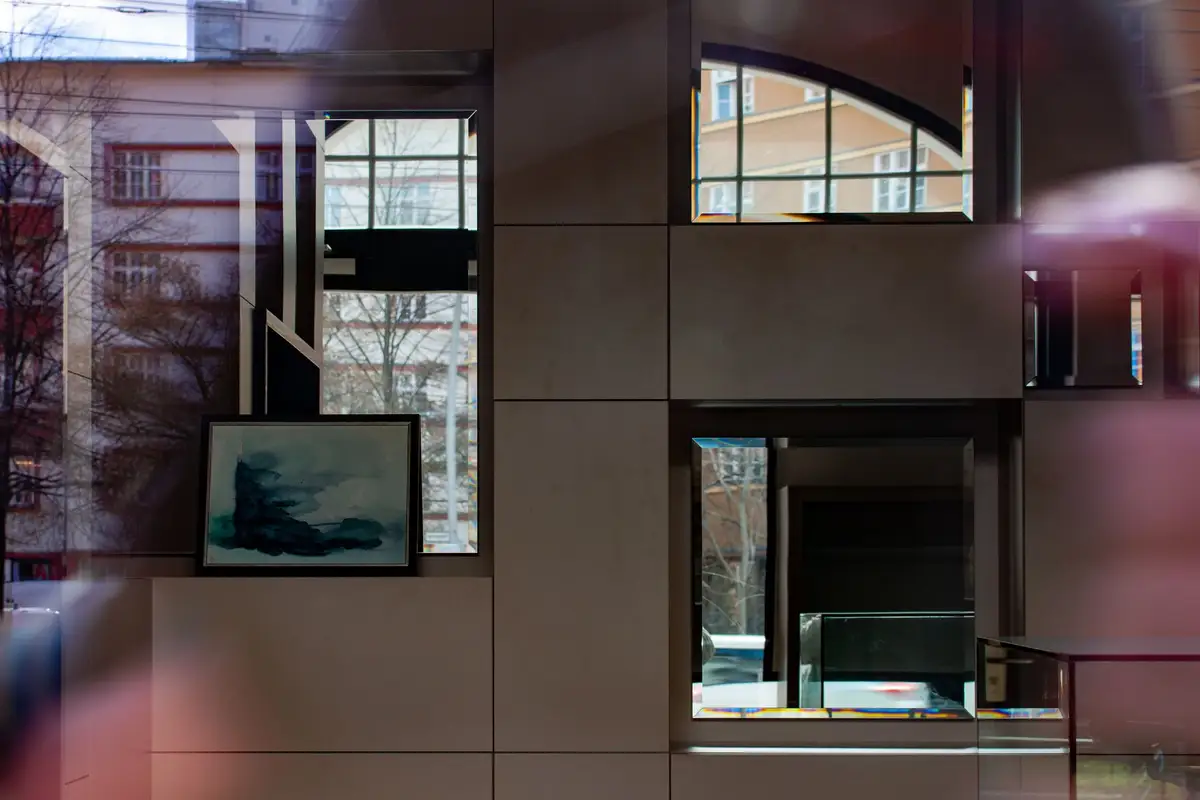
Museum glass costs about three times as much as ordinary glass, so it is fair to ask what it does. It does two things: it blocks most of the ultraviolet light that fades paper and ink, and it has a coating that cuts reflection so you see the work rather than the window behind you.
UV is the main reason paper fades. Watercolours, ink drawings, old photographs and textiles are the most sensitive. A watercolour hung in a bright room behind ordinary glass can lose its blues and pinks in five to ten years. Behind UV glass, the same work fades far more slowly.
Reflection matters most in rooms with windows opposite the wall, or for dark works. A dark linocut behind ordinary glass in a bright Puducherry living room becomes a mirror for half the day.
When is ordinary glass enough? For posters and printed reproductions, for works hung in dim corridors, and for children’s drawings that you plan to change every year. Oil and acrylic paintings on canvas usually need no glass at all.
We always tell you which glass we would choose for a particular work and why. Many people choose UV glass with ordinary reflection, a middle option that costs about ₹800 less.
Keep reading
What happens in the 30 minutes, what to bring, and how the written quote works.
Editions, numbering and papers: what “7/50” means on our prints, and why it matters.
Spacing, height and the paper template trick we use to hang a group of works without extra holes.