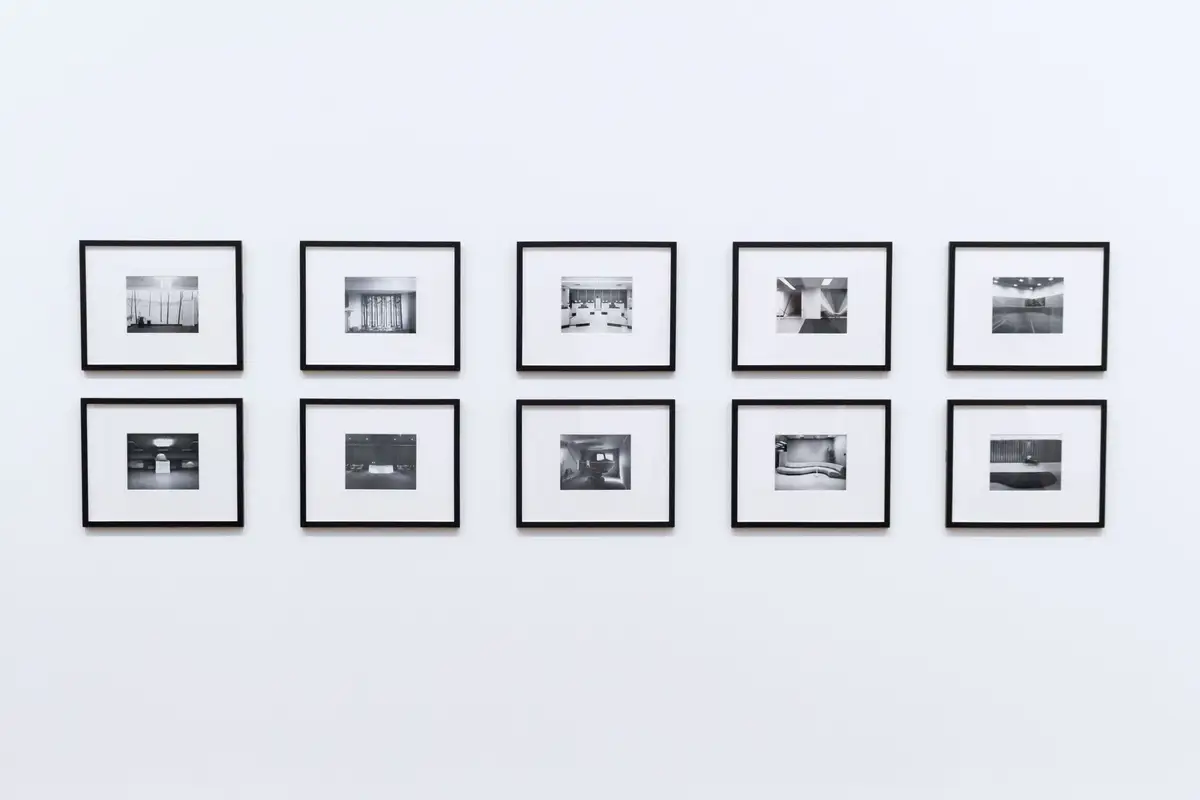
Hanging a gallery wall at home
Spacing, height and the paper template trick we use to hang a group of works without extra holes.
New show opens 14 November · Framing ready in 10 days · Insured delivery across India
9 Rue Suffren, White Town, Puducherry 605001
Tue–Sun · 10 am – 1 pm, 4 – 8 pm · Mondays closed
Editions, numbering and papers: what “7/50” means on our prints, and why it matters.
Every print in the gallery carries a small pencil note in the corner, something like 7/50, and a signature. It means this is the seventh print of an edition limited to fifty. Once the fifty are sold, that image is not printed again at that size.
Our photographic prints are giclée prints: made on a wide-format printer with pigment inks rather than dye inks, on cotton rag paper. Pigment inks last much longer without fading, and cotton paper does not yellow like wood-pulp paper. Each print is checked against the artist’s proof under daylight before it is signed.
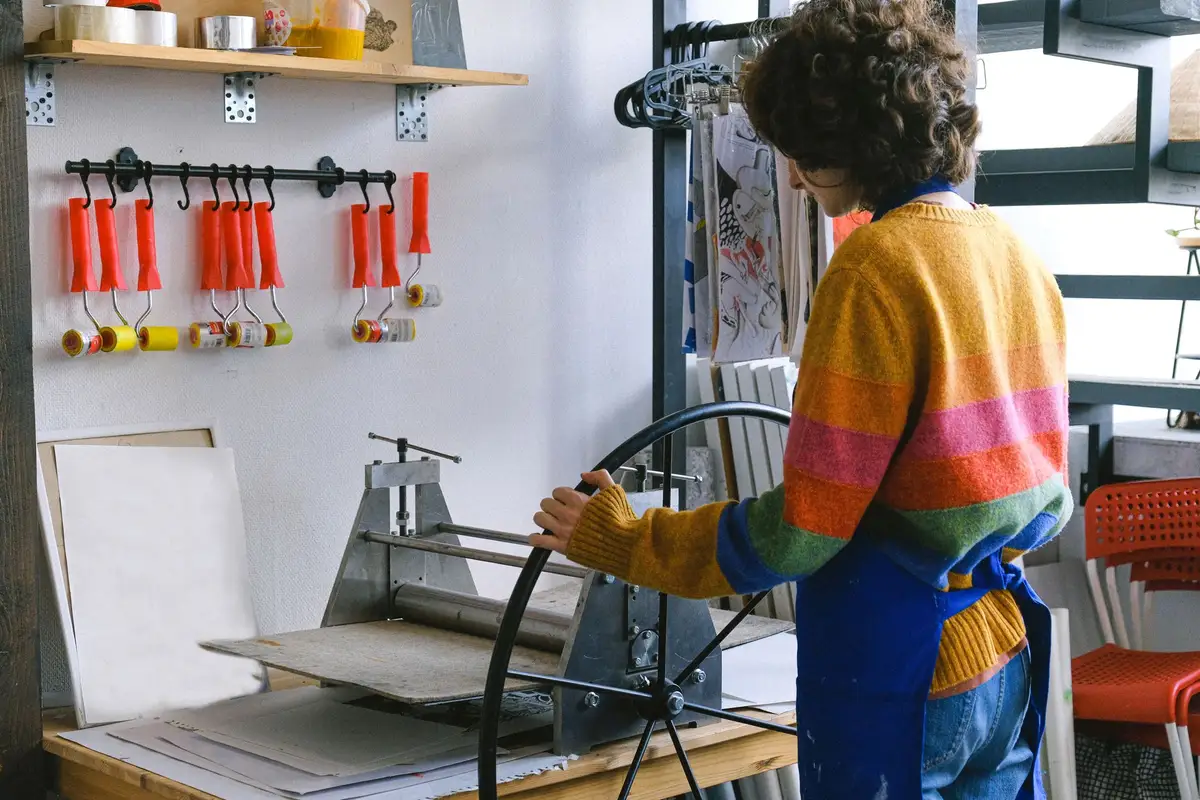
Linocuts and etchings are made by hand on our small press in the courtyard. For a linocut the artist carves the design into a block of lino, rolls ink over it, lays paper on top and turns the press. An etching is printed from a copper plate, wiped by hand before each pull. No two are exactly the same, which is part of their charm.
When you buy a print from us, you receive a small card with the title, artist, edition number, paper and ink. Keep it. If you ever sell or pass on the print, it travels with it and tells the next owner what they have.
Keep reading
Spacing, height and the paper template trick we use to hang a group of works without extra holes.
How we stitch fabric onto linen without glue, so a family piece can be enjoyed and still kept safe.
Start with the work, not the room: how we pick moulding, colour and width for a painting.