Three weeks in Pampore
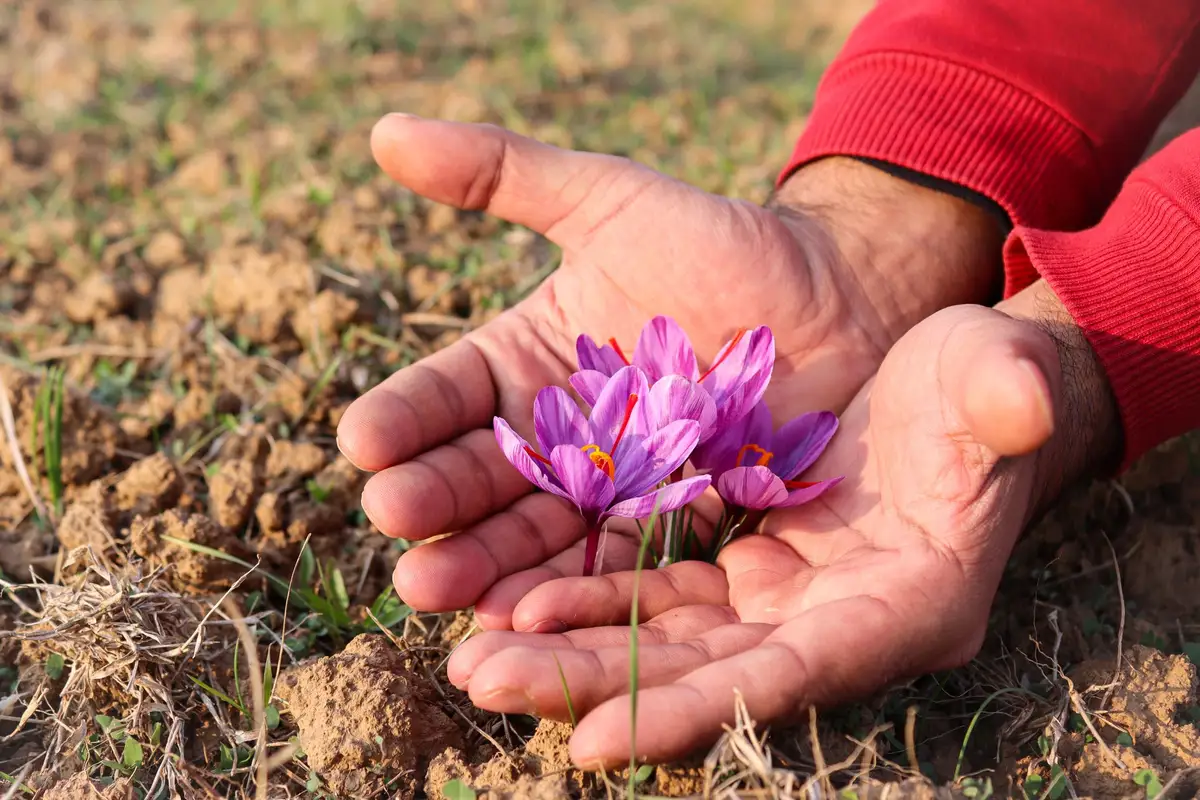
What happens in the saffron fields between late October and mid-November.
New season saffron from Pampore is in · Free delivery across India above ₹1,500
22 Residency Road, Lal Chowk, Srinagar 190001
Mon–Sat · 10 am – 7 pm · Sun 11 am – 4 pm
Three simple tests that take ten minutes and a glass of warm milk.
Saffron is the most faked spice in the world, and fake threads are often dyed corn silk, safflower petals or real saffron mixed with older stock. A few checks at home will tell you a lot.
First, look at the thread. Real Kashmiri saffron has a trumpet shape, wider at one end, and is deep red. Uniform, very thin threads that are all the same length are a warning sign.
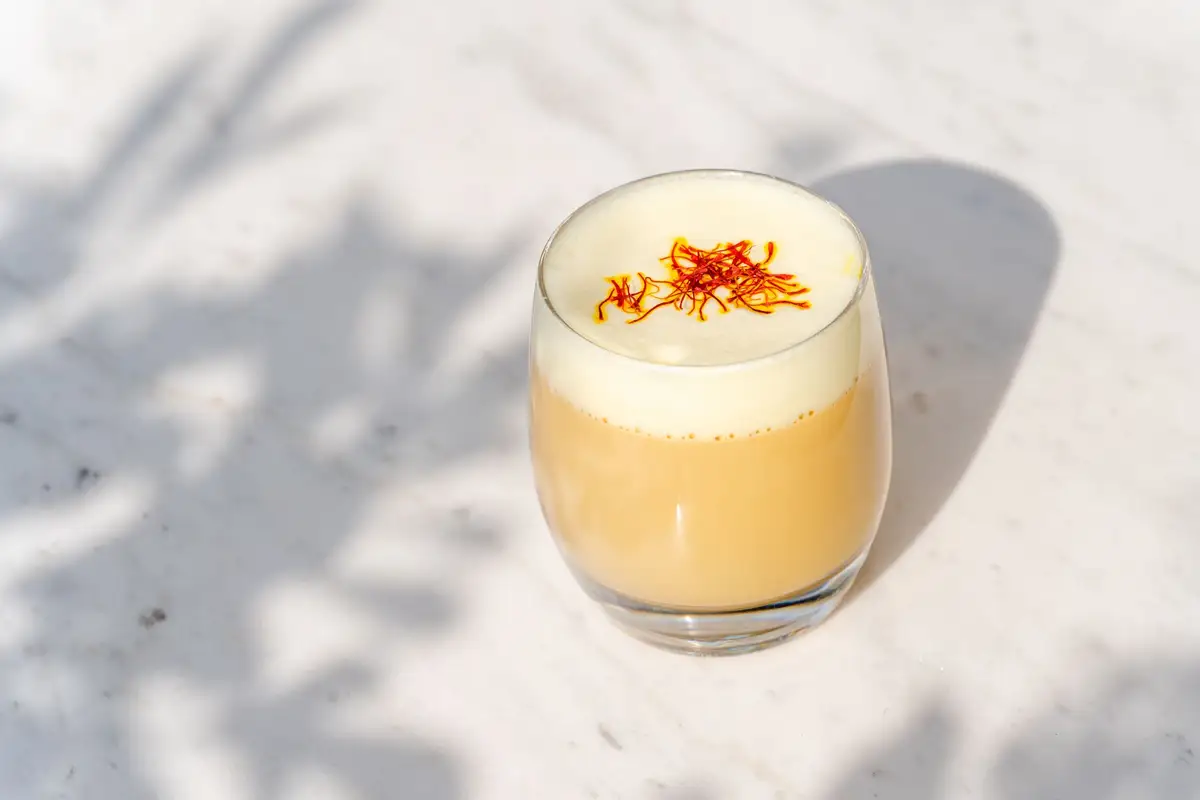
Second, drop two or three threads in a glass of warm milk or water. Real saffron releases a golden-yellow colour slowly, over about ten minutes, and the thread itself stays red. If the water turns red at once, or the thread turns pale, it has been dyed.
Third, smell and taste. Real saffron smells sweet and hay-like, but tastes slightly bitter. If it tastes sweet, something has been added.
Finally, ask us about the batch. Every tin we sell carries a batch number. Message us the number and we will tell you when it was packed and where it was grown.
Keep reading
What happens in the saffron fields between late October and mid-November.
A recipe from our kitchen, for four cups.
A pinch is about 20 threads. How many to use for biryani, kheer and milk, and why soaking first matters.