Low voltage and burnt windings
The commonest reason farm pumps fail is not the pump. How voltage problems damage motors, and the simple protection that helps.
Dealer enquiries open for Tamil Nadu, Kerala and Karnataka
Plot 22, SIDCO Industrial Estate, Kurichi, Coimbatore 641021
Mon–Sat · 8.30 am – 5.30 pm
Every pump runs on our Kurichi bench before it ships. What we measure, how long it takes and what the readings mean.
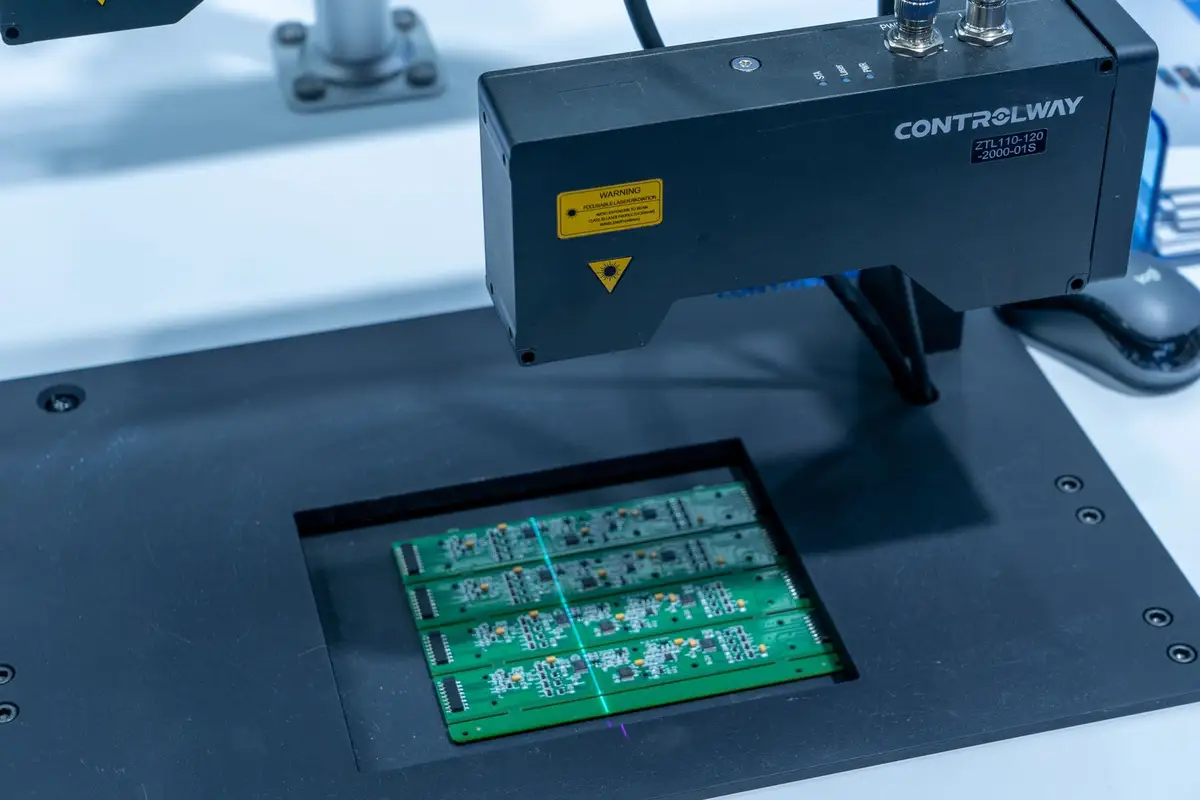
Every pump that leaves our plant in SIDCO Kurichi has run on our own test bench, and the readings travel with it. Dealers sometimes ask what the bench actually checks. Here is a pump’s twenty minutes on the bench.
The pump is clamped to a test rig connected to a sump of about 20,000 litres. The suction and delivery pipes are fitted, and the motor is connected through a panel that records voltage, current and power. Before starting, the technician checks insulation resistance on the winding with a megger, which tells us whether the winding is sound and dry. Any reading below our limit and the pump goes back to the winding section.
The pump is then run at its rated voltage. A valve on the delivery line is closed step by step, and at each step the bench records the head in metres, the flow in litres per minute from a flow meter, and the power drawn. Plotting these gives the pump’s curve, which should match the design curve within a small tolerance. The technician also listens for noise, checks for vibration, and feels the bearing housing for heat.
Finally, the pump is run at low voltage, about 10% below rated, to see that it starts reliably, as it will have to on many farms. The readings are printed on a sheet with the pump’s serial number and packed with it. If you ever call us for service, the engineer compares your pump’s performance with that sheet, which often shows at once whether the problem lies in the pump or in the installation.
Keep reading
The commonest reason farm pumps fail is not the pump. How voltage problems damage motors, and the simple protection that helps.
Floors, flats, tanks and peak demand: how building engineers size a pressure booster set, and why two pumps beat one.
The purchase price is the smallest part of a pump’s cost. A worked example of energy over ten years, and where efficiency pays.