What a pump costs to run over ten years
The purchase price is the smallest part of a pump’s cost. A worked example of energy over ten years, and where efficiency pays.
Dealer enquiries open for Tamil Nadu, Kerala and Karnataka
Plot 22, SIDCO Industrial Estate, Kurichi, Coimbatore 641021
Mon–Sat · 8.30 am – 5.30 pm
Floors, flats, tanks and peak demand: how building engineers size a pressure booster set, and why two pumps beat one.
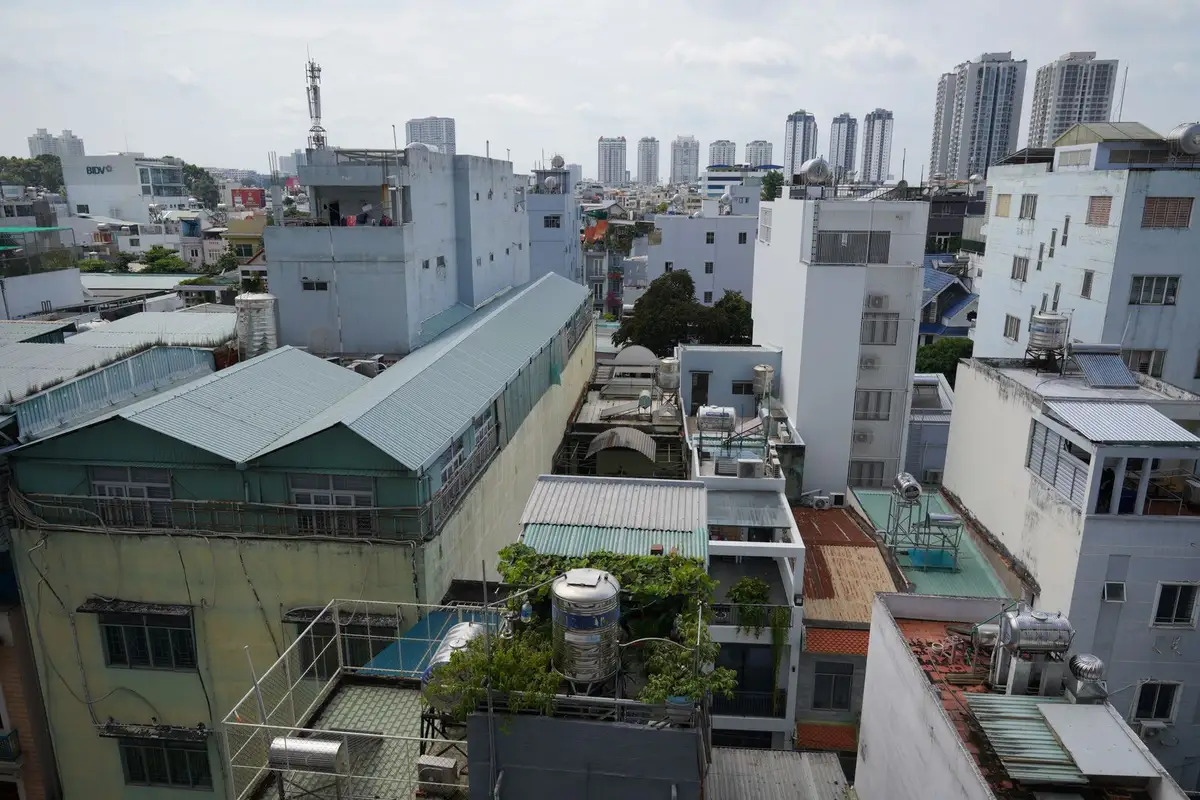
Many new apartment blocks in Coimbatore, Kochi and Bengaluru no longer rely only on overhead tanks. They use pressure booster sets that push water directly to every flat at a steady pressure. We supply our twin booster sets directly to builders and consultants, and here is how we size one.
Start with peak demand. Mornings between 6 and 8 are when everyone showers at once. A common rule of thumb is to allow about 0.1 to 0.15 litres per second per flat at peak, adjusted for the size of flats. A block of 48 two- and three-bedroom flats needs roughly 5 to 6 litres per second.
Then the pressure. The pump must lift water to the highest outlet and still deliver comfortable pressure there, usually 1.5 to 2 bar at the top floor shower. Add the height of the building, the pipe losses and that residual pressure to get the total head. A ten-storey block typically needs 50 to 60 metres of head.
Our twin booster set uses two 3 HP pumps with automatic changeover. In normal use one pump runs and the other rests; the controller alternates them so both wear evenly. At peak demand, the second pump joins in. If one fails, the other keeps water flowing while it is repaired. A pressure tank smooths out small demands at night, so the pumps do not start every time a tap opens. Send us the number of floors, flats and the sump arrangement, and our engineers will reply with a sizing sheet within one working day.
Keep reading
The purchase price is the smallest part of a pump’s cost. A worked example of energy over ten years, and where efficiency pays.
Textile mills, foundries and farms that needed water: a short history of how a city became India’s pump workshop.
March to May lowers water levels across Tamil Nadu. How to run farm pumps through the dry months without damaging them.