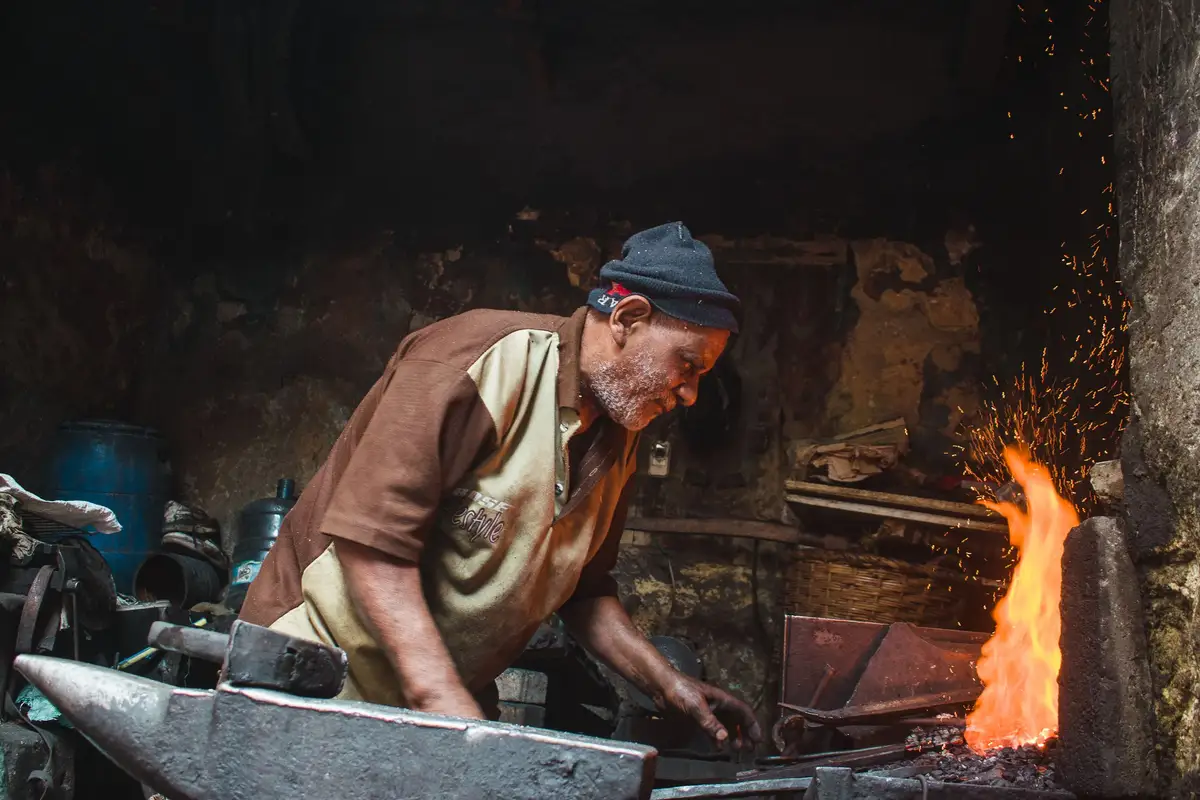
Will a carbon steel knife rust in the monsoon?
A common worry, answered: what humidity does to carbon steel, and what to do about it.
Every knife forged and sharpened by hand in Ranchi · Free re-sharpening for the first year
Plot 14, Tupudana Industrial Area, Hatia, Ranchi 834003
Tue–Sun · 10 am – 6 pm · Forge open Sat 8–11 am
From the 6 am fire to the last edge on the stone: how a knife is made, hour by hour.
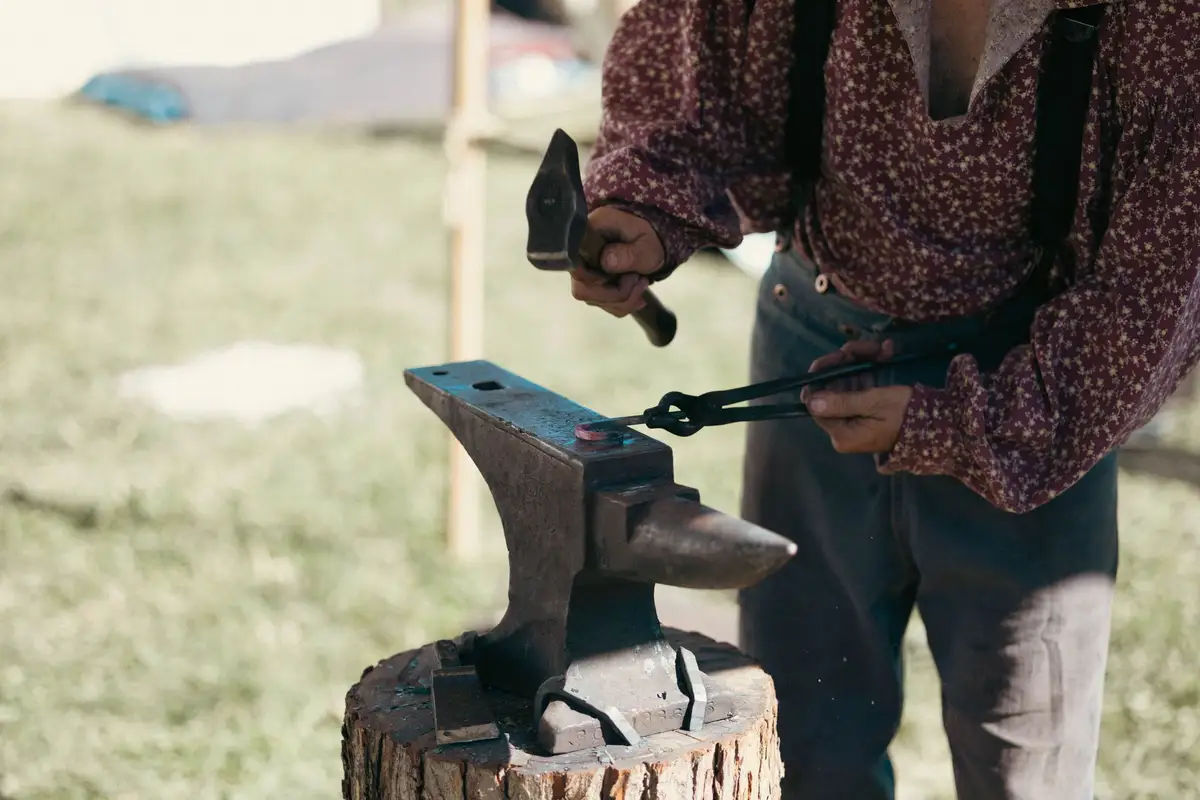
The day starts at 6 am, when Bhola Mahto lights the coal forge with dry sal twigs and a hand-cranked blower. It takes half an hour to reach forging heat. By then Puja has laid out the steel bars, marked with chalk for each knife.
Forging is loud and quick. A bar goes into the coals until it glows orange, then onto the anvil, where Bhola shapes the tip and draws out the bevel with a hammer. Back into the fire, back onto the anvil, perhaps fifteen times for one blade. The scale flakes off and falls around the anvil like black leaves.
By ten the blades for the day are shaped. They are hardened in a tank of oil, which flares and smokes when the hot steel goes in, and then tempered in an electric oven while the forge cools.
Afternoons are quiet: grinding on the belt, fitting handles, and sharpening. Every knife is tried on a tomato, an onion and a sheet of newspaper before it is oiled and boxed.
The forge closes at 6 pm. On Saturdays from 8 to 11, visitors can watch from behind the rail, try knives at the bench, and bring their own for sharpening.
Keep reading
A common worry, answered: what humidity does to carbon steel, and what to do about it.
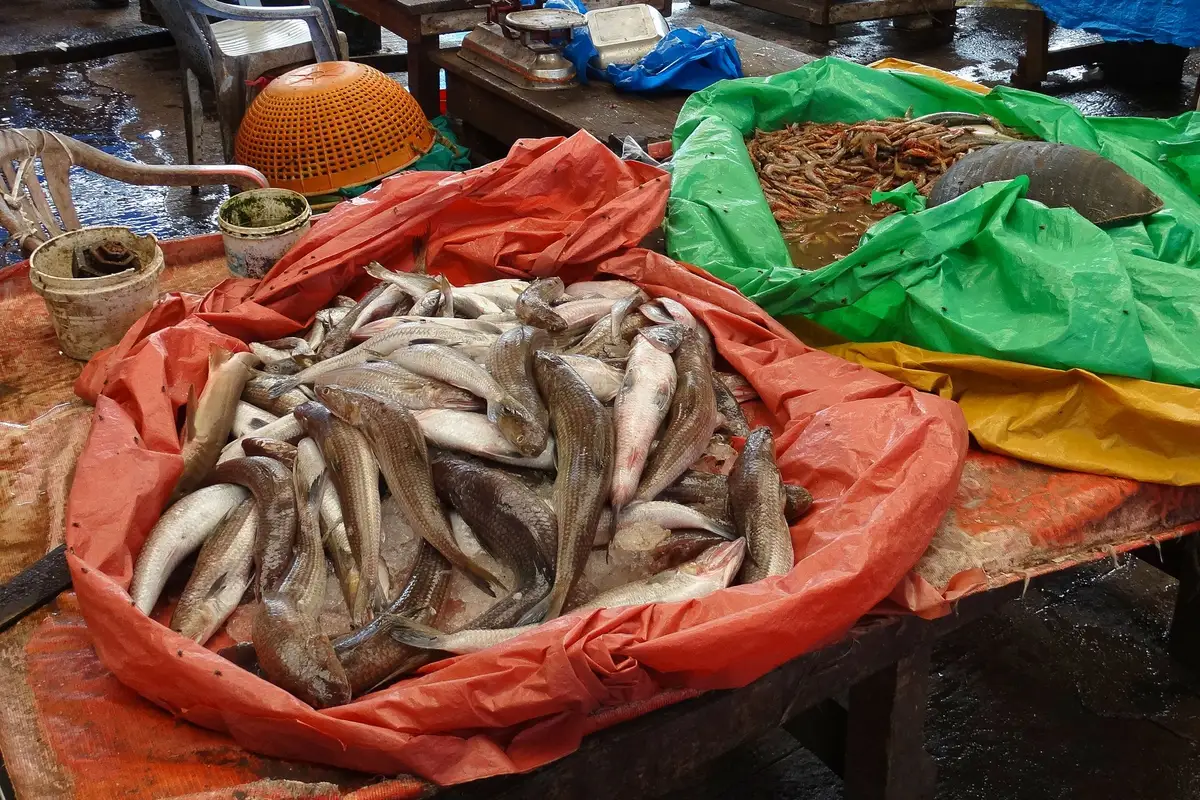
Where our fish knife pattern came from, and how the fishmongers of Ranchi use it.
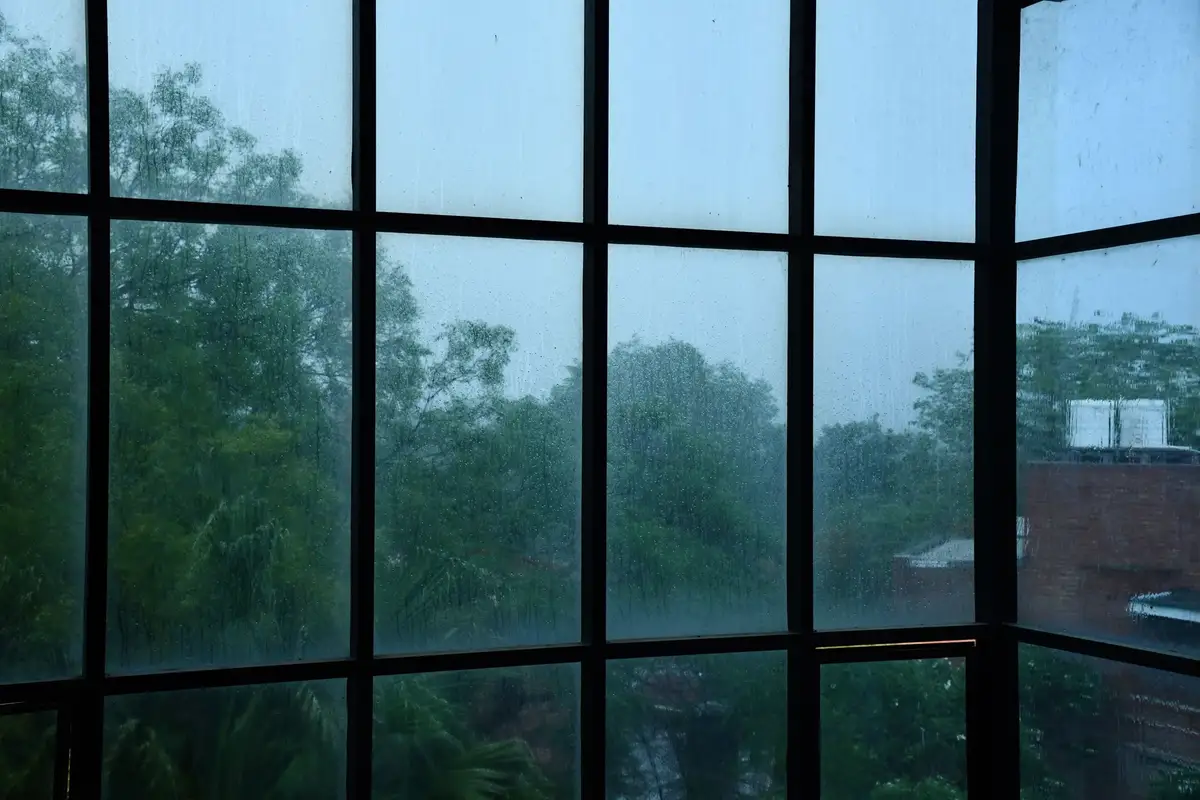
How to find us in Tupudana, what to wear, and what happens on a Saturday morning.