Why we rest on moon days
Saturdays, new moons and full moons are off. Here is the thinking, and what to do instead.
New beginners’ course starts 3 November · Your first Mysore-style class is free
418, 2nd Main Road, Gokulam 3rd Stage, Mysuru 570002
Sun–Fri · 5.30–9 am and 5.30–8 pm
Why everyone is doing something different, and why the room is so quiet.
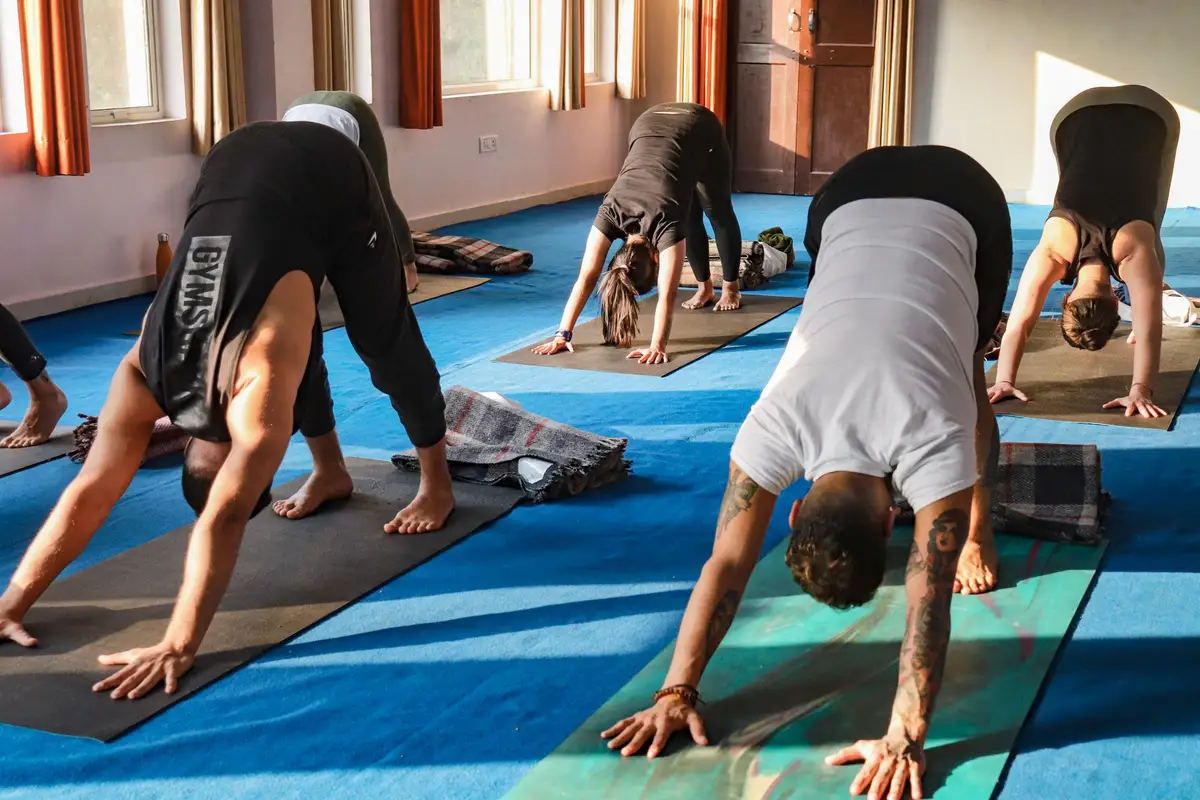
Walk into the shala at 6.30 am and the first thing you notice is the sound: eighteen people breathing, and very little else. There is no music and no one calling out postures. Each student is working through their own sequence, at their own pace, and the teacher is moving between mats.
This is the Mysore style, named after the city where it was taught this way for decades. You learn the sequence one posture at a time. On your first day that might be five sun salutations and three standing postures. When those are steady, usually after a week or two, your teacher adds the next one. Over months the practice grows to an hour or more.
The teacher’s job is to watch, adjust and decide when you are ready for more. Some days that means a hand on your back in a forward bend; other days it means leaving you alone to work it out.
New students often worry about not knowing what comes next. You are not expected to. Until it is memorised, your teacher will tell you, quietly, at your mat. Most people know their sequence by heart within a month.
Keep reading
Saturdays, new moons and full moons are off. Here is the thinking, and what to do instead.
What to expect in weeks one to four, from sore hamstrings to remembering the order.
Self-paced practice with a teacher at your side, or the whole room moving to one count. How the two differ and who each suits.