Choosing fabric for a winter or a summer wedding
Velvet in December, organza in April: how season and venue change what we suggest.
Bridal appointments for the winter season are open · Fittings at our Kala Ghoda studio
3 Rampart Row, Kala Ghoda, Fort, Mumbai 400001
Tue–Sun · 11 am – 7.30 pm · by appointment
Weight does not equal quality. Why we design for 4 to 7 kg and how a bride can move freely in it.
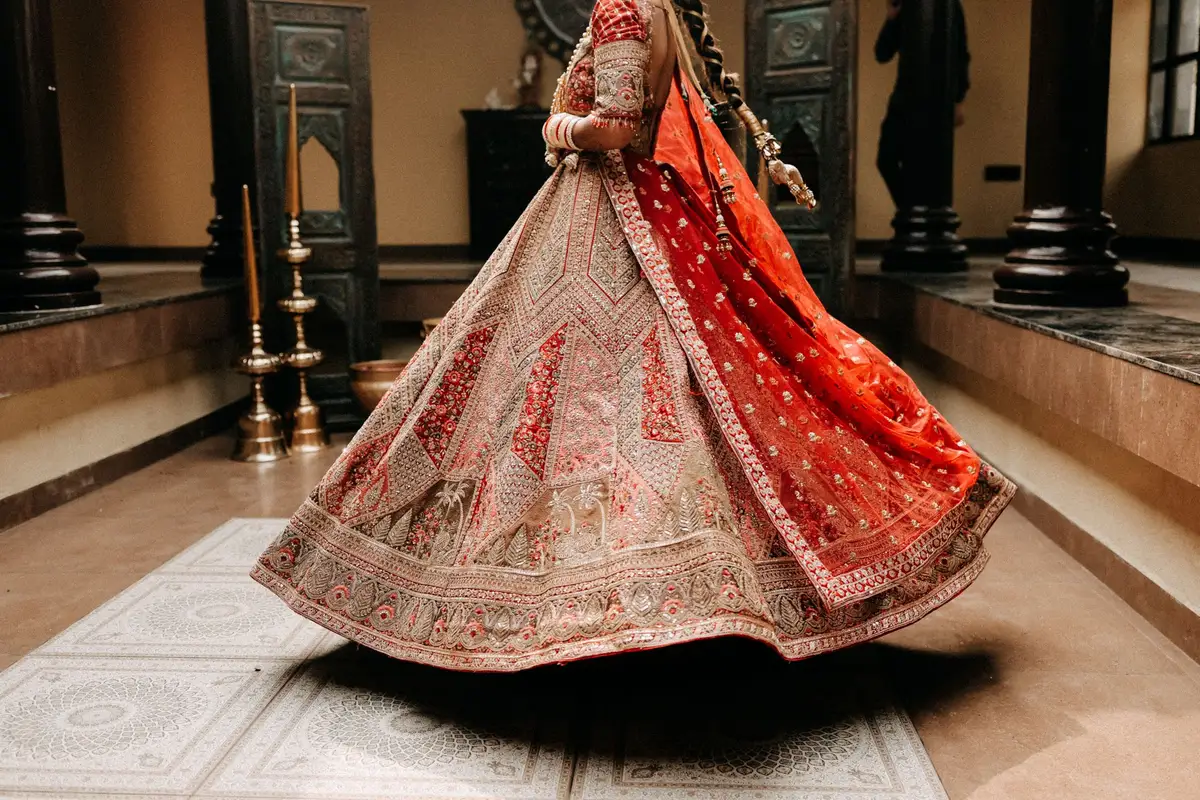
One of the most common worries we hear is that a lighter lehenga will look cheap in photographs. The opposite is often true. A skirt that weighs 12 kg pulls the waistband down, flattens the flare and leaves the bride tired and stiff by the third hour. You see it in the pictures.
The richness people notice comes from density of embroidery in the right places, the drape of good fabric and how well the piece fits, not from the total weight. Our crimson bridal lehenga, with around 1,400 hours of zardozi, weighs close to 7 kg, and we consider that the upper limit. The maroon dori lehenga sits at about 4.5 kg. Most of our brides fall between those two.
There are a few ways we keep weight down without losing the look. We place heavy coiled zardozi in the border and the upper skirt where the eye goes, and use lighter sequin and thread fills lower down. We use can-can only where needed for flare and line the skirt in cotton silk instead of heavier satin. And we build the waistband with a broad grosgrain belt inside, so the weight rests on the hips rather than hanging from the waist.
At your second fitting we weigh the skirt and you walk the length of the studio, sit and stand twice. If it feels heavy then, it will feel twice as heavy at the end of the night, and we adjust.
Keep reading
Velvet in December, organza in April: how season and venue change what we suggest.
Two fittings, one pair of mojris and the shoulder check most grooms forget: getting the sherwani right.
Four months is comfortable, three is tight: what happens in each week of the making.