A groom’s guide to sherwani fittings
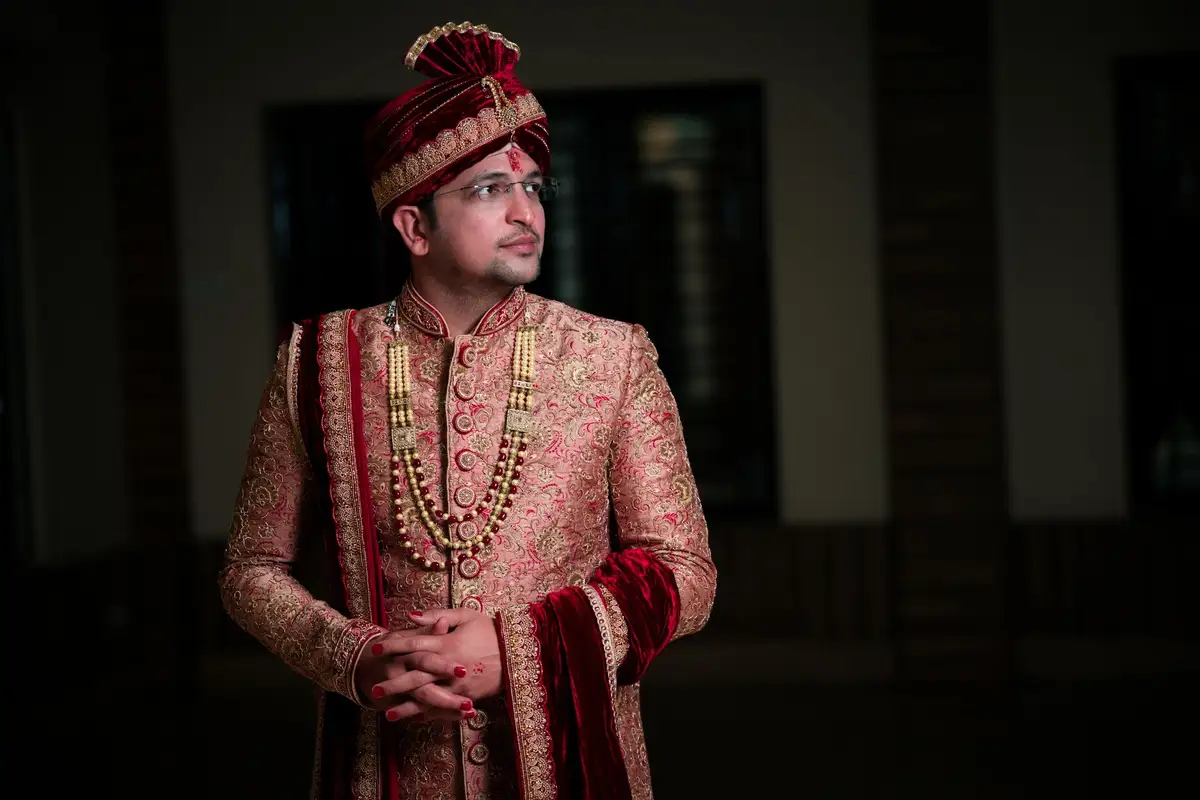
Two fittings, one pair of mojris and the shoulder check most grooms forget: getting the sherwani right.
Bridal appointments for the winter season are open · Fittings at our Kala Ghoda studio
3 Rampart Row, Kala Ghoda, Fort, Mumbai 400001
Tue–Sun · 11 am – 7.30 pm · by appointment
Velvet in December, organza in April: how season and venue change what we suggest.

Mumbai weddings happen in two very different climates. Between November and February evenings are pleasant, sometimes cool by the sea. From March to May it is humid and hot even after dark. The same lehenga will feel very different in each, so the season is one of the first things we ask about.
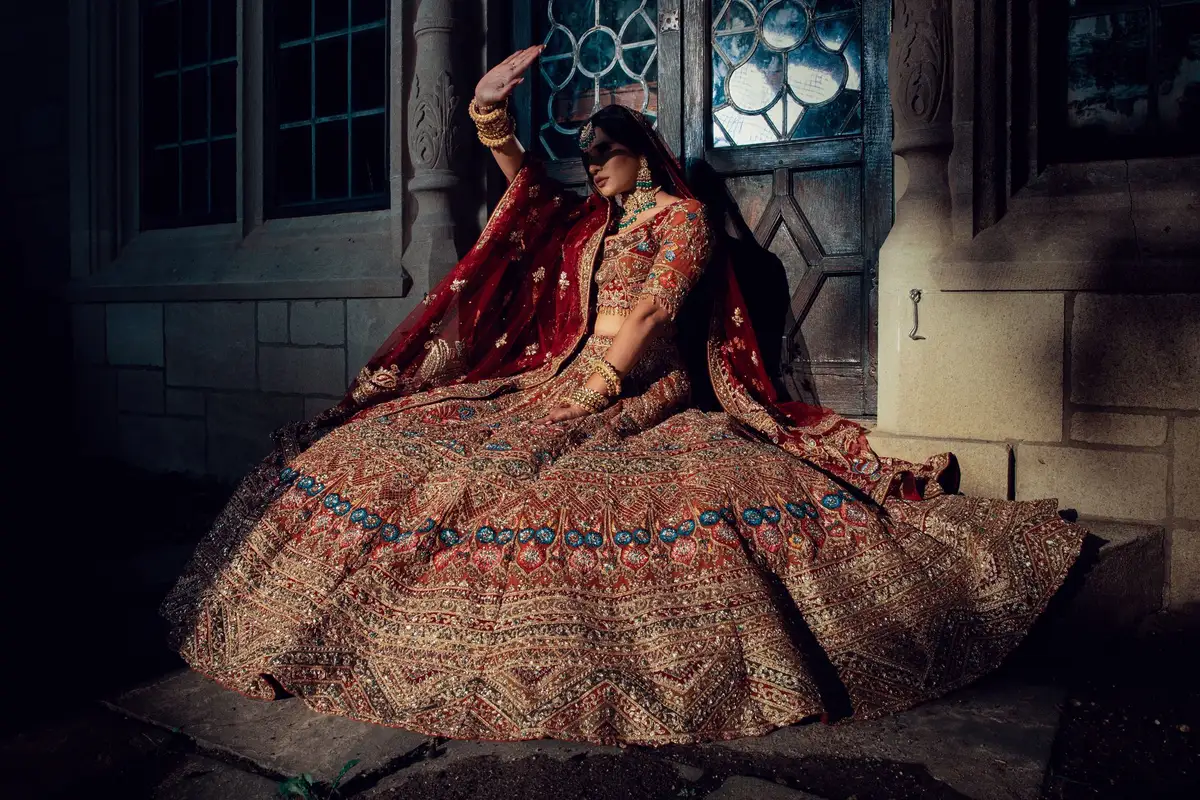
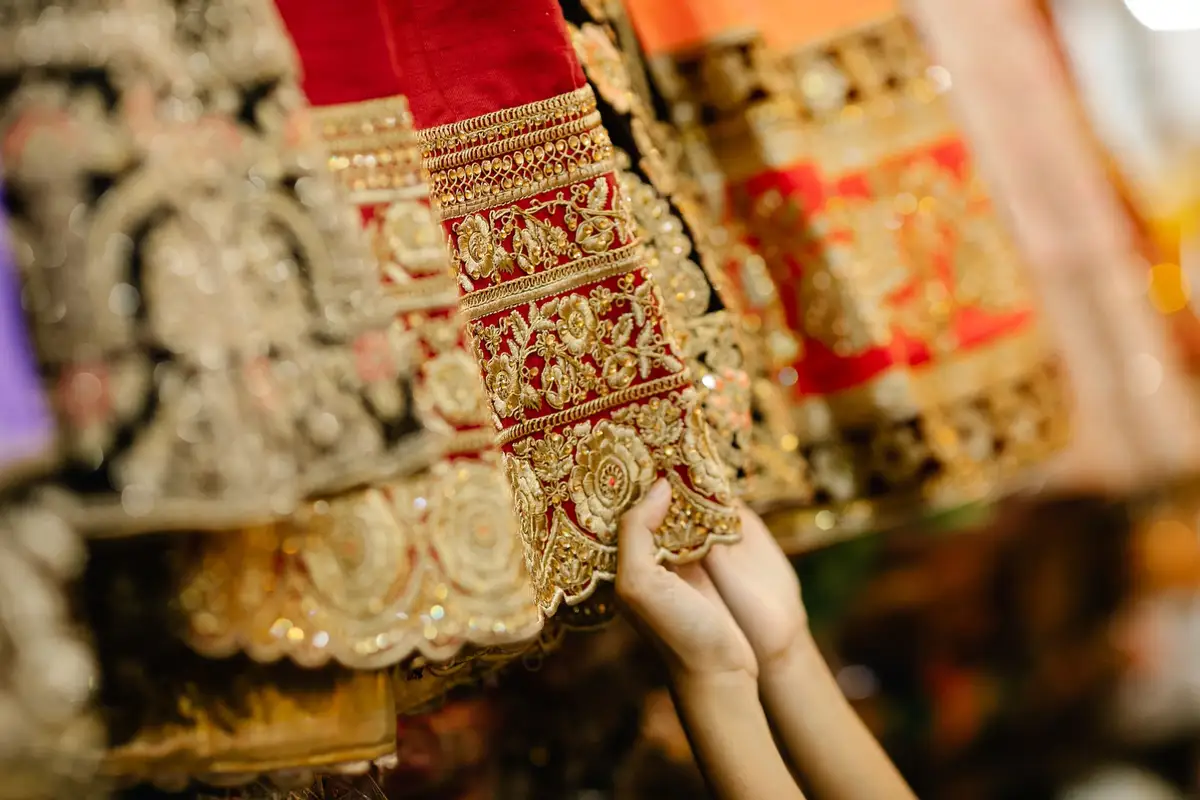
For winter evenings, silk velvet is a real option. It holds colour deeply, takes heavy zardozi well and feels warm on a terrace in January. Raw silk and dupion also work well; they are crisp, hold the flare of a kali skirt and photograph with a soft sheen. We line these in cotton silk so they breathe through a long night of dancing.
For summer and daytime functions we steer towards lighter Banarasi silks, organza, georgette and chanderi. Our emerald lehenga in Banarasi silk with gota patti weighs well under 4 kg and suits a morning pooja or mehendi in April. Velvet in May is something we will make if asked, but we will gently suggest you wear it only for an air-conditioned reception.
Venue matters as much as the calendar. An open lawn in Alibaug in March needs a lighter skirt and a shorter train than a hotel ballroom in Worli. Tell us about every function, including the ones you are not buying from us, and we can help you plan the fabrics so each outfit suits its hours.
Keep reading
Two fittings, one pair of mojris and the shoulder check most grooms forget: getting the sherwani right.
Four months is comfortable, three is tight: what happens in each week of the making.
Three kinds of embroidery you will hear about at your appointment, and what each one does.