Zardozi, dori and gota: a short guide
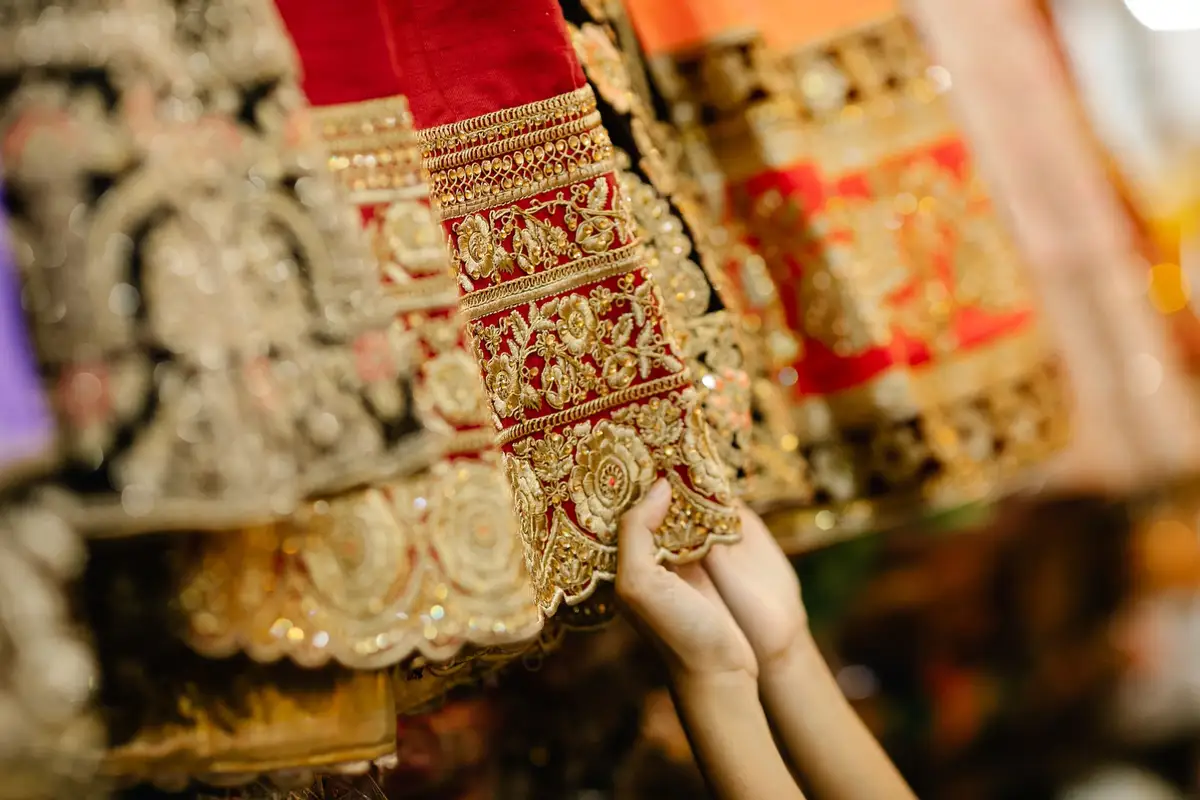
Three kinds of embroidery you will hear about at your appointment, and what each one does.
Bridal appointments for the winter season are open · Fittings at our Kala Ghoda studio
3 Rampart Row, Kala Ghoda, Fort, Mumbai 400001
Tue–Sun · 11 am – 7.30 pm · by appointment
Four months is comfortable, three is tight: what happens in each week of the making.
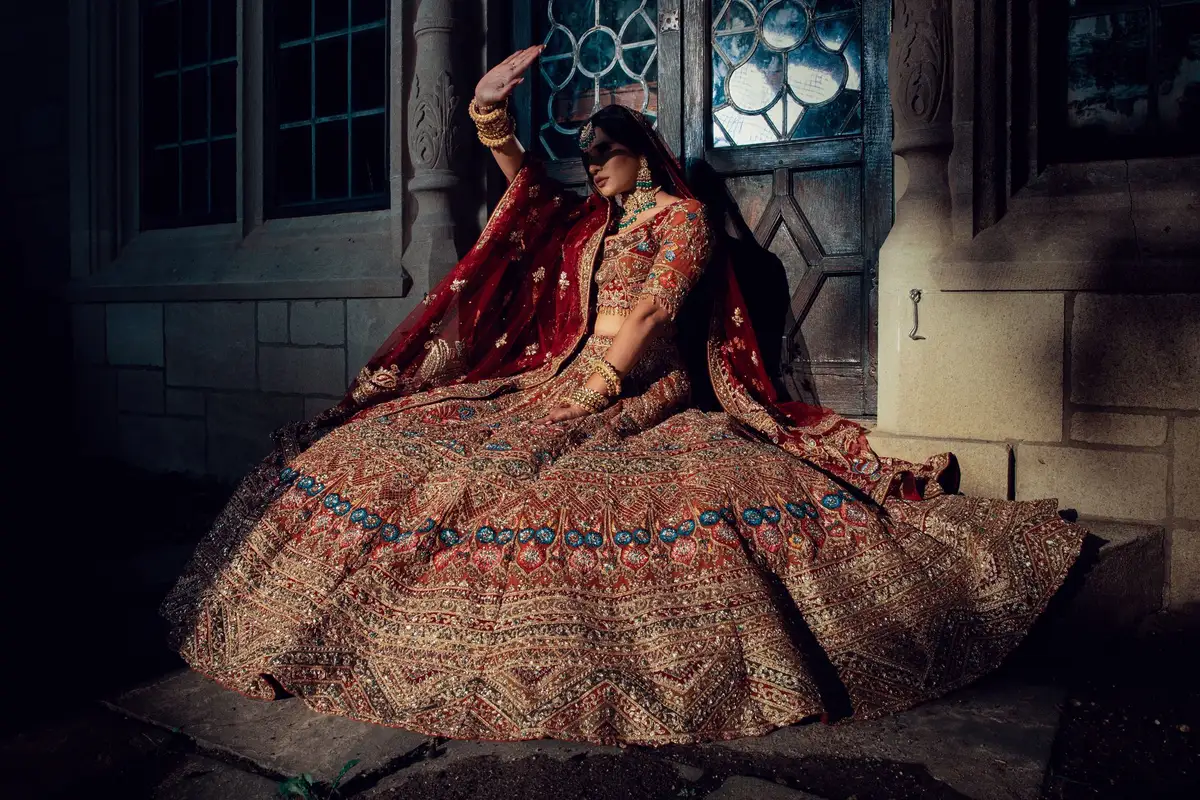
A bridal lehenga is made in stages, and each stage needs time that cannot really be hurried. The first two weeks are for the design: your appointment, sketches, fabric swatches and a final drawing with the embroidery marked in colour.
Then the fabric is dyed and cut, and the outline of the embroidery is traced on by hand. The zardozi itself takes the longest. A bridal piece with dense work can need 1,200 to 1,500 hours, spread across six or seven karigars over about eight weeks.
Your first fitting comes before the embroidery is finished, using a calico toile, so we can change the shape without unpicking any handwork. The second fitting is in the real fabric with the blouse half-made. The third, about two weeks before the wedding, is for the final length with the shoes you will wear.
So four months from the first appointment is comfortable. Three months is possible if the embroidery is lighter. If your date is closer than that, tell us at the start and we will suggest a design that fits the time, rather than promise one that does not.
Keep reading
Three kinds of embroidery you will hear about at your appointment, and what each one does.
Store it flat, keep it dry and let it breathe twice a year.
Ninety minutes, three swatch trays and a pencil sketch: how a first visit to the studio runs.