A wedding shopping day in south Mumbai
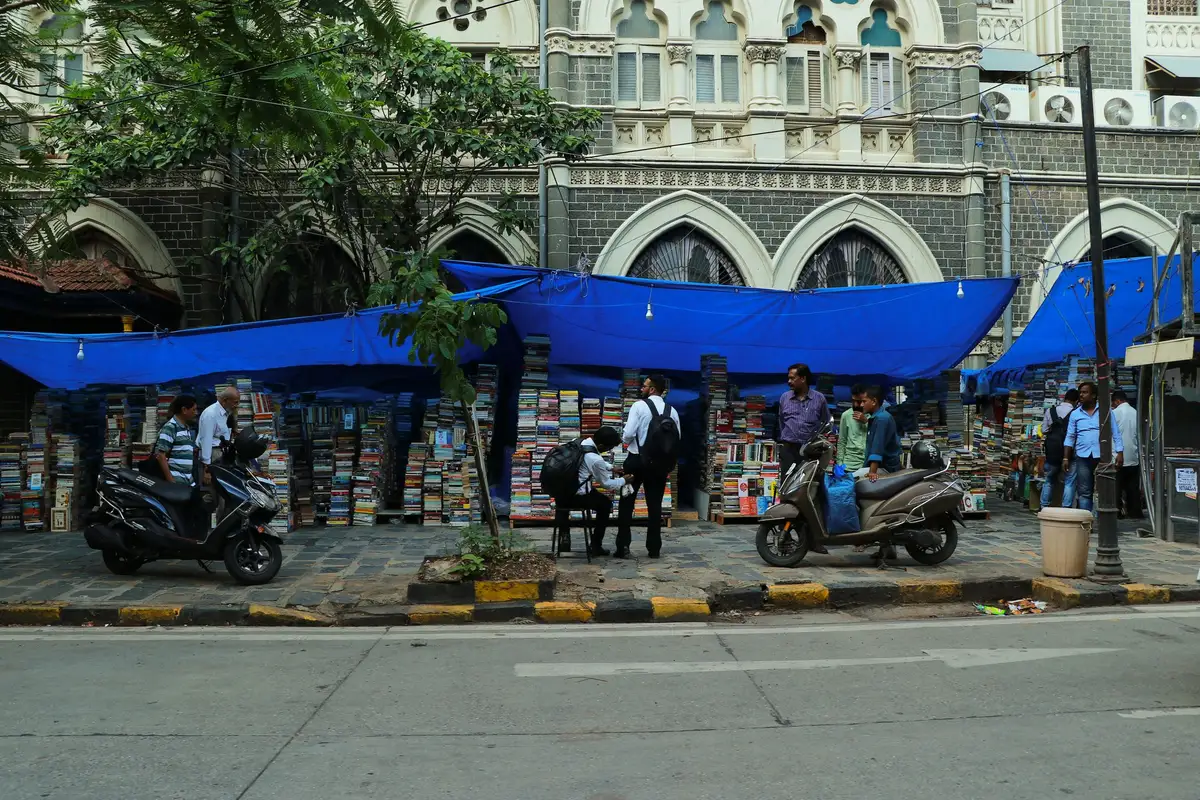
Where to go for jewellery, footwear, dupattas and tailoring trims within a short drive of Kala Ghoda.
Bridal appointments for the winter season are open · Fittings at our Kala Ghoda studio
3 Rampart Row, Kala Ghoda, Fort, Mumbai 400001
Tue–Sun · 11 am – 7.30 pm · by appointment
How a design travels from Farah’s drawing to a stretched frame and a karigar’s needle.
Every piece of embroidery we make starts as a drawing on butter paper, called a khaka. Once your sketch is approved, our pattern master, Salim, redraws the embroidery full size, panel by panel, so the skirt of a bridal lehenga can need nine or ten sheets laid end to end on the long table.
Salim then pricks the outline of the design with a fine needle, a hole every two or three millimetres. The paper is laid on the cut fabric and rubbed with a cloth pad dipped in a paste of chalk and kerosene. When the paper lifts away, the design is left on the silk as a line of pale blue dots. It washes out completely once the work is done.
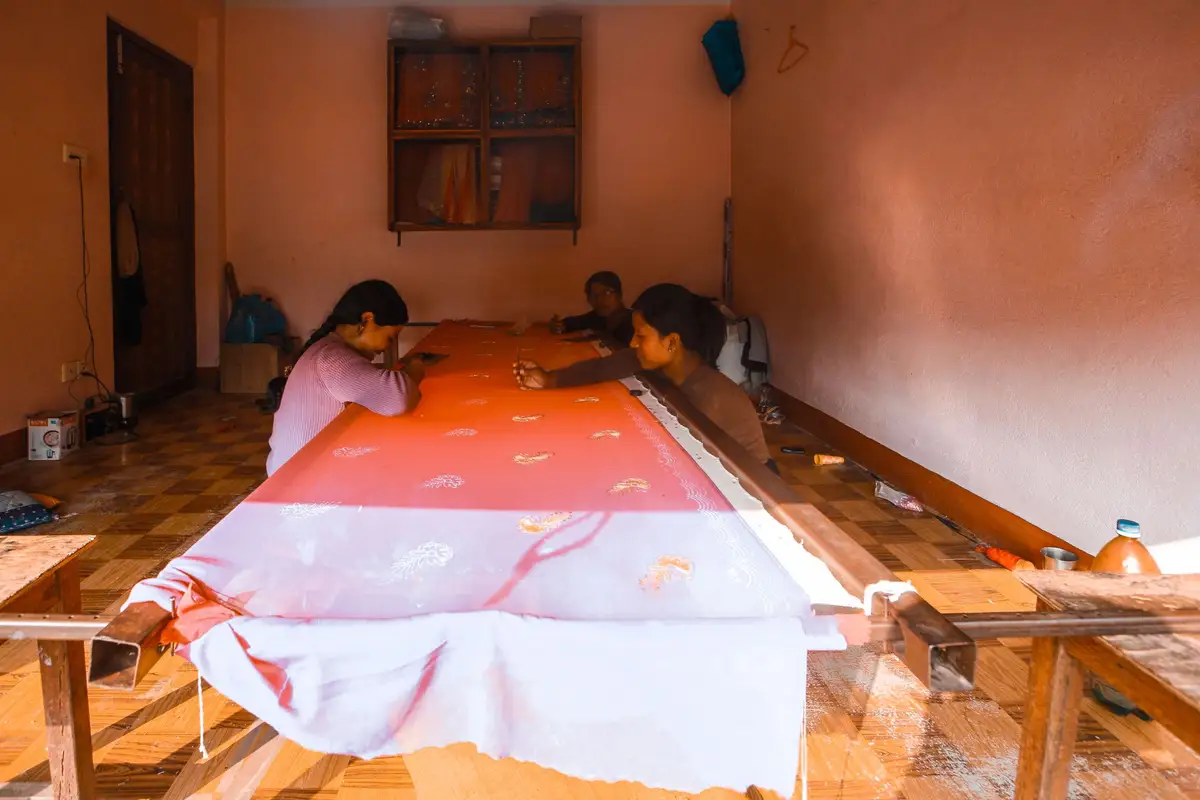
The marked panel is stitched into the adda, a low wooden frame about two metres long, and pulled taut with cotton tape. Four or five karigars sit along each side on floor cushions and work towards the centre. Each one has a specialty: Irfan does the heavy coiled zardozi, Rafiq the fine sequin fills, and Nasreen the bead edges. They work in good daylight from the north windows and stop by six, because colour matching under tube lights leads to mistakes.
You are welcome to see your own panel on the frame at your second fitting. Most brides take a photo of it; very few have seen how many hands go into one border.
Keep reading
Where to go for jewellery, footwear, dupattas and tailoring trims within a short drive of Kala Ghoda.
Weight does not equal quality. Why we design for 4 to 7 kg and how a bride can move freely in it.
Velvet in December, organza in April: how season and venue change what we suggest.