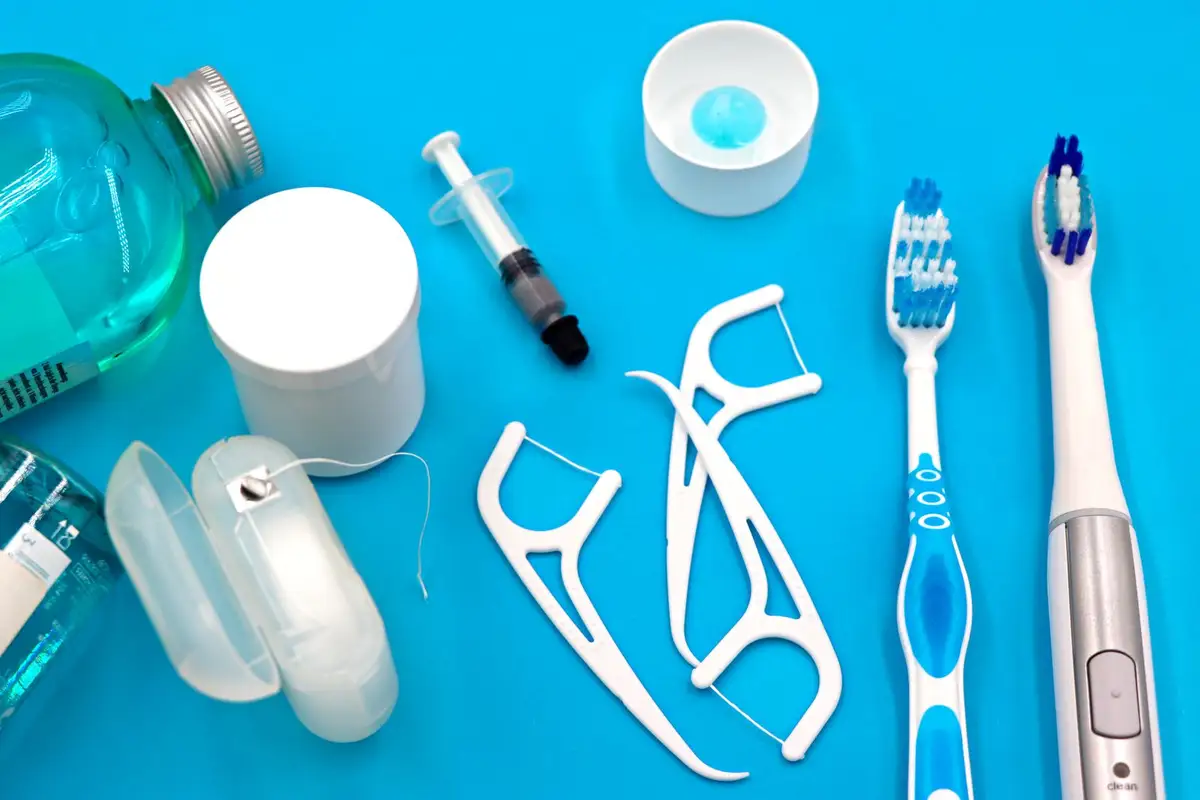
Choosing a toothbrush, toothpaste and floss
Soft or medium bristles, electric or manual, fluoride or herbal: what we tell patients who ask what to buy.
Evening appointments till 8.30 pm · Written estimate before any treatment
2nd floor, Sai Prasad Chambers, Karve Road, Kothrud, Pune 411038
Mon–Sat · 10 am – 1.30 pm, 4.30 – 8.30 pm
Washing, sealing, autoclaving and logging: what happens to every instrument between one patient and the next.
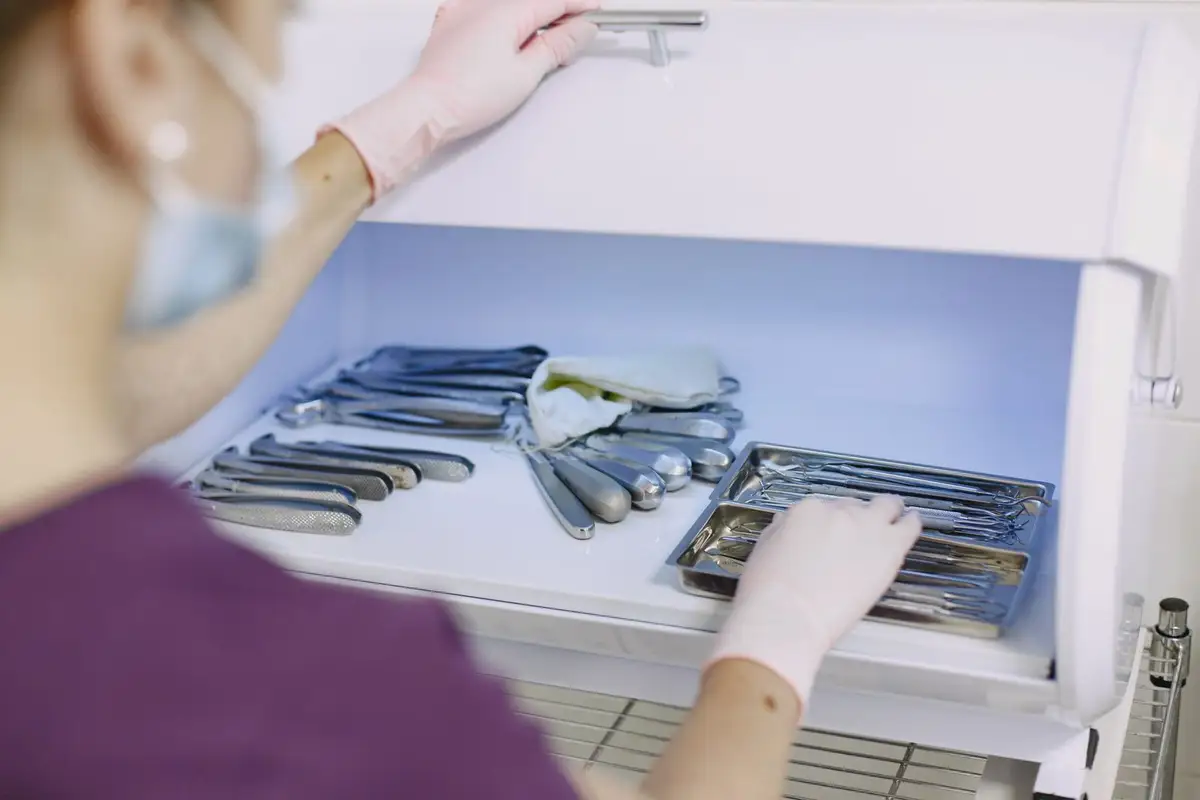
Our sterilisation room has a glass wall facing the waiting area, so anyone can watch the work. Here is what happens to an instrument after it leaves your mouth.
Used instruments go straight from the surgery in a closed tray. In the dirty side of the room, our assistant Pooja, wearing heavy gloves, apron and face shield, rinses off visible debris and places them in an ultrasonic cleaner, a tank of detergent that shakes away dirt from hinges and grooves for about ten minutes. They are rinsed, dried and checked under a magnifying lamp for any remaining residue.
Next, the instruments are packed in sealed paper-and-plastic pouches, each with a strip of indicator tape that changes colour when it has been sterilised. The pouches go into a Class B autoclave, which pulls air out of the chamber and fills it with steam at 134 °C under pressure. A full cycle takes about forty minutes including drying. Every cycle is printed and logged with the date, time and the person who ran it, and once a week we run a test cycle with a special pack to check the machine is working properly.
After the cycle, the pouches move to the clean side of the room and are stored by date. In the surgery, your dentist opens a fresh pouch in front of you. Single-use items, such as needles, suction tips, gloves and masks, are never reused. Handpieces, the drills, are cleaned, oiled and autoclaved between every patient.
Keep reading
Soft or medium bristles, electric or manual, fluoride or herbal: what we tell patients who ask what to buy.
Chakli, karanji, ladoo and shankarpali for two weeks: simple habits to protect teeth through the festive season.
Thirty minutes, an X-ray if needed, and a plan you can take home.