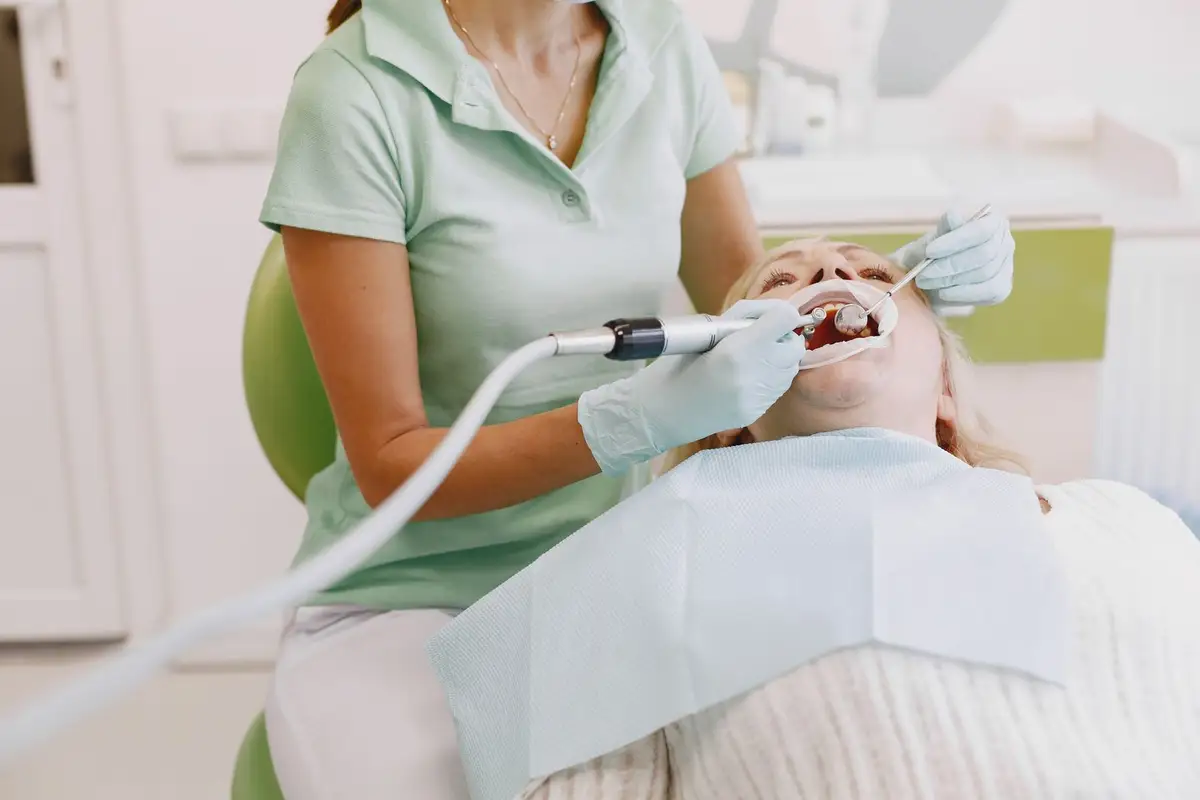
Your child’s first visit to the dentist
When to bring them, what Dr Meera does in the first fifteen minutes and how to talk about it at home.
Evening appointments till 8.30 pm · Written estimate before any treatment
2nd floor, Sai Prasad Chambers, Karve Road, Kothrud, Pune 411038
Mon–Sat · 10 am – 1.30 pm, 4.30 – 8.30 pm
Pink in the sink is common and easy to ignore. What usually causes it, what to try at home and when to see us.
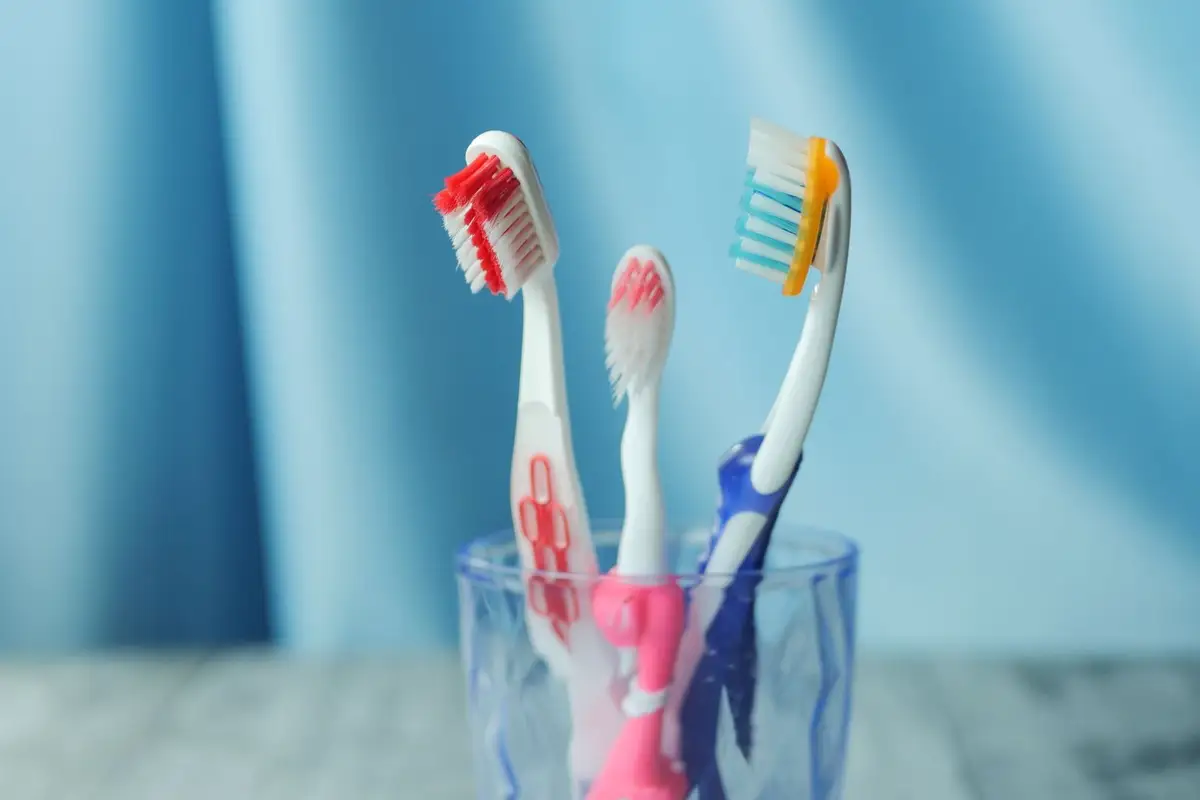
Many patients mention, almost in passing, that their gums bleed a little when they brush. It is one of the most common things we see, and one of the most ignored, because it rarely hurts.
The usual cause is plaque, the soft, sticky film of bacteria that builds up along the gum line. If it is not cleaned away well each day, the gums next to it become red, puffy and bleed easily. This early stage is called gingivitis. Over months, plaque hardens into tartar, which a toothbrush cannot remove, and the gums can start to pull away from the teeth, forming pockets. Other things can play a part too, including hormonal changes in pregnancy, some medicines, diabetes and smoking, which can hide bleeding while the gums are still affected.
A common reaction is to brush more gently or avoid the area. It is better to keep brushing, slowly and carefully, with a soft brush angled towards the gum line, and to clean between the teeth with floss or small interdental brushes once a day. If the bleeding is from plaque, it often lessens over a week or two of careful cleaning.
If it continues beyond two weeks, if your gums are swollen or receding, if teeth feel loose, or if you notice a bad taste that does not go away, book a check-up. We measure the gum pockets, take X-rays if needed, and usually start with scaling and polishing, ₹1,200, followed by a recheck.
Keep reading
When to bring them, what Dr Meera does in the first fifteen minutes and how to talk about it at home.
Loose teeth, gaps and sensitivity after a cleaning: what is really happening, and why scaling does not wear away enamel.
Root canal, crown, X-rays and follow-ups: how a typical estimate at Smitrekha is built up, item by item.