A day on line 7
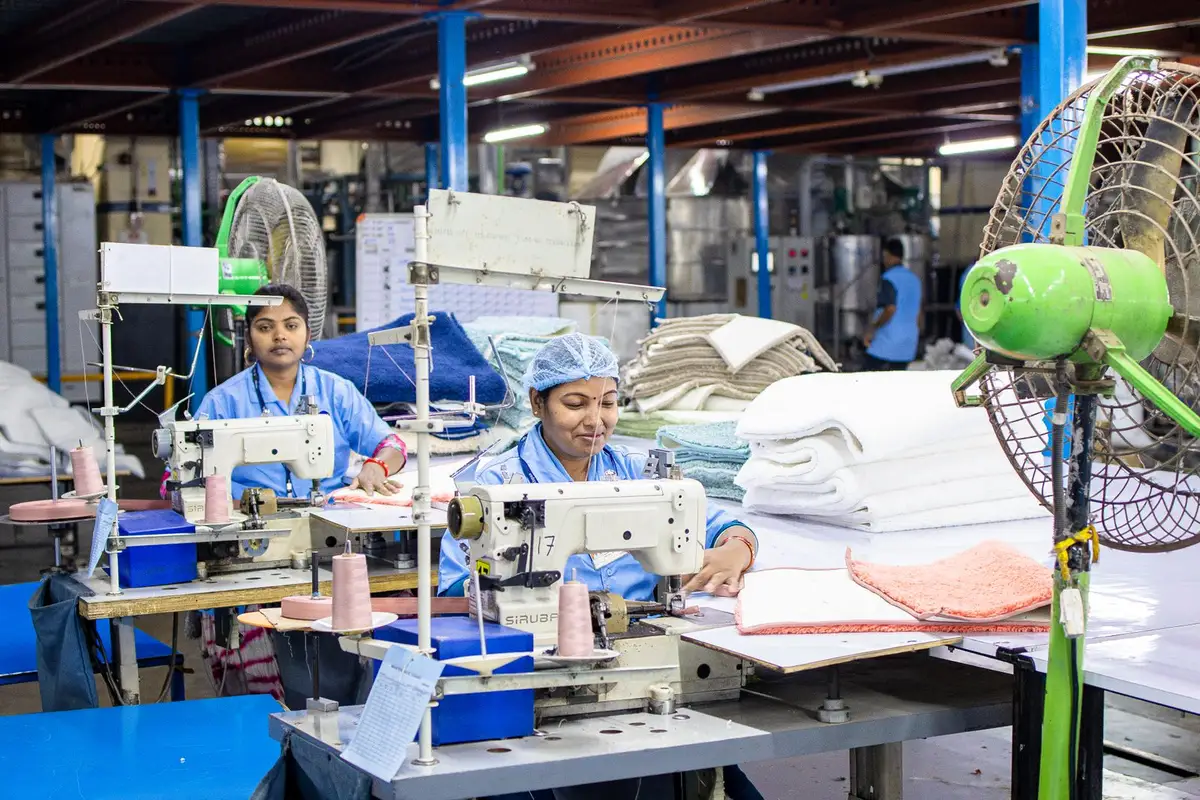
From the cutting table to the carton: how 1,200 polos are made in a shift.
Booking production for Spring–Summer 2027 · Sampling slots open from 3 November
Plot 41, 3rd Phase, Peenya Industrial Area, Bengaluru 560058
Mon–Sat · 9 am – 6 pm · visits by appointment
Shrinkage is decided in the knitting and the finishing, long before sewing.
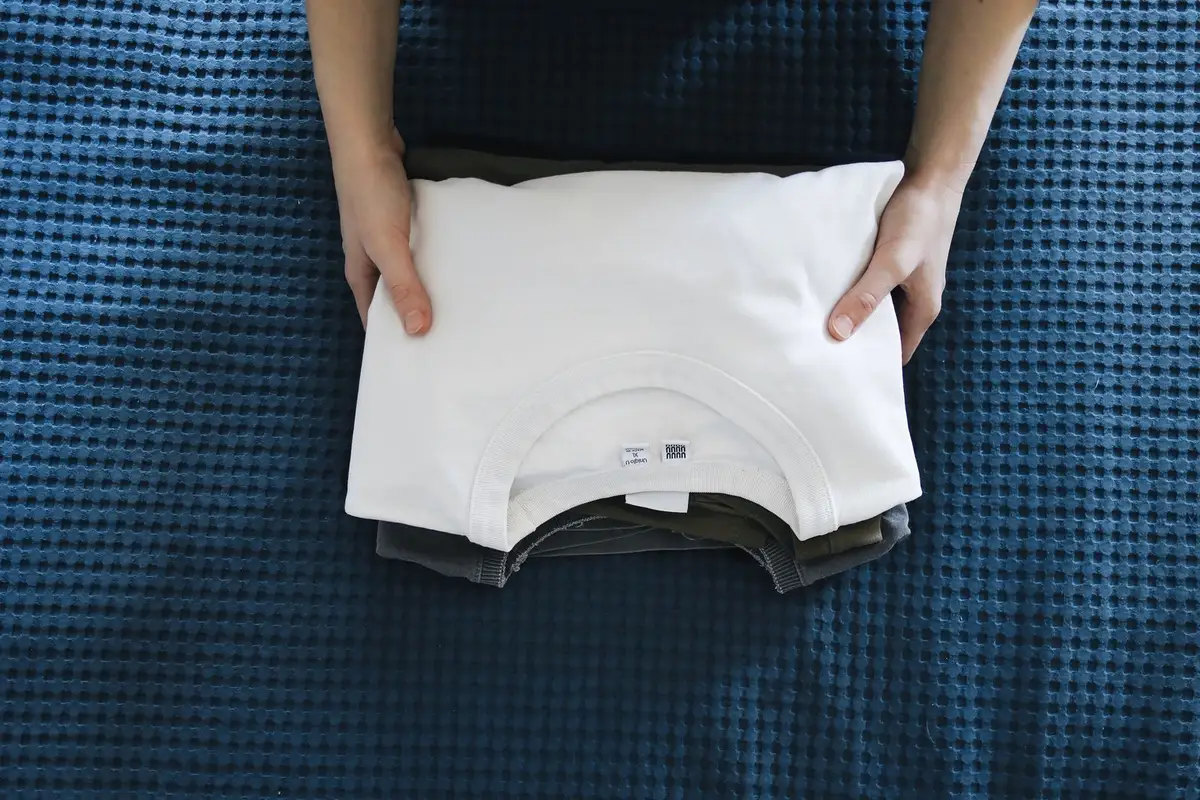
Most complaints about T-shirts are about shrinkage. A shirt that loses 8% in length after the first wash will be returned, however good the print.
Knitted cotton shrinks because the loops are stretched during knitting and dyeing, and relax when washed. The fix starts with the fabric. We knit to a tighter stitch length for the GSM, and run the fabric through a compactor after dyeing, which pre-relaxes it. That brings shrinkage down to 4–5%.
We then test every lot. A swatch is washed and tumble-dried three times, and length and width are measured against marks. If a lot shrinks more than 5%, we hold it and re-finish it before cutting. Patterns are cut with an allowance for the measured shrinkage, so the finished garment hits the size chart after washing.
If your brand sells garment-dyed or enzyme-washed T-shirts, the wash itself does some of this work. Tell us your wash at the start, and we will cut the pattern bigger by the right amount.
Keep reading
From the cutting table to the carton: how 1,200 polos are made in a shift.
Fabric, trims, cut-make-trim, washing, overheads and freight. A worked costing for 1,000 piqué polos, so you can see what moves the price.
Three cotton knits make most T-shirts and polos. How they differ in feel, weight, shrinkage and print, and which suits which garment.