How an FOB price for a polo is built, line by line
Fabric, trims, cut-make-trim, washing, overheads and freight. A worked costing for 1,000 piqué polos, so you can see what moves the price.
Booking production for Spring–Summer 2027 · Sampling slots open from 3 November
Plot 41, 3rd Phase, Peenya Industrial Area, Bengaluru 560058
Mon–Sat · 9 am – 6 pm · visits by appointment
From the cutting table to the carton: how 1,200 polos are made in a shift.
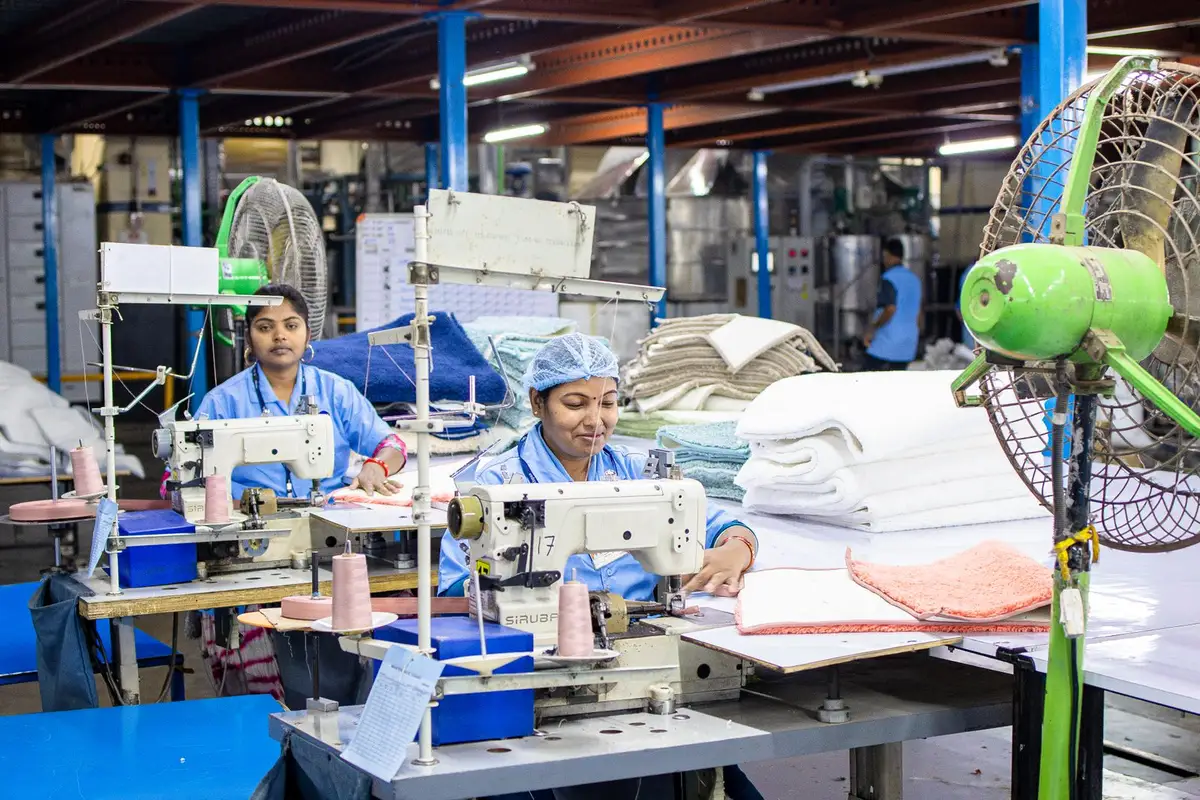
Line 7 makes polo shirts. At 8.30 am, cut bundles arrive from the cutting room, each tagged with size, colour and a bundle number so that every panel in a garment comes from the same part of the fabric roll.
The line has 34 operators and 38 machines. Shoulders are joined first, then the collar is attached, the placket is set, sleeves go in and side seams close with vents. Each operator does one or two operations, and bundles move along the line on a table rather than a conveyor, which keeps the pace steady.
At three points along the line, a quality checker pulls garments at random and checks measurements and stitches. If a fault appears, it goes back to the operator who made it within minutes, not days. At the end, every polo is checked, trimmed, pressed and folded.
By 5.30 pm, line 7 has made about 1,200 polos. Before the cartons are sealed, our own auditor opens a sample of them, just as your buyer’s inspector will.
Keep reading
Fabric, trims, cut-make-trim, washing, overheads and freight. A worked costing for 1,000 piqué polos, so you can see what moves the price.
Three cotton knits make most T-shirts and polos. How they differ in feel, weight, shrinkage and print, and which suits which garment.
Ugadi, Ramzan, Dasara and Diwali all change the pace of a Bengaluru factory. A calendar for buyers placing orders with Indian makers.