What a motor rewind costs, and why
Copper, labour, bearings and testing: how we price a rewind, with typical figures for common ratings.
IE3 motors from stock in 0.37–30 kW · Rewinding with a 6-month warranty
J-214, MIDC Bhosari, Pune 411026
Mon–Sat · 8.30 am – 7 pm · breakdown desk 24 hours
How to pick the right helical geared motor for a conveyor, mixer or hoist without oversizing or overloading it.
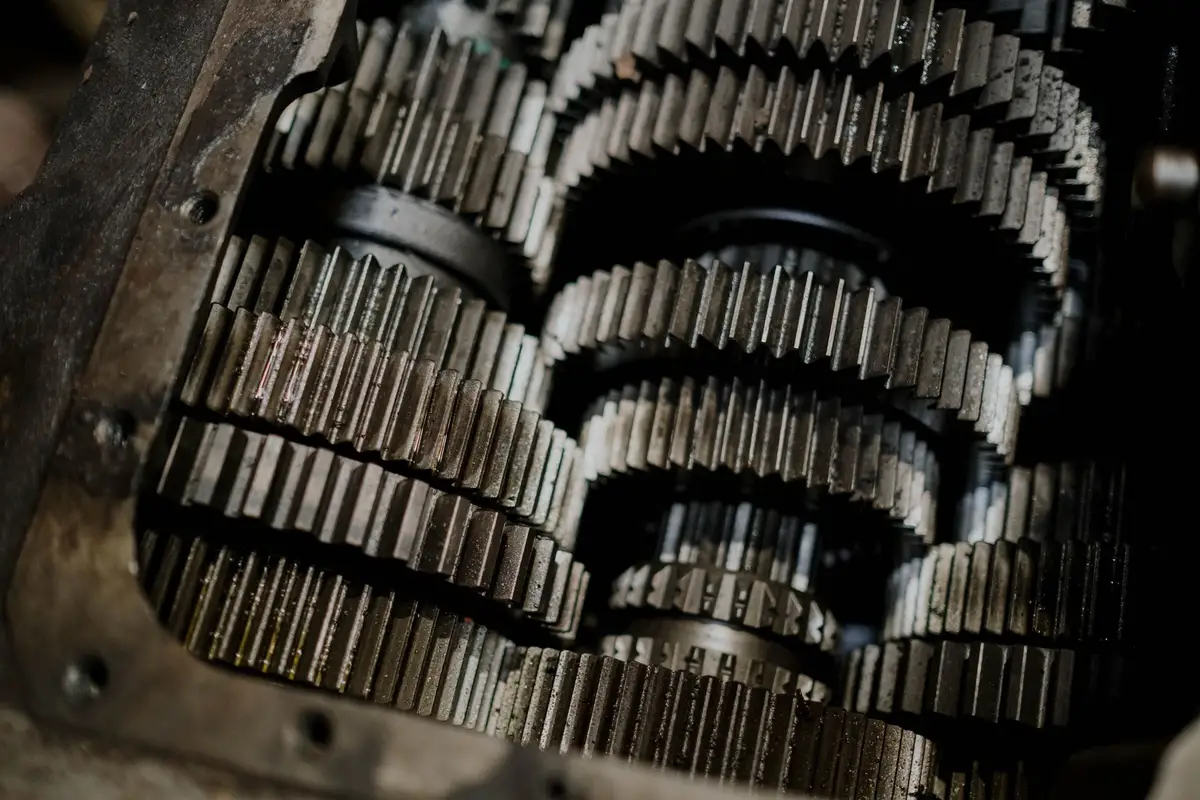
A geared motor combines a motor and a gearbox in one unit, and the choice comes down to three numbers: output speed, output torque and service factor. Customers who start from the motor kW alone often end up with the wrong unit.
Start with the output speed. A 4-pole motor runs at about 1,440 rpm. If your conveyor drum needs 48 rpm, you need a ratio of about 30:1. Our helical geared motors come in ratios from 5:1 to 120:1, so most speeds are covered. If speed must vary, add a drive and size the ratio for the middle of the range.
Next, torque. Torque at the output shaft rises roughly in proportion to the ratio, less gear losses. A 1.5 kW motor at 30:1 gives about 280 Nm at 48 rpm. Work out the torque your machine needs, including starting under load, which for a loaded conveyor or a mixer full of material can be much higher than running torque. Then apply a service factor for the duty. A smooth conveyor running eight hours a day might need a factor of 1.0 to 1.25. A mixer with shock loads, running round the clock with frequent starts, may need 1.5 or more. The gearbox’s rated torque should be at least the required torque multiplied by this factor.
Finally, check the mounting, shaft and position: foot or flange, solid or hollow shaft, and whether the gearbox will sit horizontal or vertical, which affects the oil level. Send us the drawing and our engineers will size it within a day.
Keep reading
Copper, labour, bearings and testing: how we price a rewind, with typical figures for common ratings.
What customers see on a plant visit, from stamping to the test bench, and how to arrange one.
Oversized motors waste power, run at poor power factor and can hide real problems. How to size correctly.