Hatha or vinyasa: which class to book first
Both use the same postures. The pace, the breath and the room feel very different. How to choose.
First class free · Morning batches from 6 am
12 Sathy Road, Saravanampatti, Coimbatore 641035
Mon–Sat · 6 am – 8.30 pm · Sun 7 – 10 am
A smaller room changes how teachers teach and how students learn.
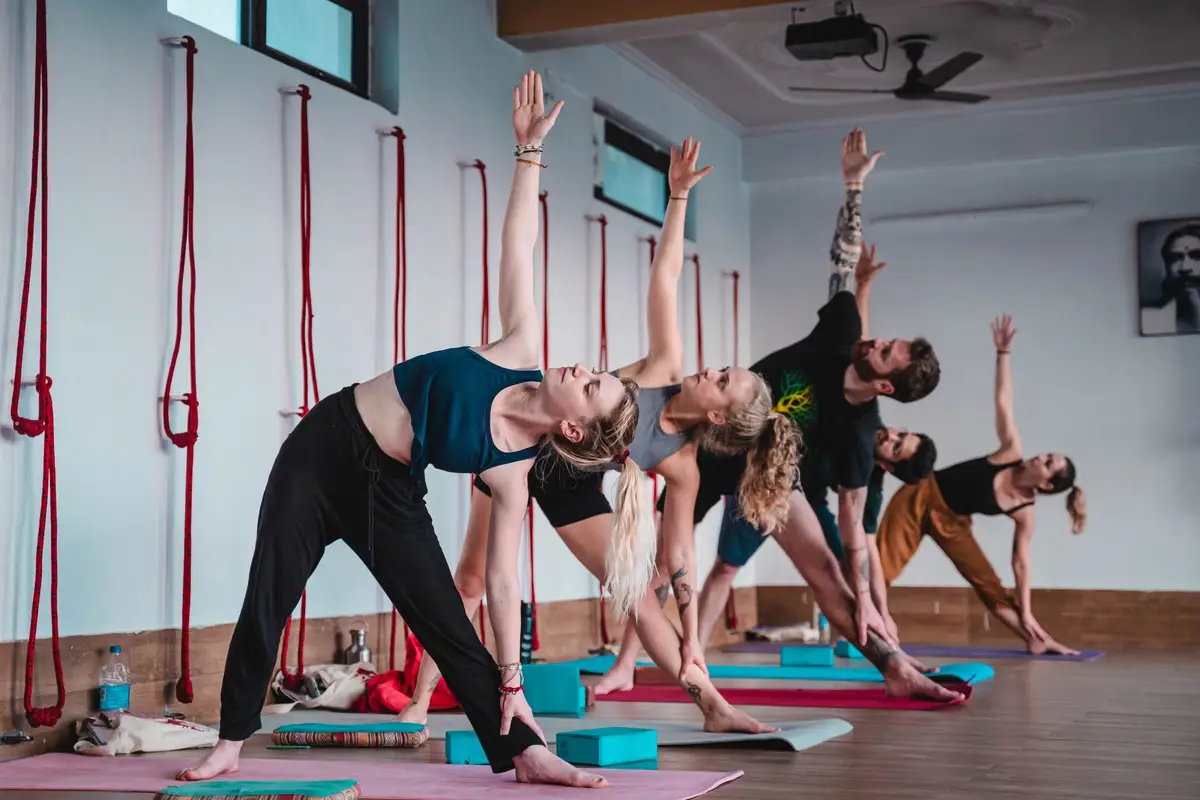
When we opened the studio in Saravanampatti, we were advised to fit thirty mats in the room. We chose twelve. People sometimes ask why, so here is our reasoning.
In a class of twelve, a teacher can see everyone at once. They notice the student whose knee drifts inward in a lunge, or whose shoulders creep up in a downward dog, and they can offer a small adjustment or a different option. In a room of thirty, the teacher mostly demonstrates from the front.
Small classes also mean teachers learn names, injuries and habits. They remember that you are recovering from a sprained ankle, or that you prefer not to be touched during adjustments. Over a few months, that knowledge lets them suggest the next step in your practice.
There is a quieter benefit too. Twelve people in a room of this size have space to move without bumping into each other, and the room stays calm. Beginners feel less watched; regular students feel less crowded. It does mean popular batches fill up, especially at 6 am. If a class is full, join the waitlist. Cancellations are common, and you will be notified as soon as a mat becomes free.
Keep reading
Both use the same postures. The pace, the breath and the room feel very different. How to choose.
A short sequence you can do in office clothes, in a chair or standing, from our stretch and mobility class.
From Navaratri to Pongal, routines slip. How to pause, scale down and come back to class without starting over.