Inside a Saturday nattuvangam class
Live cymbals, a singer and a mridangam: why our Saturday batches dance to live music and what students learn from it.
New term begins 5 January · Free trial class for every new student
27, 11th Main Road, 4th Block, Jayanagar, Bengaluru 560011
Mon–Fri · 4 pm – 9 pm · Sat–Sun · 7 am – 1 pm
Discipline and vocabulary, or freedom and floor work: how the two forms differ, and why many adults try both.
Adults who come to our studio in Jayanagar for a trial often cannot decide between our Bharatanatyam and contemporary classes. Both are dance, both are demanding and both are taught in the same teak-floored room. But they ask different things of you.
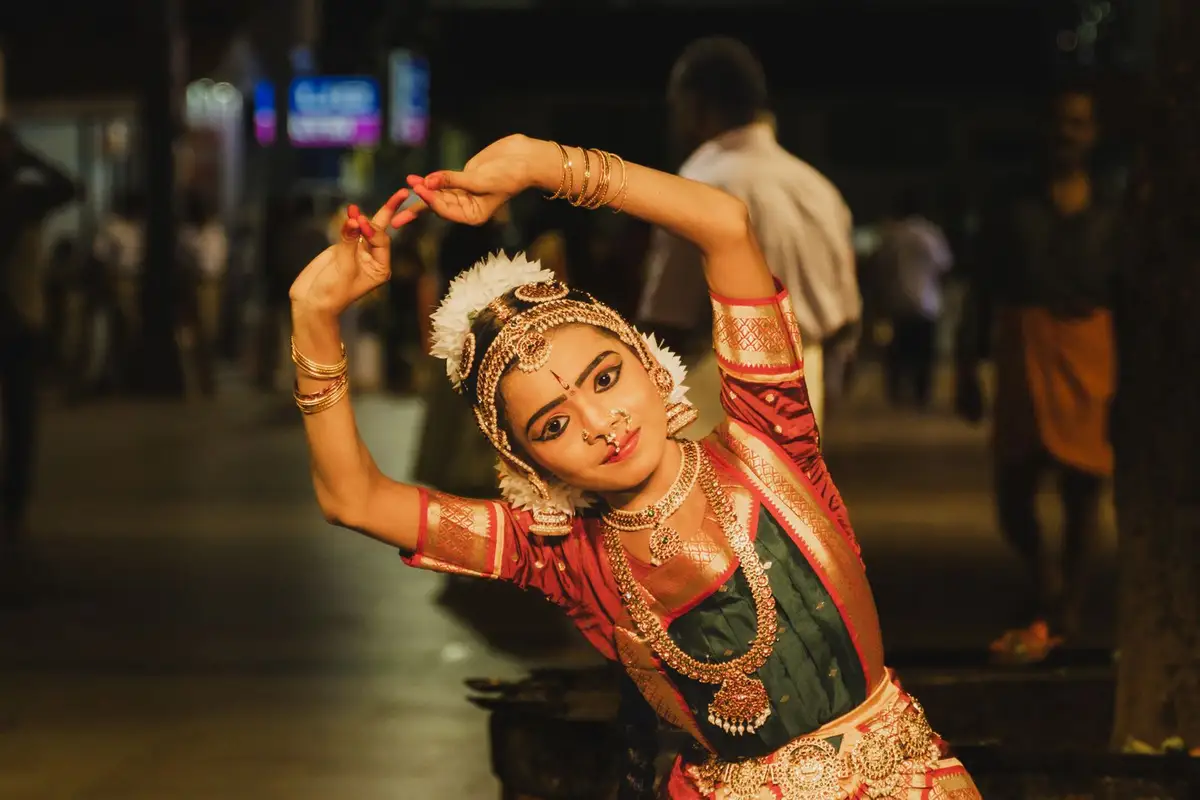
Bharatanatyam is a classical form with a fixed vocabulary. You begin with adavus, the basic units of footwork and movement, practised in aramandi, the half-seated position with knees turned out. Each adavu has a name, a count and a correct shape, and progress is measured by how cleanly you can perform them at increasing speeds. Later come hand gestures, expressions and full compositions to Carnatic music. It suits people who enjoy structure, repetition and a long tradition, and who like seeing steady, measurable improvement.
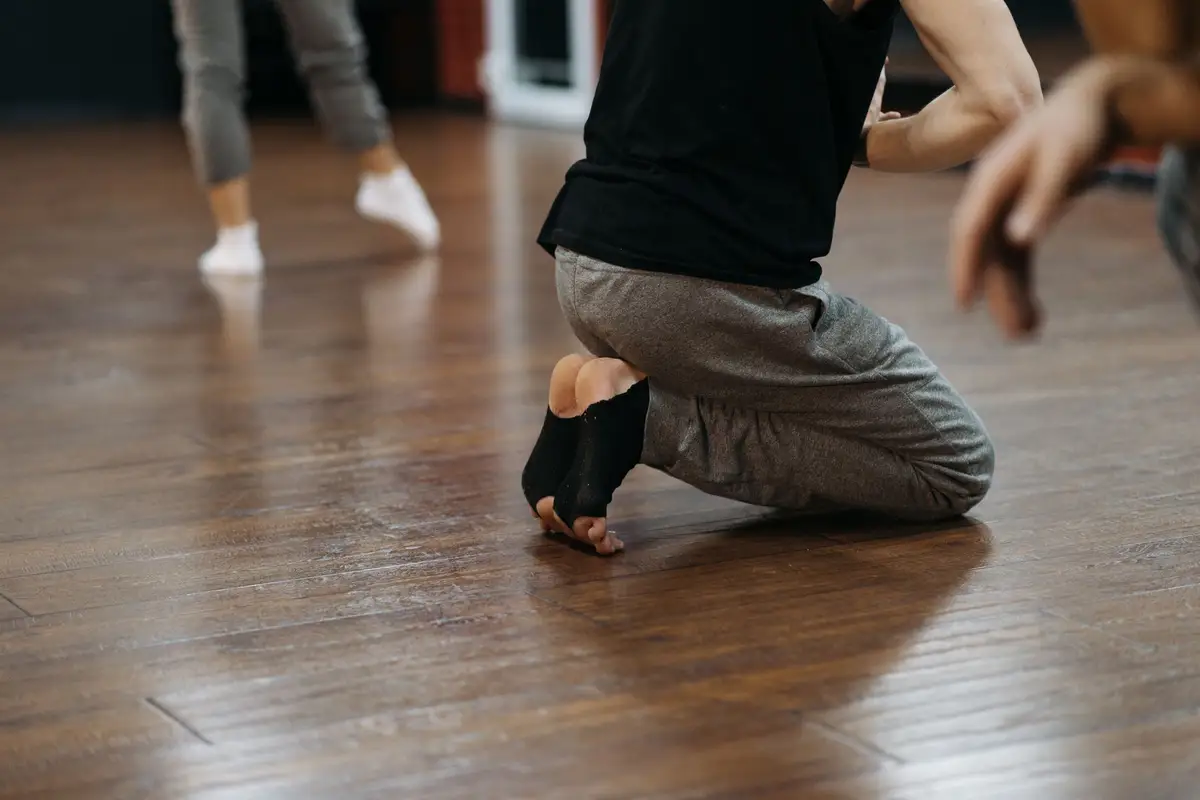
Contemporary dance has no single vocabulary. Classes begin with a warm-up and floor work, then move into exercises on weight, breath, falling and recovering, and finally a short phrase of choreography to recorded music. It asks you to listen to your own body and to improvise. It suits people who want to move freely, to explore and to sweat without worrying about exact shapes.
If you cannot decide, try a free trial class of each in the same week. Many of our adult students take Bharatanatyam on Tuesdays and Thursdays and contemporary on Mondays and Wednesdays, and say each makes them better at the other. If your knees are a concern, mention it to the teacher before the trial; aramandi can be built up gradually.
Keep reading
Live cymbals, a singer and a mridangam: why our Saturday batches dance to live music and what students learn from it.
Where to watch dance during the two busiest months of the year, and how our students take part.
The half-seated position is the heart of Bharatanatyam. How to build it safely, and when to tell the teacher about pain.