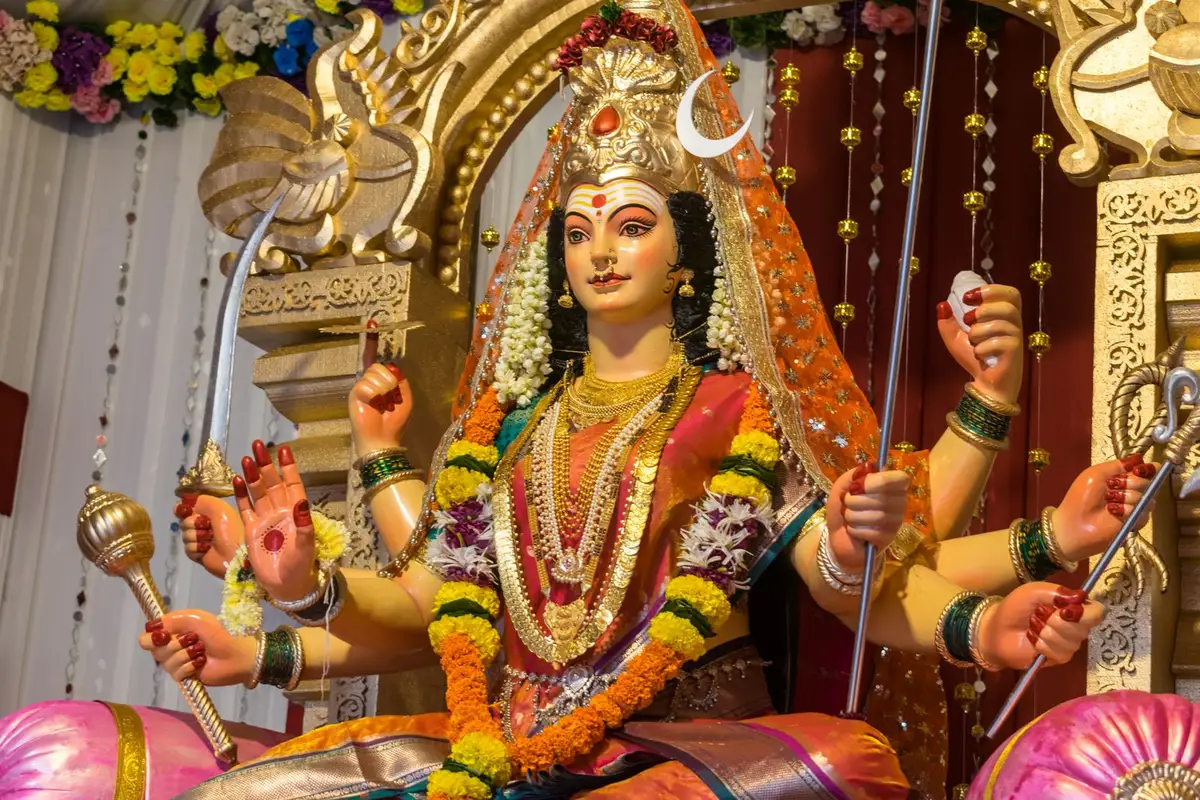
Navaratri and the December season in Bengaluru
Where to watch dance during the two busiest months of the year, and how our students take part.
New term begins 5 January · Free trial class for every new student
27, 11th Main Road, 4th Block, Jayanagar, Bengaluru 560011
Mon–Fri · 4 pm – 9 pm · Sat–Sun · 7 am – 1 pm
Live cymbals, a singer and a mridangam: why our Saturday batches dance to live music and what students learn from it.
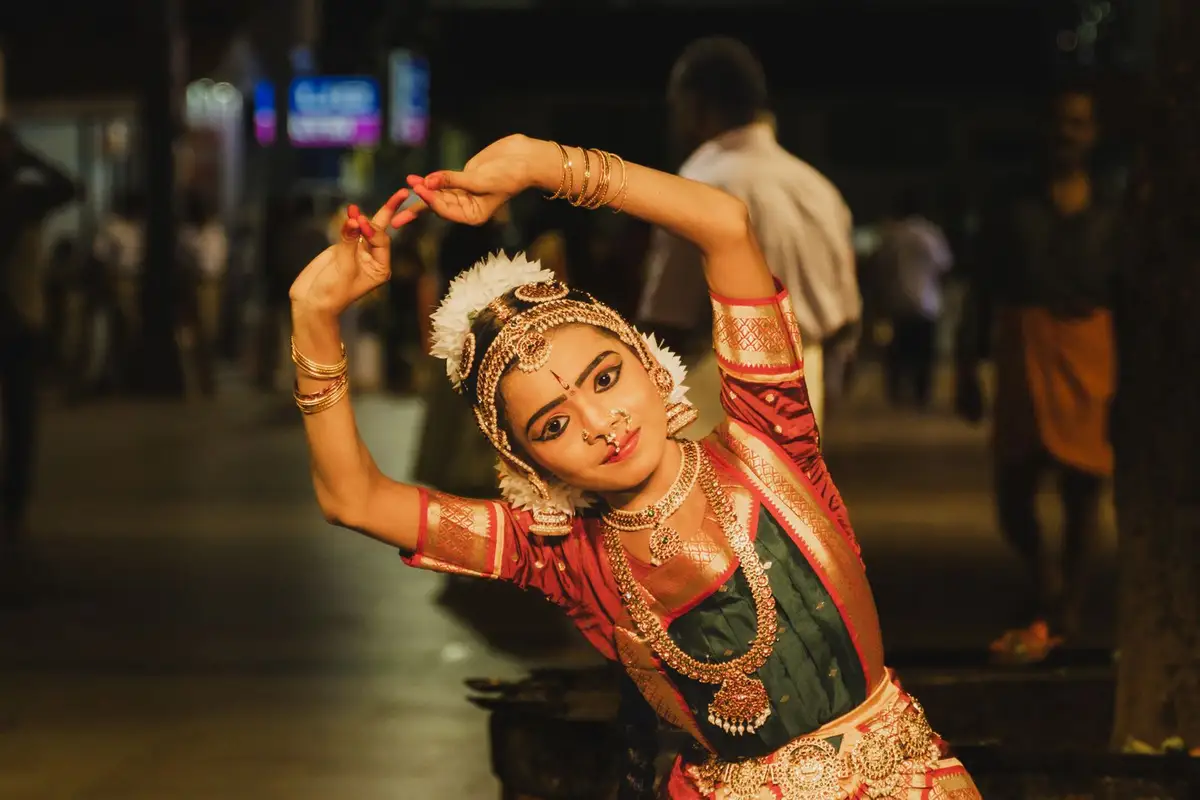
On weekdays our students practise to recorded music or to the teacher’s voice and a wooden stick on a block. On Saturday mornings, the studio changes. Revathi sits at the front with the nattuvangam cymbals, and a singer and a mridangam player join for two hours. For many students, it is the best part of the week.
Nattuvangam is the art of conducting a Bharatanatyam performance. The nattuvanar plays a small pair of brass cymbals and recites the rhythmic syllables, called sollukattu, that the dancer’s feet follow. On stage, this person keeps the dancer, singer and drummer together. In class, Revathi uses it to sharpen timing, because live cymbals are less forgiving than a recording.
A Saturday session begins with adavus at three speeds, with the mridangam marking each beat. Then each batch works on its current composition. Juniors may be learning an alarippu or a jathiswaram; seniors a varnam or a padam. The singer sings the line, the dancer performs it, and Revathi stops whenever feet and drum drift apart. Students also take turns trying the cymbals themselves, so they understand the count from the other side.
Working with live musicians teaches things a recording cannot. Tempos change slightly from week to week, and dancers learn to listen and adjust. Senior students preparing for an arangetram learn to work with the same musicians who will accompany them on stage. Parents are welcome to sit at the back for the last half hour.
Keep reading
Where to watch dance during the two busiest months of the year, and how our students take part.
The half-seated position is the heart of Bharatanatyam. How to build it safely, and when to tell the teacher about pain.
Monthly fees, practice sarees, salangai, exam fees and the annual day: a full year’s budget for a junior student.