What a year of Bharatanatyam classes costs
Monthly fees, practice sarees, salangai, exam fees and the annual day: a full year’s budget for a junior student.
New term begins 5 January · Free trial class for every new student
27, 11th Main Road, 4th Block, Jayanagar, Bengaluru 560011
Mon–Fri · 4 pm – 9 pm · Sat–Sun · 7 am – 1 pm
The half-seated position is the heart of Bharatanatyam. How to build it safely, and when to tell the teacher about pain.
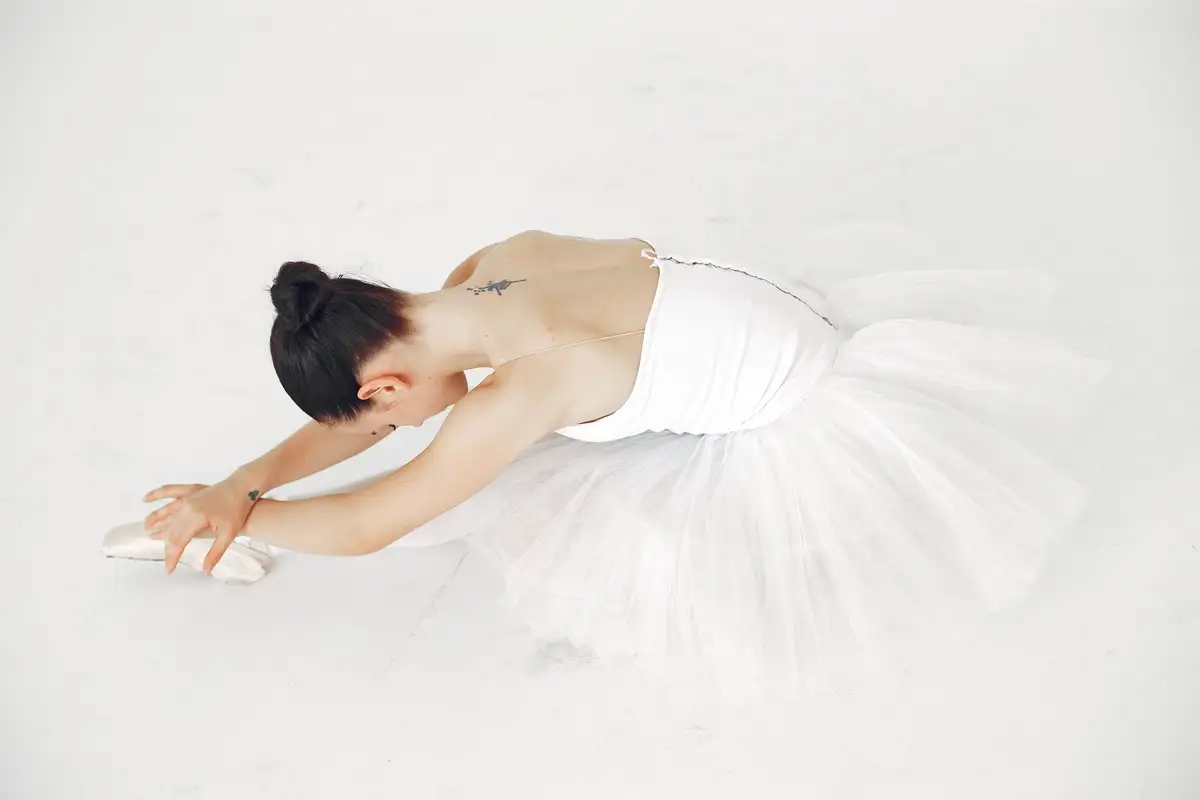
Aramandi, the half-seated position with knees bent and turned out over the toes, is the base of almost every movement in Bharatanatyam. It is also the reason people worry about their knees. Done well and built up gradually, it is part of a healthy practice. Done badly, it puts strain where it should not be. Here is what our teachers look for.
The turn-out should come from the hips, not the knees. Many beginners force their feet out wide and then bend, which twists the knee. We teach students to turn out only as far as their hips allow, then bend so that each knee points straight over the second toe. If the knees fall inwards, the turn-out is too wide.
Depth comes with time. A child of five or an adult beginner does not need to sit low in the first months. We start with a shallow aramandi held for short counts, and deepen it over a year as the thigh and hip muscles strengthen. Our sprung wooden floor absorbs some of the impact of footwork, which hard tiled or concrete floors do not.
Warm up before every class. Our classes start with ten minutes of joint rotations, stretches and slow adavus. At home, never practise footwork on stone or tiles at full force. Tell your teacher about any pain, especially sharp pain, swelling or clicking in the knee. We adjust the position or rest that student, and suggest seeing a doctor or physiotherapist if it continues. Dance should be tiring, but it should never hurt.
Keep reading
Monthly fees, practice sarees, salangai, exam fees and the annual day: a full year’s budget for a junior student.
Warm-up, three adavus and one line of an item: a short routine that helps students more than one long session a week.
Less costume, more posture: why the first twelve months look slow, and why that is the point.