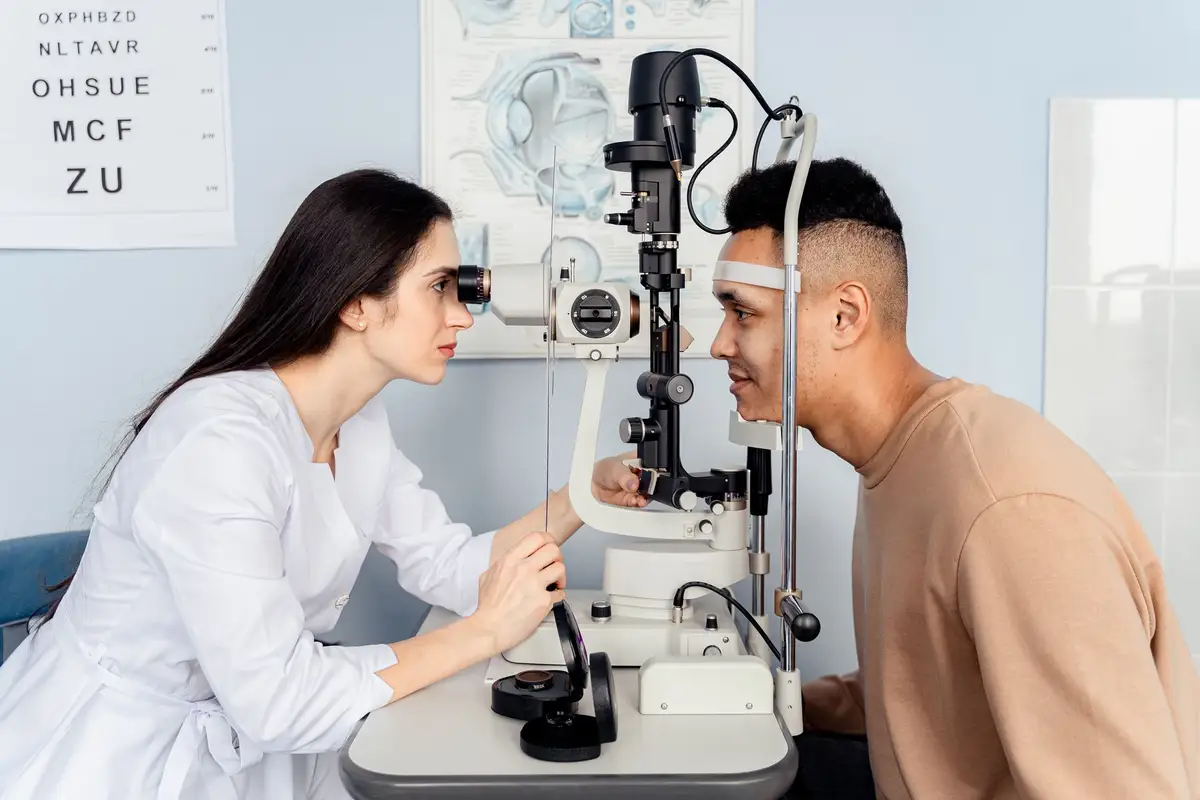
How often should you get your eyes tested?
Once a year for most adults and every child, and sooner if anything changes.
Eye test free with every pair of prescription glasses · Glasses ready in 2 days
8-2-293 Road No. 12, Banjara Hills, Hyderabad 500034
Mon–Sat · 10 am – 8.30 pm · Sun 10 am – 2 pm
Helmets, wind, dust and glare: what to look for in frames and lenses if you ride to work every day.
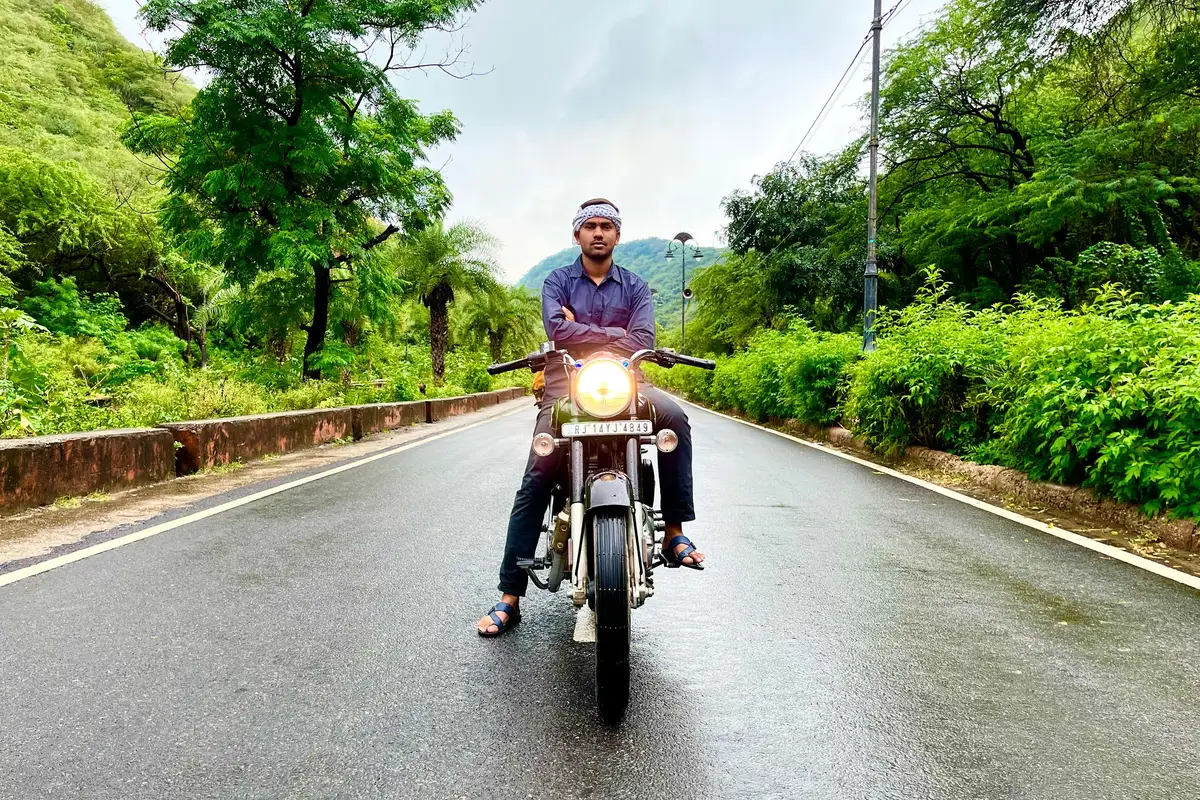
A large share of our patients ride to work, along routes like Road No. 12, the Jubilee Hills check post and the flyovers towards Hitec City. Riding with glasses brings its own problems, and a few choices help.
Frames first. Thin metal or titanium temples slide under a helmet’s padding more easily than thick acetate, which can press into the sides of the head. Our gold round titanium frame was chosen by many riders for this reason. Avoid very large frames that touch the helmet visor.
Lenses next. Polycarbonate or Trivex lenses are lighter and harder to shatter than standard plastic, which matters if something flies up from the road. Anti-reflective coating cuts the starburst from oncoming headlights at night. For daytime riding, prescription sunglasses or photochromic lenses reduce glare; remember that photochromics stay slightly tinted for a minute or two when you move indoors. Dust and wind dry the eyes and make them water, so a helmet with a clear visor, kept down, is the best protection. Wraparound sports frames can be made with your prescription if you ride long distances.
If you notice more trouble at night than in the day, such as halos around lights or difficulty reading signboards, mention it at your test. It is often a small change in prescription and worth checking before the darker evenings of the monsoon.
Keep reading
Once a year for most adults and every child, and sooner if anything changes.
Frame width matters more than face shape. Start there, then choose a style.
Bendable frames, safe lenses and a good fit behind the ears matter more than colour.