How a bridal set is made in our karkhana
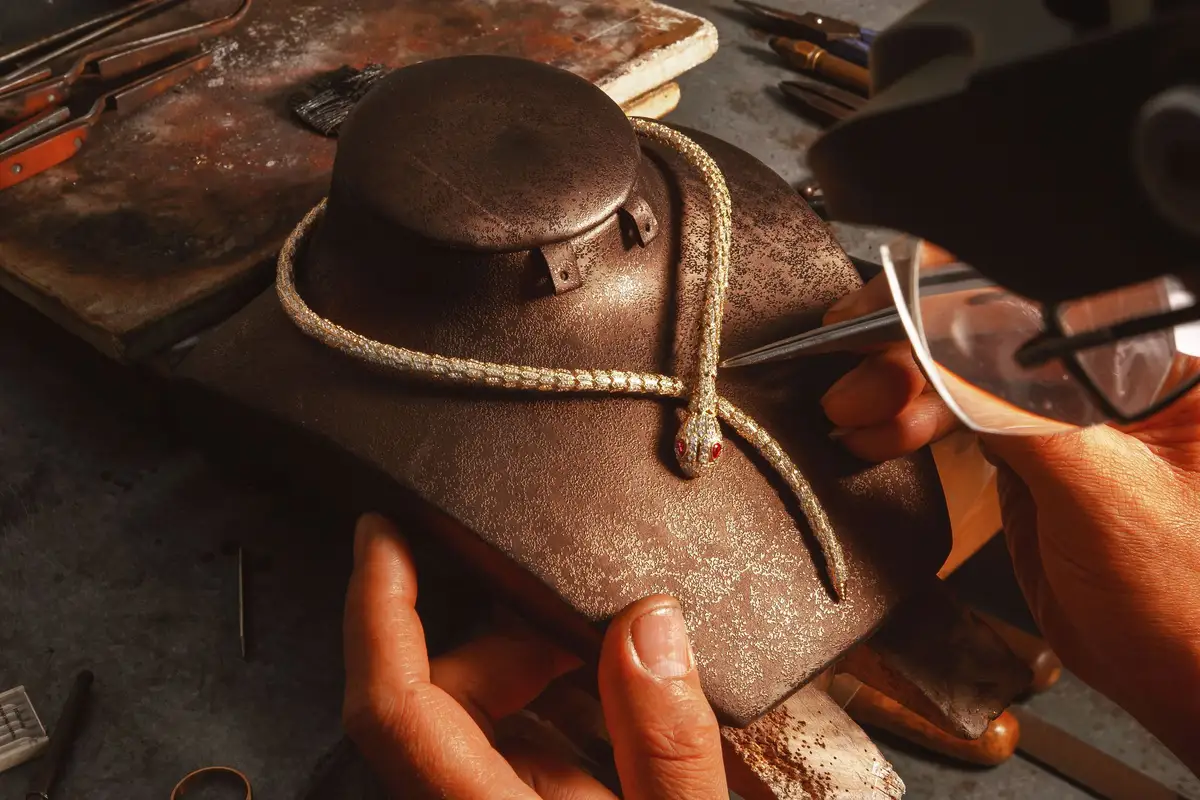
Six people, twelve weeks and one piece of gold: the making of a rani haar.
Weighed gold · Insured delivery across India · Video viewing on request
118 Johari Bazaar, near Haldiyon ka Rasta, Jaipur 302003
Mon–Sat · 11 am – 8 pm · Sun by appointment
Two words often used together, and what they really mean on your bill.
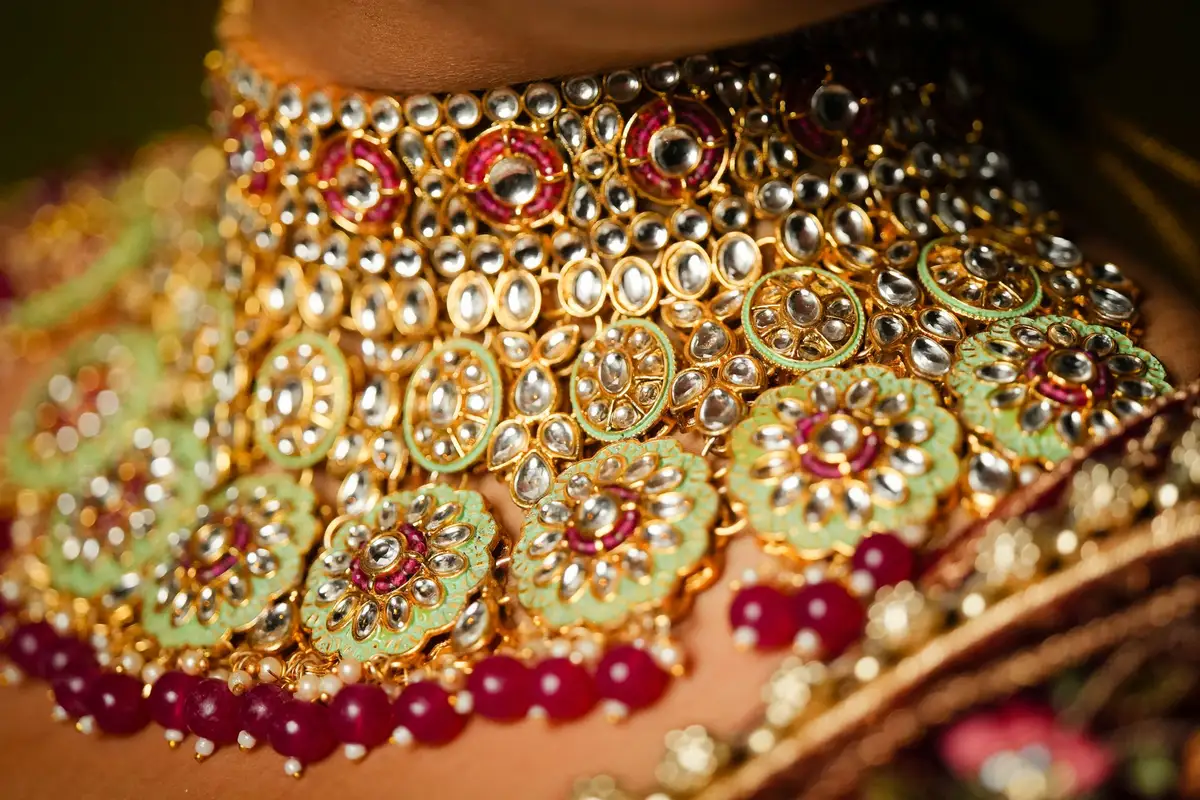
People often ask for “kundan polki” as if it were one thing. It is two. Polki is the stone: a natural diamond that has not been faceted, only cut flat on top and bottom so it can be set. It looks soft and glassy rather than sparkling, and each one is a slightly different shape.
Kundan is the method. The setter, or kundansaz, presses thin strips of highly refined gold foil around each stone, building a wall that holds it in place without claws. The same method can hold polki, coloured gemstones or glass.
So a “kundan necklace” may have glass stones and cost a fraction of a “polki necklace” set in exactly the same way. Both are honest pieces; the price should simply reflect what is inside.
On our bills you will see each stone type with its weight in carats, the gold weight in grams and the making charge as a separate line. If you are comparing pieces between shops, ask for those three numbers. They tell you more than the photograph does.
Keep reading
Six people, twelve weeks and one piece of gold: the making of a rani haar.
Keep it dry, keep it separate and never soak it.
Gold weight, polki carats, beads, making charge and GST, line by line on a real-sized bill.