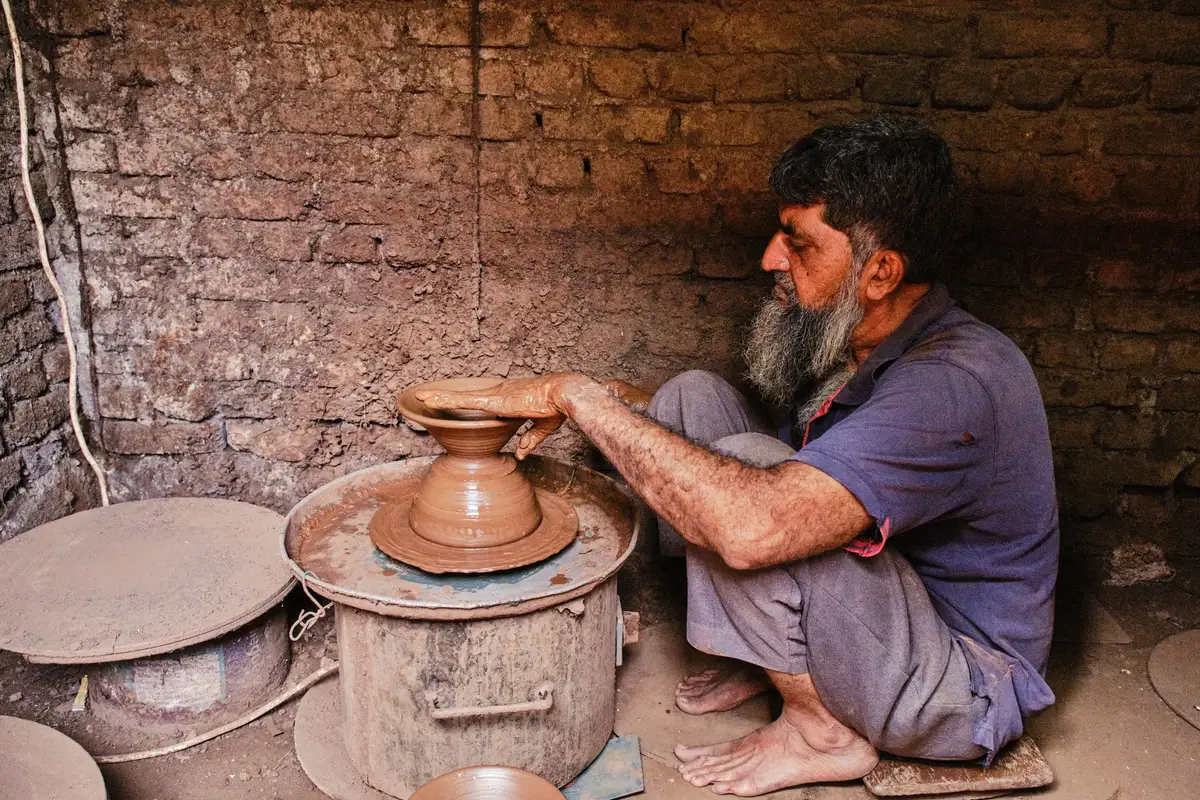
A potter’s day out from White Town to Villianur
Terracotta workshops, a temple chariot and a quiet lake: a half-day route around Puducherry for anyone who loves clay.
New firing every second Friday · Every piece packed by hand and insured in transit
27 Rue Romain Rolland, White Town, Puducherry 605001
Tue–Sun · 10 am – 6 pm · closed Mondays
Forty test tiles, three months and a lot of disappointment: how a new glaze goes from notebook to kiln.
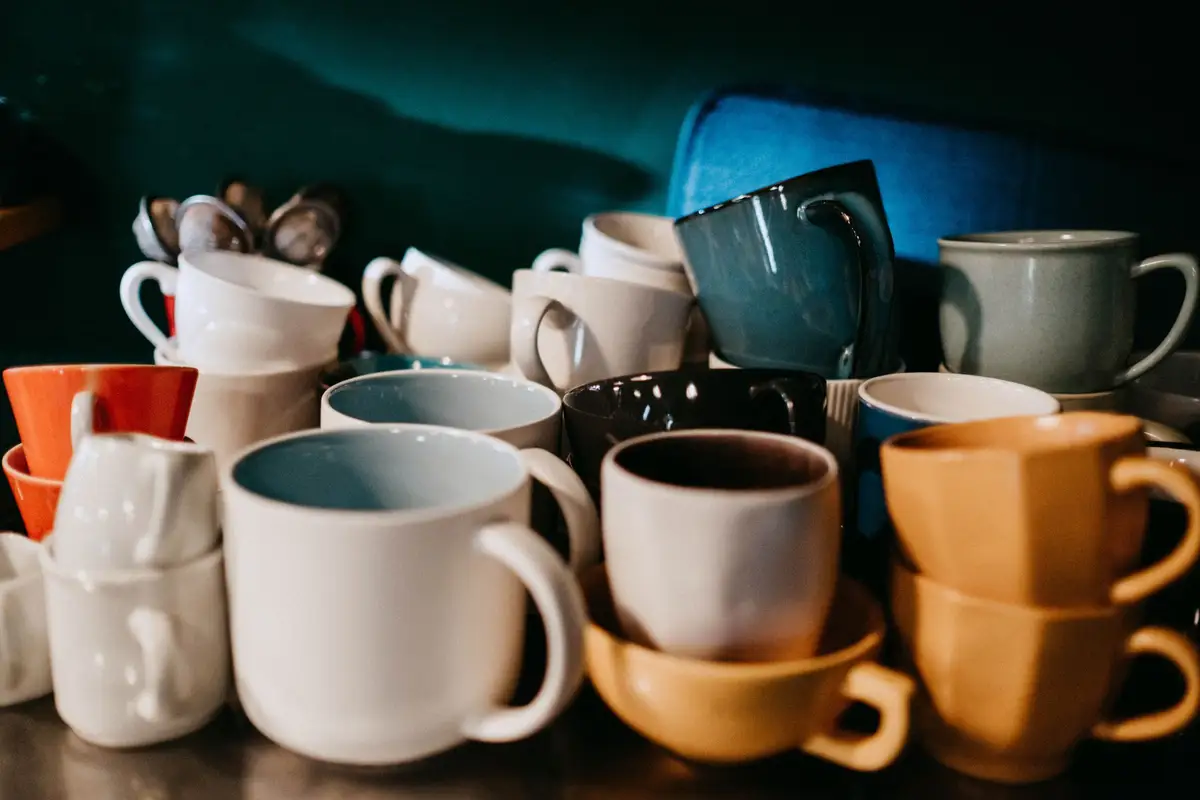
Our lagoon blue glaze, the one that pools dark in the curve of a bowl and breaks to brown at the rim, took about three months to develop. Customers often ask how we arrive at a new colour. The answer is slowly, and on test tiles.
A glaze is a mixture of powdered minerals: silica, which melts into glass, alumina, which makes it stiff enough to stay on the pot, and fluxes such as feldspar and whiting that help it melt at our temperature of 1,260°C. Colour comes from small amounts of metal oxides. Lagoon blue uses cobalt and a little iron and rutile, which give it the streaks and the brown edge.
Lakshmi started with a base recipe and changed one ingredient at a time, in steps of 1 or 2%. Each version was mixed in a small cup, brushed onto a tile of our clay, fired with a normal kiln load. The first firing produced eight tiles; only one was close. Over five firings, we made about forty tiles before settling on the recipe.
Then came the tests for daily use. We glazed a set of bowls, used them at home for a month, washed them in a dishwasher, heated them in a microwave and left lemon juice and vinegar on the surface overnight to check the glaze did not change. All our glazes are lead-free, and we only release one after it passes these tests. The last step is to mix a large bucket. Even then, every firing comes out a little differently, which is why each lagoon bowl is slightly its own colour.
Keep reading
Terracotta workshops, a temple chariot and a quiet lake: a half-day route around Puducherry for anyone who loves clay.
Which marks are part of handmade pottery and which ones mean a piece is sold as a second, explained plainly.
Clay, glaze, a dozen pairs of hands and two kiln firings: the real cost of our speckled stoneware mug.