The women’s self-defence course: what to expect
Eight sessions with Anjali, week by week: what is taught, what to wear and how the classes feel.
New beginners’ batches start on the 1st of every month · First class free
Kalari Road, near Thali Temple, Chalappuram, Kozhikode 673002
Mon–Sat · 6 – 9 am, 5.30 – 9 pm · Sun 7 – 10 am
Flying kicks, secret pressure points and instant results: what students expect, and what training is really like.
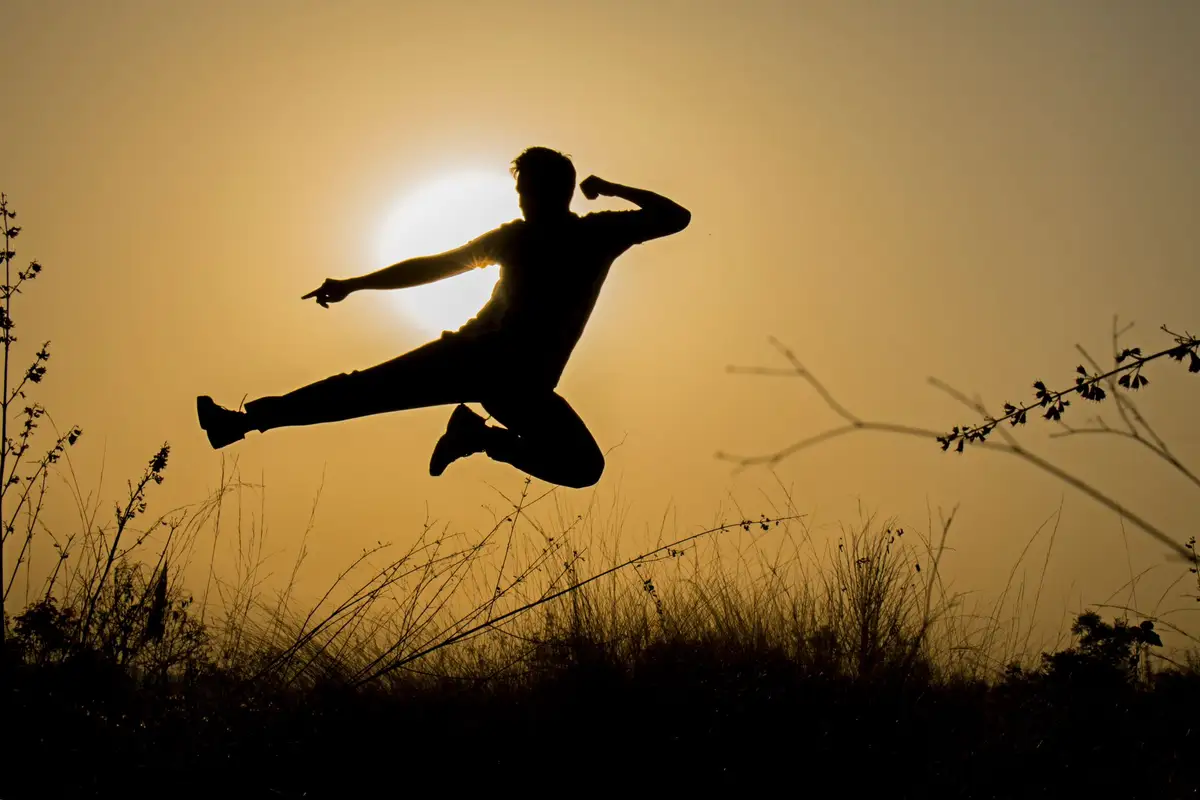
Many new students come to us after seeing kalaripayattu in a film or a video online. They arrive expecting spectacular leaps and fast fights in the first week. The reality is slower, and we think more interesting. Here are the myths we hear most often.
The first is that kalaripayattu is mostly about flying kicks. In fact, the first year is almost entirely meythari, the body training done close to the ground: stances, steps, controlled kicks and rolls. High jumps come later, when the body is ready, and they make up a small part of training.
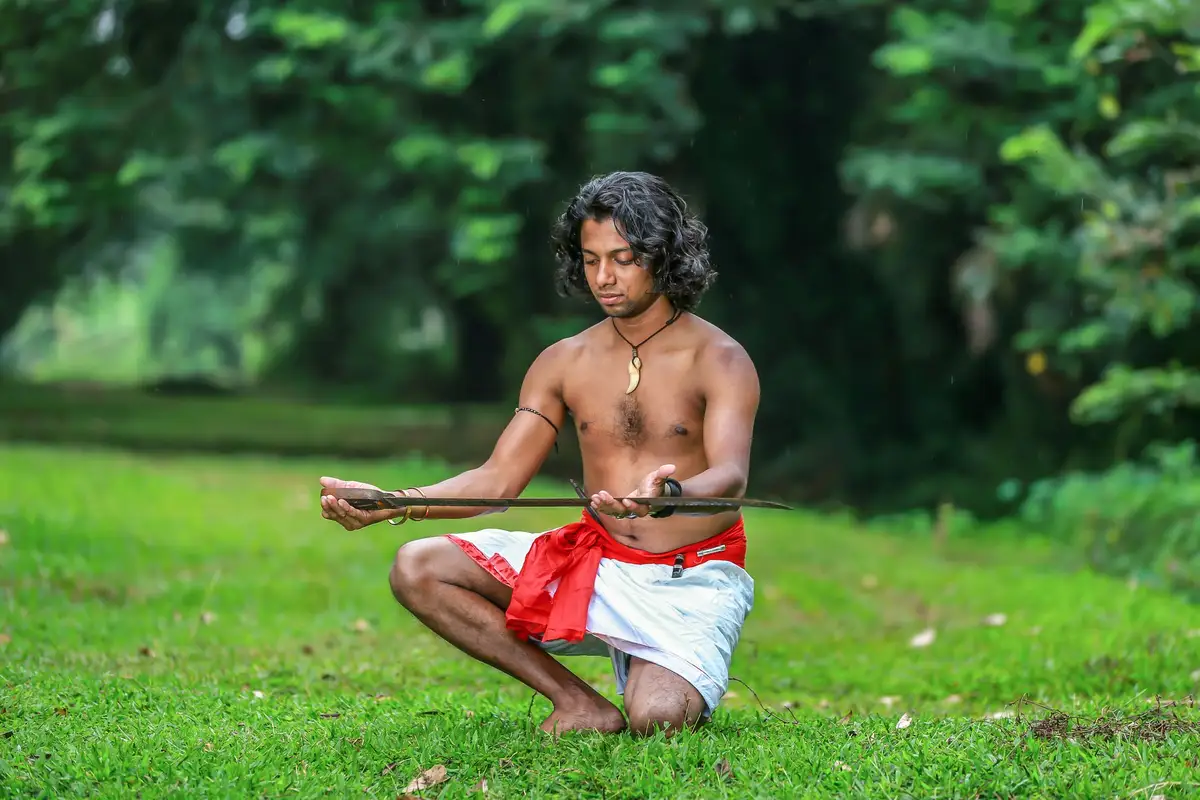
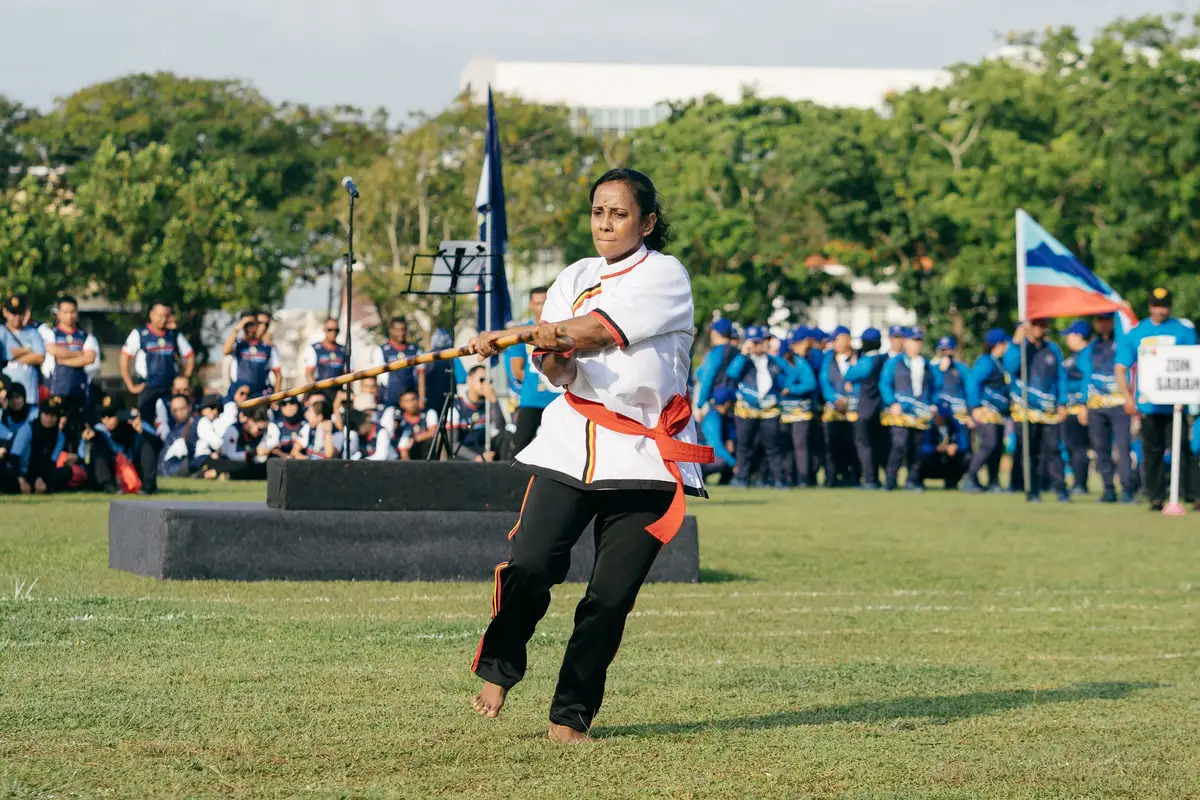
The second is that students learn weapons straight away. Here, nobody holds a stick until the gurukkal decides their foundation is ready, usually after about a year. Metal weapons, such as the sword and shield, come years after that, and only for a few students.
The third concerns marmam, the knowledge of vital points in the body. Films sometimes show a single touch ending a fight. In the kalari tradition, marmam is studied quietly by senior students over many years, mostly in connection with treatment and care. It is not taught to beginners and is not a trick. The last myth is that you need to be young and flexible to start. Our oldest beginner was 58. Flexibility is something training builds, slowly, not something you need on the first day. What you do need is patience: the art rewards those who come back to the floor week after week, not those who want results in a month.
Keep reading
Eight sessions with Anjali, week by week: what is taught, what to wear and how the classes feel.
Why our training floor is four feet below the ground, and what the poothara is.
One is from Kerala, one from Tamil Nadu. Both start with the feet.