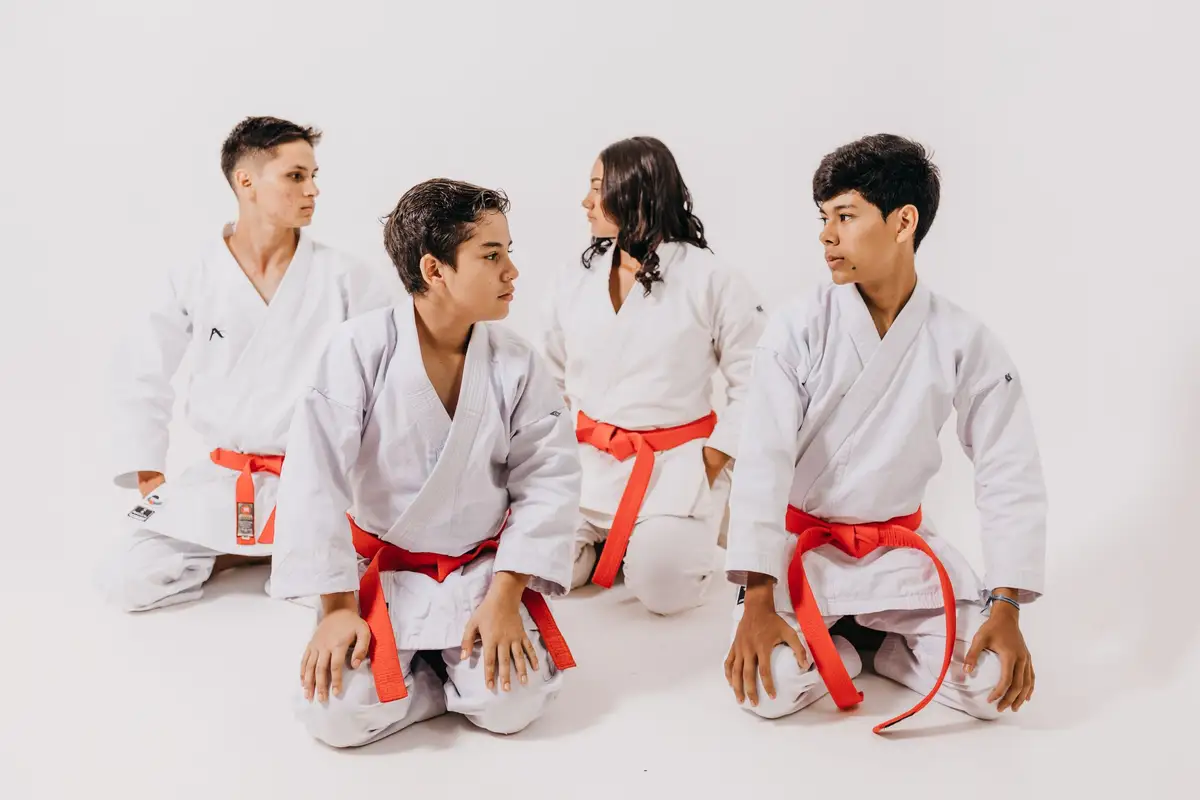
Preparing for your first class
What to eat, what to wear and what the first ninety minutes look like.
New beginners’ batches start on the 1st of every month · First class free
Kalari Road, near Thali Temple, Chalappuram, Kozhikode 673002
Mon–Sat · 6 – 9 am, 5.30 – 9 pm · Sun 7 – 10 am
One is from Kerala, one from Tamil Nadu. Both start with the feet.
At Chuvadu we teach two arts, and new students often ask which they should choose.
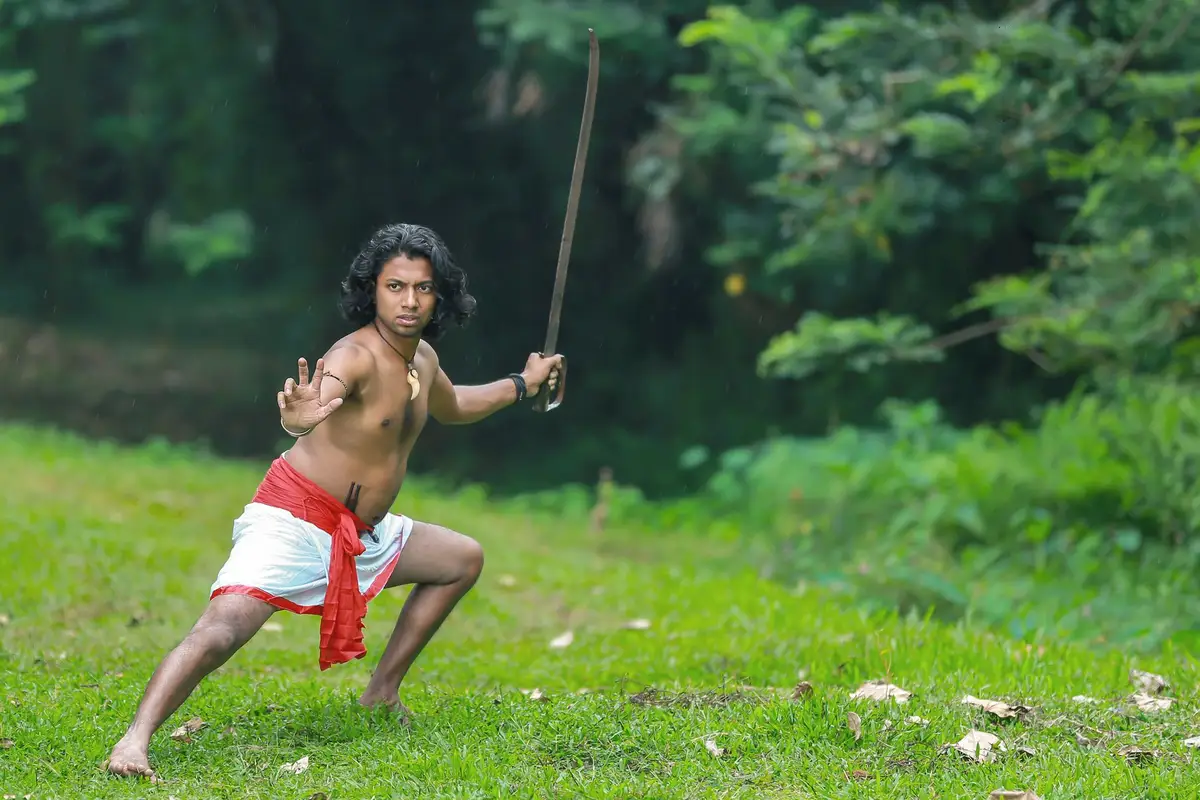
Kalaripayattu comes from Kerala. Training begins with meythari, body exercises that build flexibility, balance and power through stances named after animals, high kicks, jumps and rolls. Only after this foundation do students move to sticks, then metal weapons, and finally empty-hand techniques. It is a complete system, and progress is slow by design.
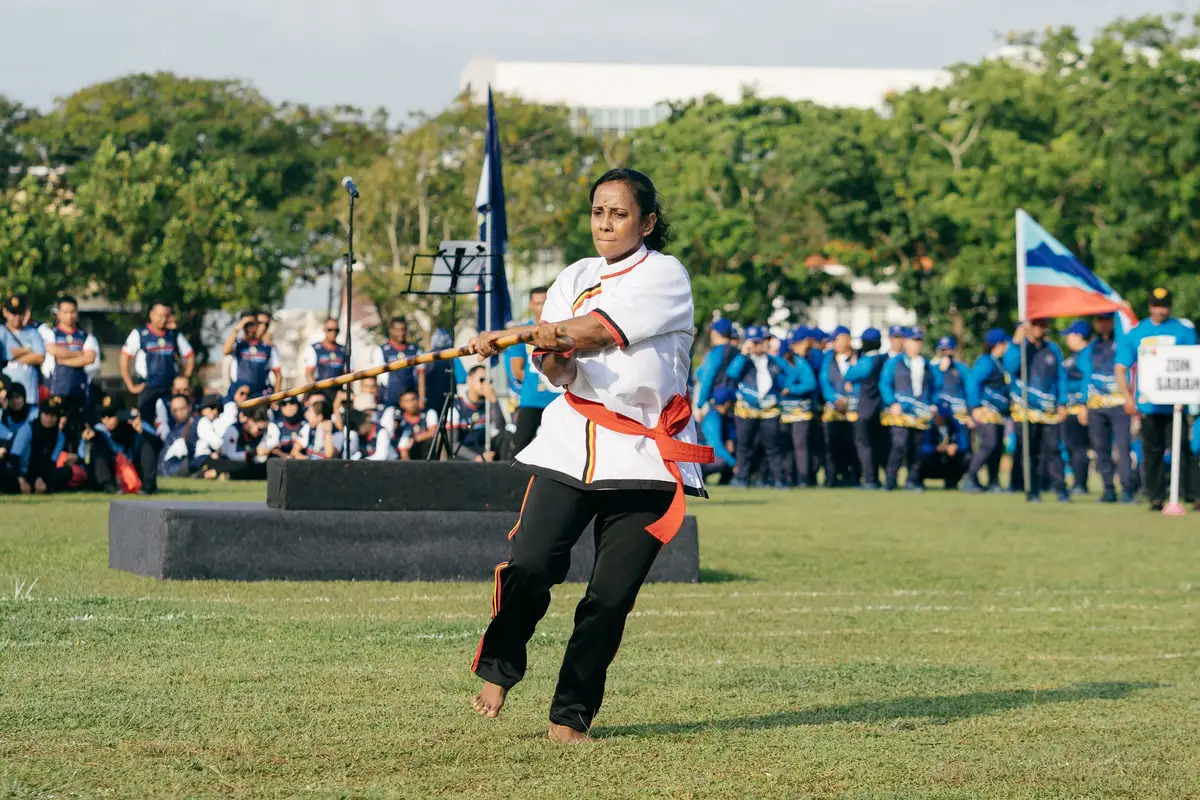
Silambam comes from Tamil Nadu and centres on the bamboo staff. Students learn footwork patterns traced on the ground, and then fast, flowing spins and strikes with a staff cut to their height. It develops coordination, wrist strength and timing, and beginners usually enjoy it from the first week.
The two share a lot. Both begin with the feet, both value control over force, and both are traditionally taught in a relationship of respect between teacher and student.
If you want a full-body practice and do not mind a long foundation, start with kalaripayattu. If you want to pick up a staff early and like rhythm and speed, try silambam. Many of our students eventually do both. Book a free class in each, and decide after.
Keep reading
What to eat, what to wear and what the first ninety minutes look like.
How to oil, store and check a kettukari or silambam staff so it stays straight and does not split.
Age, temperament and school timings: how we place children between seven and sixteen, and when they move up.