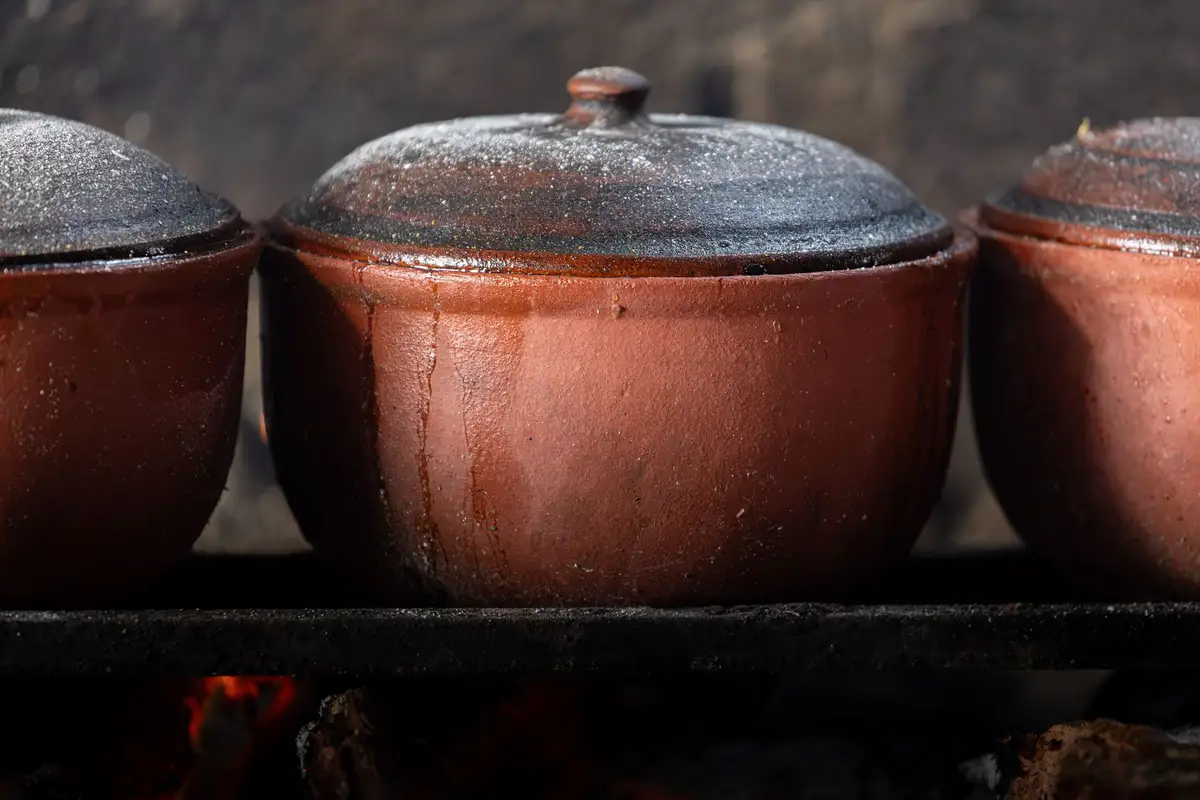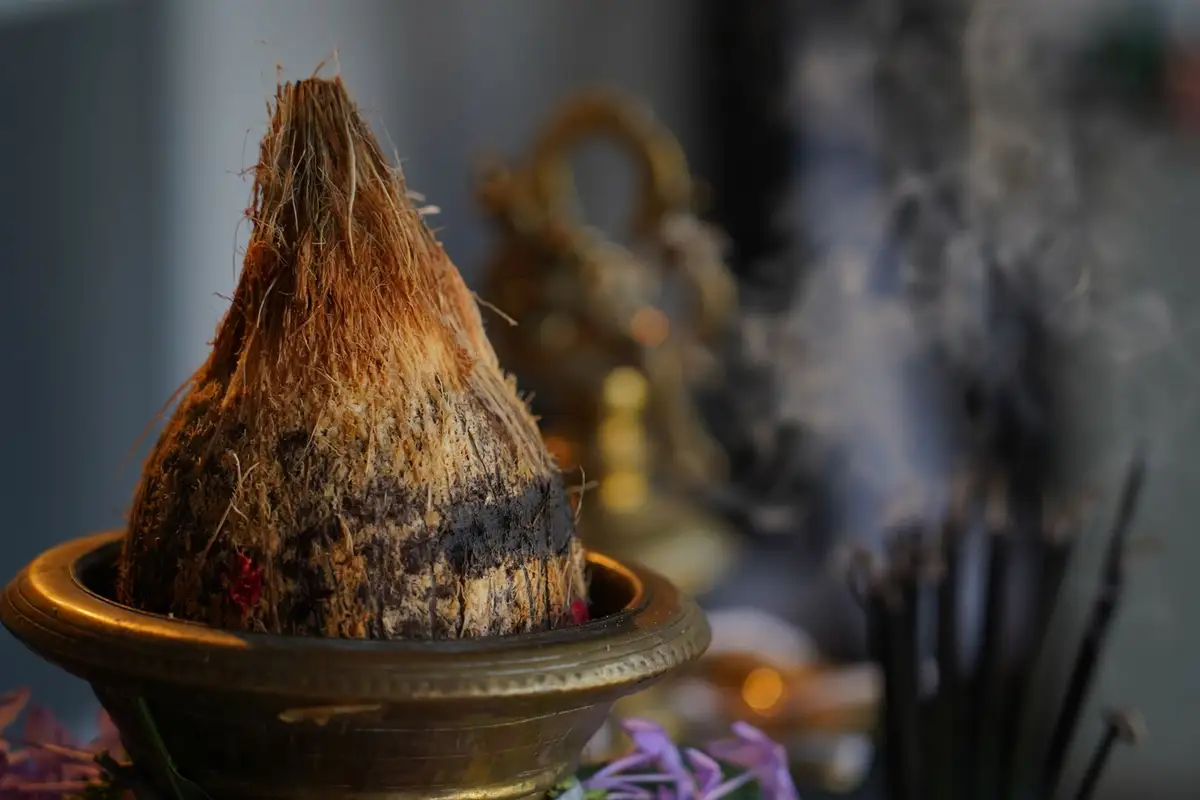
Buying a pongal pot for Thai Pongal
Clay or brass, size, and when to buy: a short guide to the pot at the centre of the harvest festival.
Every iron vessel seasoned before it ships · Free delivery across India above ₹1,999
41 South Masi Street, Madurai 625001
Mon–Sat · 9.30 am – 9 pm · Sun 10 am – 2 pm
Steel sheet, the smith’s hours, our seasoning and the weight in your hand: what you pay for in an iron kadai.
Iron kadais are sold across India for as little as ₹500, and ours is ₹1,450 for a 10-inch piece. Customers fairly ask what the difference is.
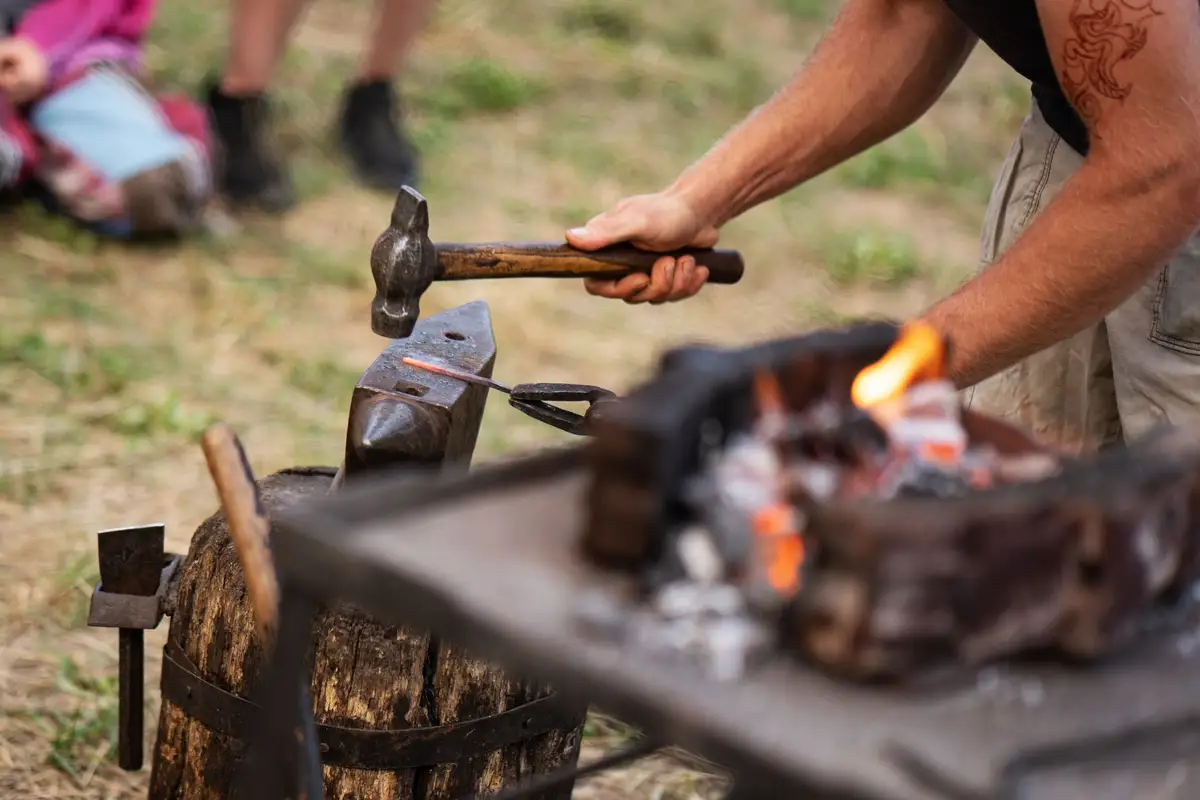
Most cheap kadais are pressed. A machine stamps a thin sheet of iron, often 1.5 to 2 mm, into a bowl shape in seconds. They are light and heat fast, but they also develop hot spots, warp on high heat and lose their seasoning quickly. Ours are hand-forged by a family of smiths we have bought from for forty years. They start with a thick round of iron, heat it in a forge and beat it into shape over a curved anvil, rotating it a little with each blow. A 10-inch kadai takes around two hours of forging and weighs about 2.4 kg, with walls close to 3 mm thick.
The iron itself is about ₹350 of the price, and the smith’s labour, fuel and handles about ₹550. Then comes our part. Every kadai is scrubbed, dried, and seasoned in our back room with four coats of gingelly oil, each baked on over a flame, which takes most of a morning. Seasoning, packing and the care card add around ₹200.
The rest covers freight to Madurai, our rent and our margin. A forged kadai heats evenly, does not warp and, looked after, lasts several generations. A pressed one is perfectly usable, but you may buy three in the time one forged kadai lasts.
Keep reading
Clay or brass, size, and when to buy: a short guide to the pot at the centre of the harvest festival.
Ours arrive seasoned, but here is how to keep them that way, or start from scratch.
Soaking, slow heat and what not to do.