
Chand raat in Aminabad: our longest night
The night before Eid, the lanes fill with mehendi stalls. What it is like, and how to beat the rush.
Karwa Chauth slots open from 10 October · Bridal dates for November to February filling
17 Shahnajaf Road, Hazratganj, Lucknow 226001
Tue–Sun · 11 am – 8 pm · home visits by booking
Sifting, soaking, resting and rolling: how a kilo of henna becomes 80 cones.
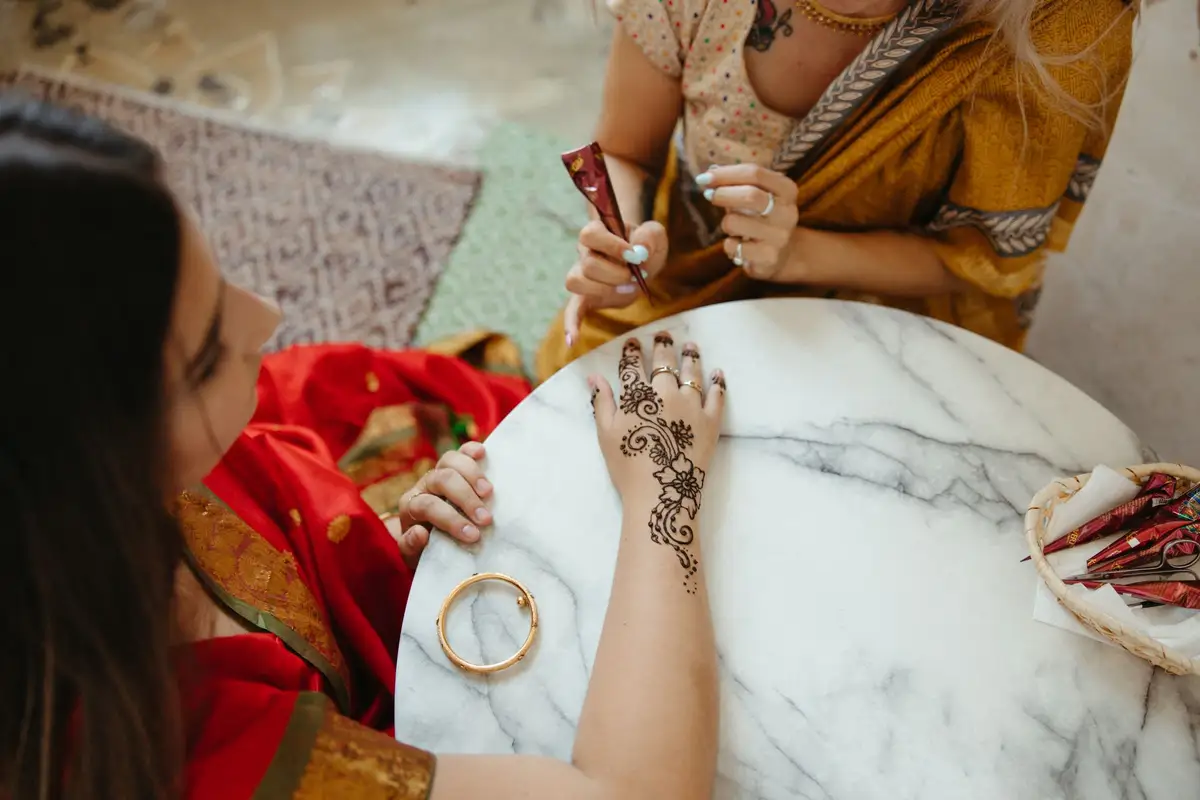
Every Thursday morning, before the studio opens, two of us make the week’s henna. It starts with Sojat henna powder, which we sift three times through a fine cotton cloth. The leaf powder that comes through is soft as talc; the stalks and grit that stay behind would clog a fine cone.
The powder is mixed with fresh lemon juice and a spoon of sugar into a thick paste, covered and left to rest in a warm corner for about 12 hours. This is when the dye releases. We test it by dabbing a little on a palm: when it leaves an orange mark in five minutes, the paste is ready. Then we loosen it with more lemon juice and a few drops of eucalyptus oil until it falls from a spoon like thick honey.
The cones themselves are cut from plastic sheet, rolled by hand and taped. A kilo of powder fills about 80 cones of 25 g. We fill them through a piping bag so there are no air bubbles, which would make the line break mid-design, then fold the ends and write the date on each.
Everything goes straight into the freezer. A cone keeps for six weeks frozen and about a week in the fridge. Anything older than that is thrown away. Natural henna loses its strength, and we would rather roll more cones than draw a bride’s hands with tired paste.
Keep reading
The night before Eid, the lanes fill with mehendi stalls. What it is like, and how to beat the rush.
For first-timers and children: how long it takes, how it feels and how to look after it.
Paste time, warmth and patience: the steps that decide whether your colour turns maroon or stays orange.