Your first mehendi: what to expect
For first-timers and children: how long it takes, how it feels and how to look after it.
Karwa Chauth slots open from 10 October · Bridal dates for November to February filling
17 Shahnajaf Road, Hazratganj, Lucknow 226001
Tue–Sun · 11 am – 8 pm · home visits by booking
The night before Eid, the lanes fill with mehendi stalls. What it is like, and how to beat the rush.

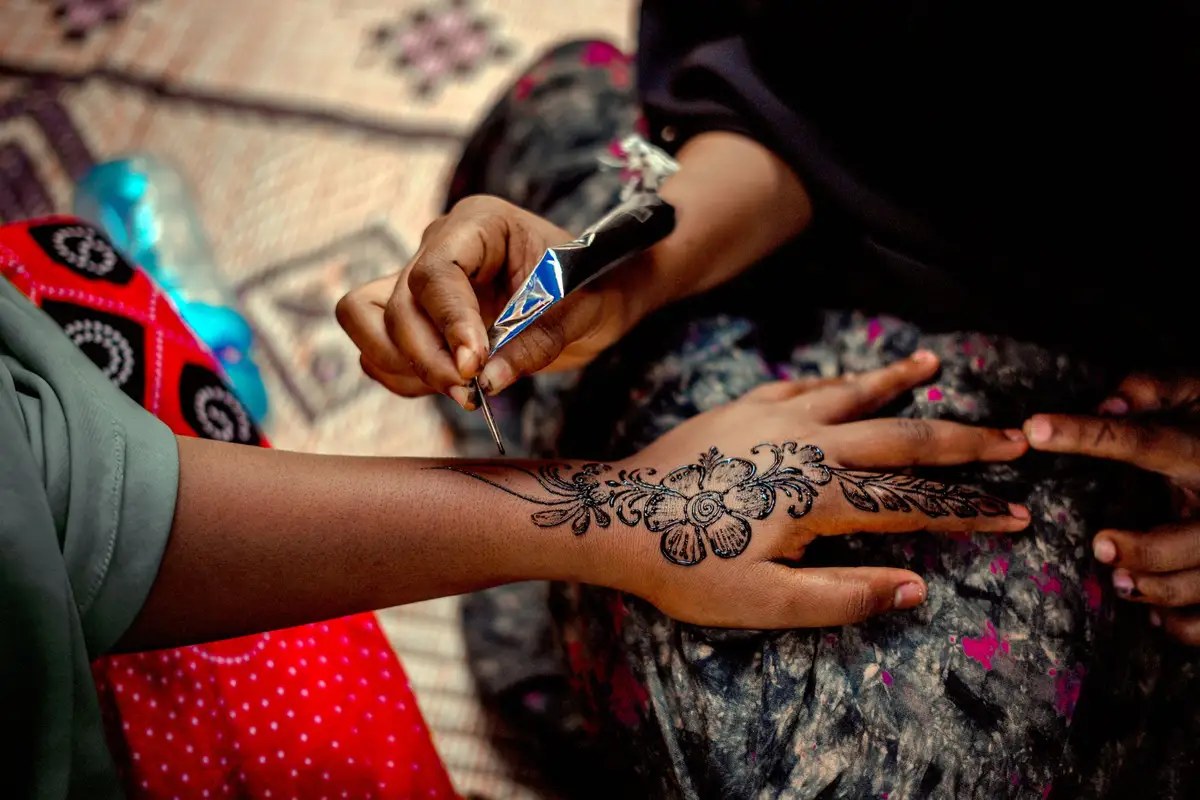
If you have never been to Aminabad on chand raat, it is worth seeing once. The night the Eid moon is sighted, the market stays open past midnight, bangle sellers set up under strings of bulbs and every corner has someone with a cone. Families come out after iftar, and the queues for mehendi stretch down the lane.
Our studio is not in Aminabad, but chand raat is our longest night too. We open from 7 pm to 2 am with all six artists and keep extra lamps and chairs for the crowd. Instead of a queue, we hand out numbered tokens when you arrive, so you can go for kebabs or shopping and come back when your number is close.
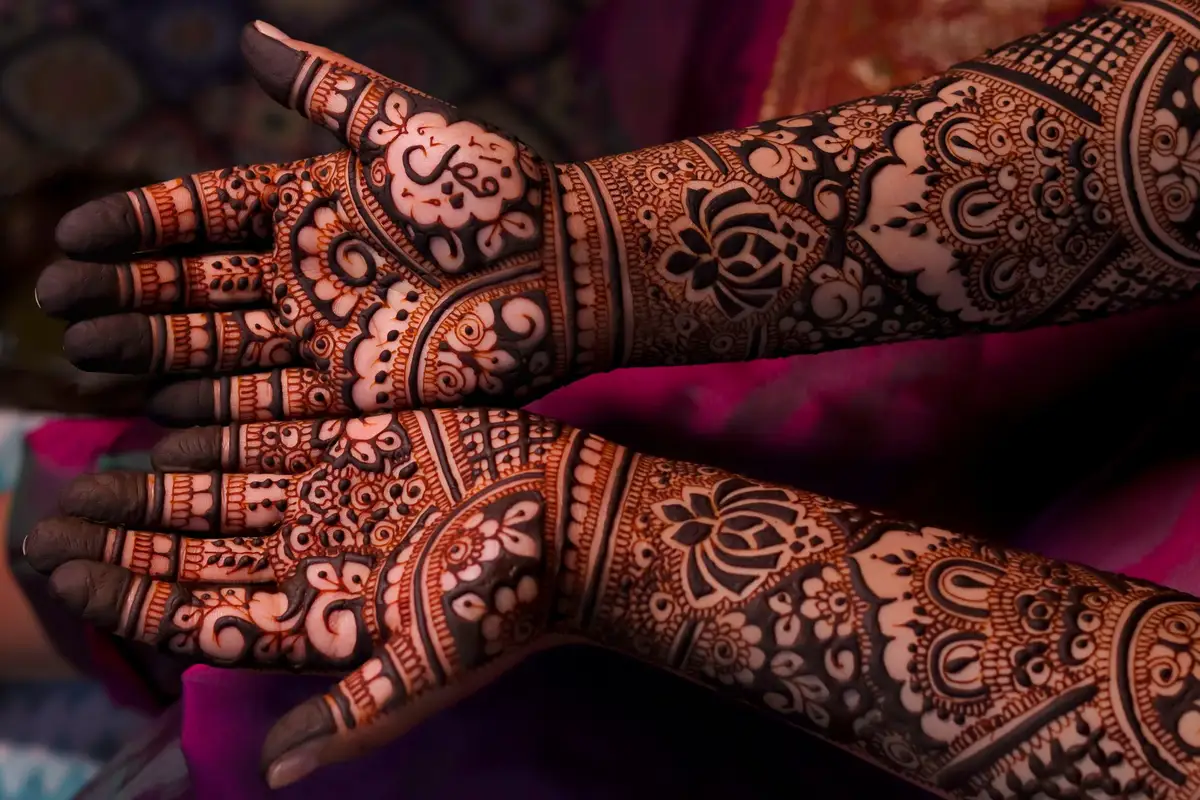
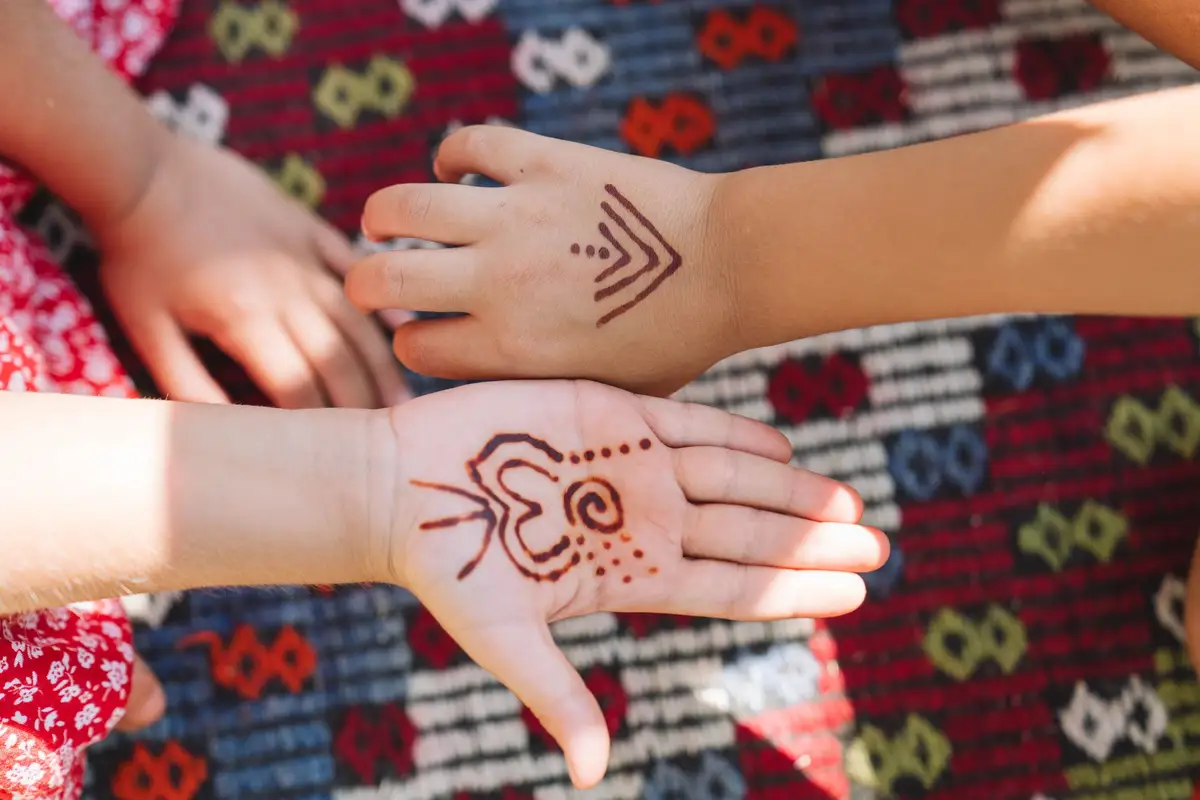
Most women ask for both palms in a festival design: a crescent and star, a bit of jaali and fingertip caps. It takes about 25 minutes and costs ₹600. Children’s designs, a single motif on the back of the hand, are ₹200 and take ten minutes.
A few tips for the night. Come early in the evening if you can; the rush peaks between 10 pm and midnight. Wear sleeves that roll up easily. Bring a dupatta or a cloth to wrap your hands on the way home so the paste does not smudge in the rickshaw. And sleep with the paste on, so the stain is at its best for Eid morning.
Keep reading
For first-timers and children: how long it takes, how it feels and how to look after it.
Paste time, warmth and patience: the steps that decide whether your colour turns maroon or stays orange.
Black henna and instant cones can stain in minutes. Here is what is in them, and how to spot one before it touches your skin.