Natural henna or chemical cones: how to tell
Black henna and instant cones can stain in minutes. Here is what is in them, and how to spot one before it touches your skin.
Karwa Chauth slots open from 10 October · Bridal dates for November to February filling
17 Shahnajaf Road, Hazratganj, Lucknow 226001
Tue–Sun · 11 am – 8 pm · home visits by booking
Paste time, warmth and patience: the steps that decide whether your colour turns maroon or stays orange.
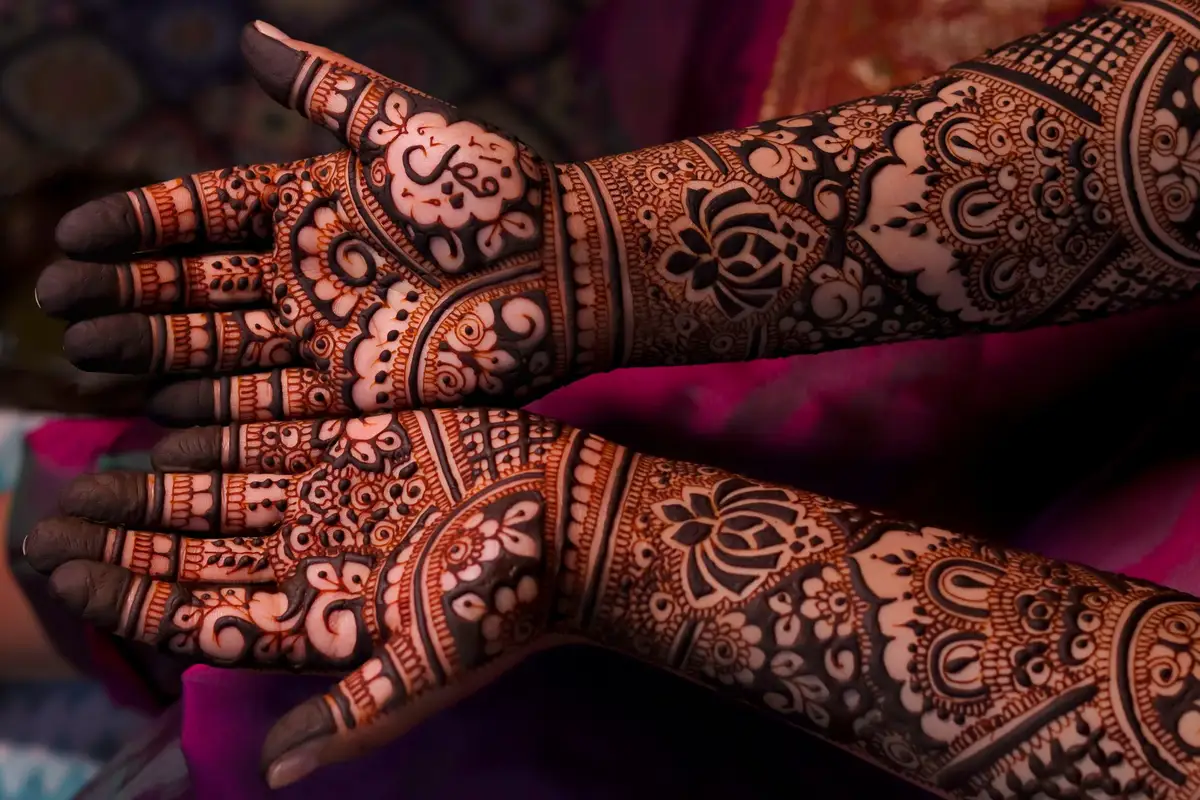
The colour of mehendi comes from a dye in the henna leaf that binds to the outer layer of your skin. The paste needs time to give it up, so the single most useful thing you can do is leave it on. Six to eight hours is good; overnight is better.
When the paste is dry to the touch, we dab on a mix of lemon juice and sugar with cotton. It keeps the paste stuck to the skin and moist for longer. Do not soak it; two or three light dabs an hour are enough. Keep your hands warm. In winter, sit near a heater or wrap your hands loosely in a cotton cloth.
When it is time to take it off, scrape the dry paste away with the blunt side of a butter knife. Do not wash it off. Avoid water on your hands for the next 12 hours if you can, and rub a few drops of mustard or coconut oil over the design before you bathe.
The stain starts orange and darkens over 24 to 48 hours as it meets the air. This is why we ask brides to have mehendi two days before the wedding, not the night before. Palms always go darker than the backs of the hands, and fingertips darkest of all, because the skin there is thicker.
Keep reading
Black henna and instant cones can stain in minutes. Here is what is in them, and how to spot one before it touches your skin.
From the first enquiry to the morning after the mehendi, here is when each step should happen.
The jaali, keri and phool of Lucknow’s embroidery work just as well in henna. How we borrow them.