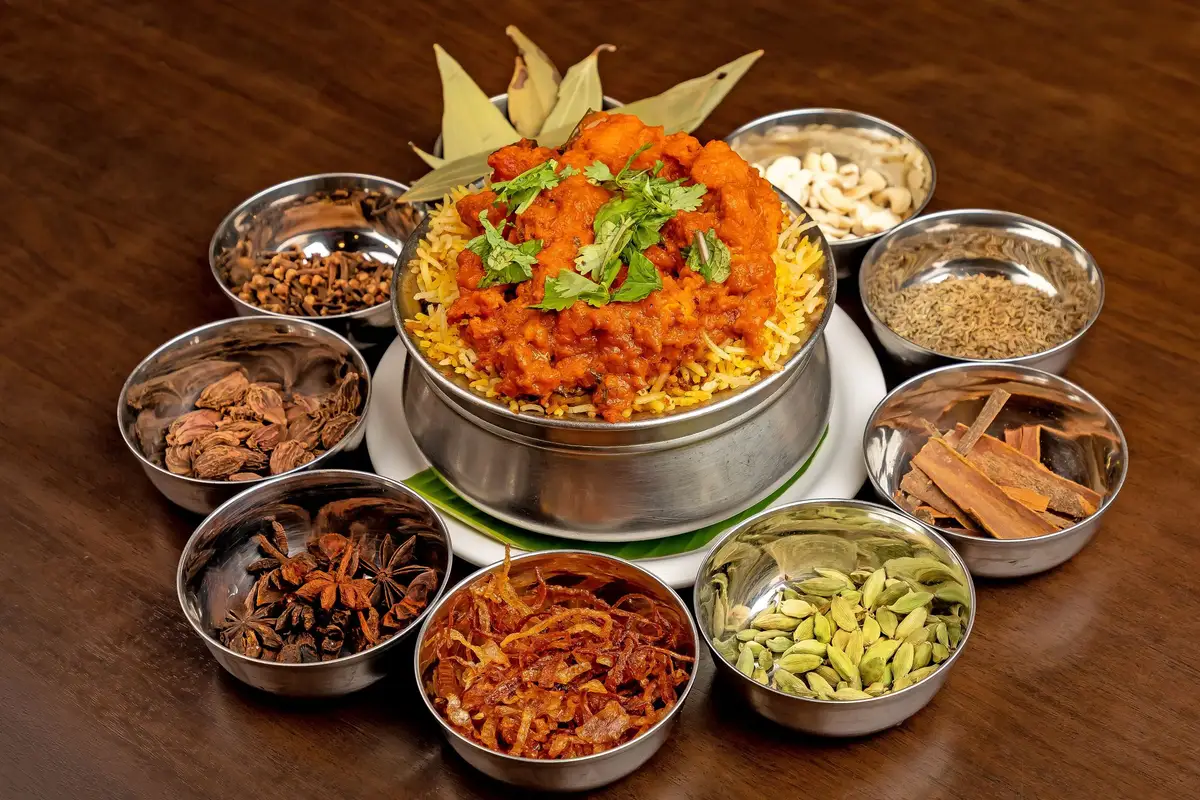
Kacchi and pakki: two ways to make a biryani
Why we put raw meat in the pot, and why it takes so long.
Degs open at 12.30 pm and 7.30 pm · Delivery across Hyderabad and Secunderabad
6-3-1090 Raj Bhavan Road, Somajiguda, Hyderabad 500082
Daily · 12.30 – 3.30 pm · 7.30 – 11.30 pm
Our recipe for the peanut, sesame and tamarind chilli curry that sits beside every portion of biryani.
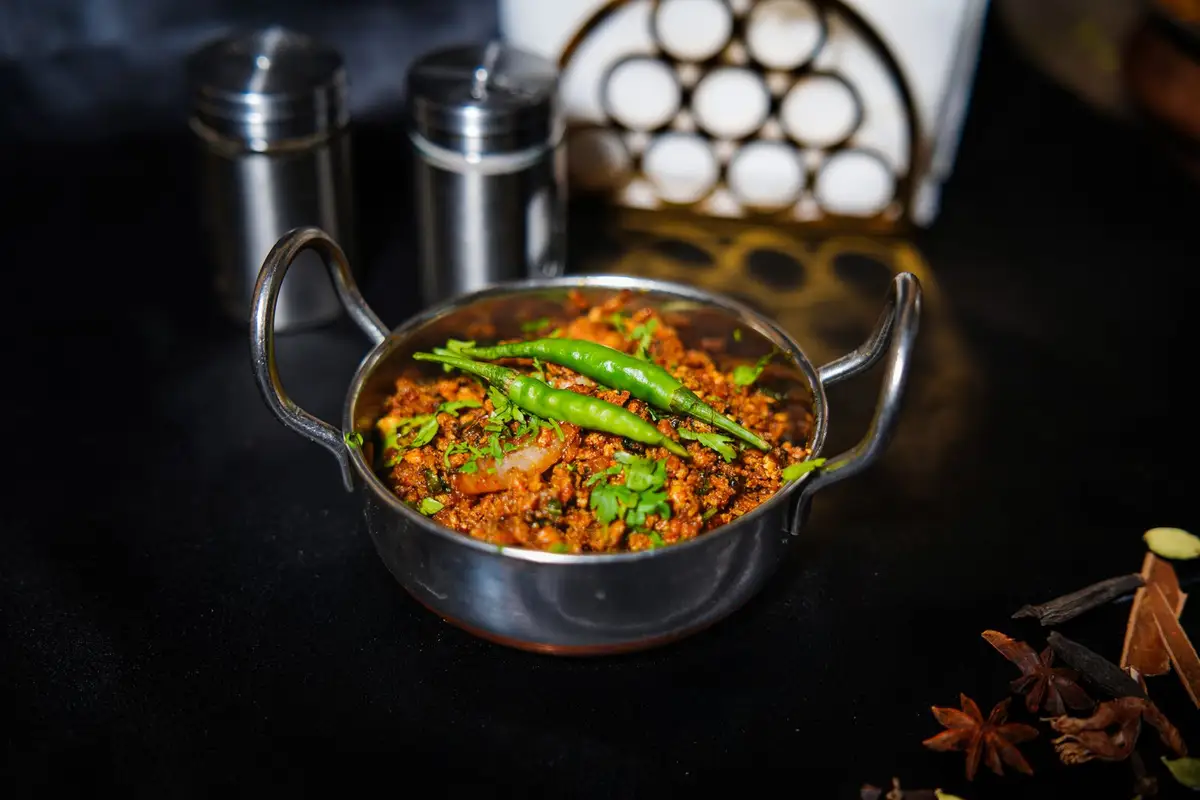
Mirchi ka salan is the curry we serve with every biryani, and the recipe guests ask for most. It is not difficult, but it takes patience with the roasting. This makes enough for six.
You need 250 g of long, thick, mild green chillies, the kind sold for bajji. Slit each one down one side without cutting through, remove some seeds if you like it milder, and fry them in 3 tablespoons of oil until blistered. Set them aside.
For the paste, dry-roast 3 tablespoons of raw peanuts, 2 tablespoons of sesame seeds and 1 tablespoon of desiccated coconut on low heat until golden and fragrant, stirring all the time. This takes about eight minutes; burnt sesame turns the whole curry bitter. Add 1 teaspoon each of cumin and coriander seeds for the last minute. Cool and grind to a smooth paste with a little water.
In the same oil, crackle mustard seeds, cumin, a sprig of curry leaves and a pinch of methi seeds. Add one finely chopped onion and cook until soft, then a tablespoon of ginger-garlic paste, half a teaspoon of turmeric and a teaspoon of chilli powder. Stir in the paste and cook on low for ten minutes until the oil separates. Add tamarind pulp from a lemon-sized ball, a teaspoon of jaggery, salt and a cup of water. Slide in the chillies and simmer for five minutes. It tastes better after an hour, and best the next day.
Keep reading
Why we put raw meat in the pot, and why it takes so long.
Steam is your friend; the microwave on high is not.
We grind it every Tuesday. Here is what goes in.