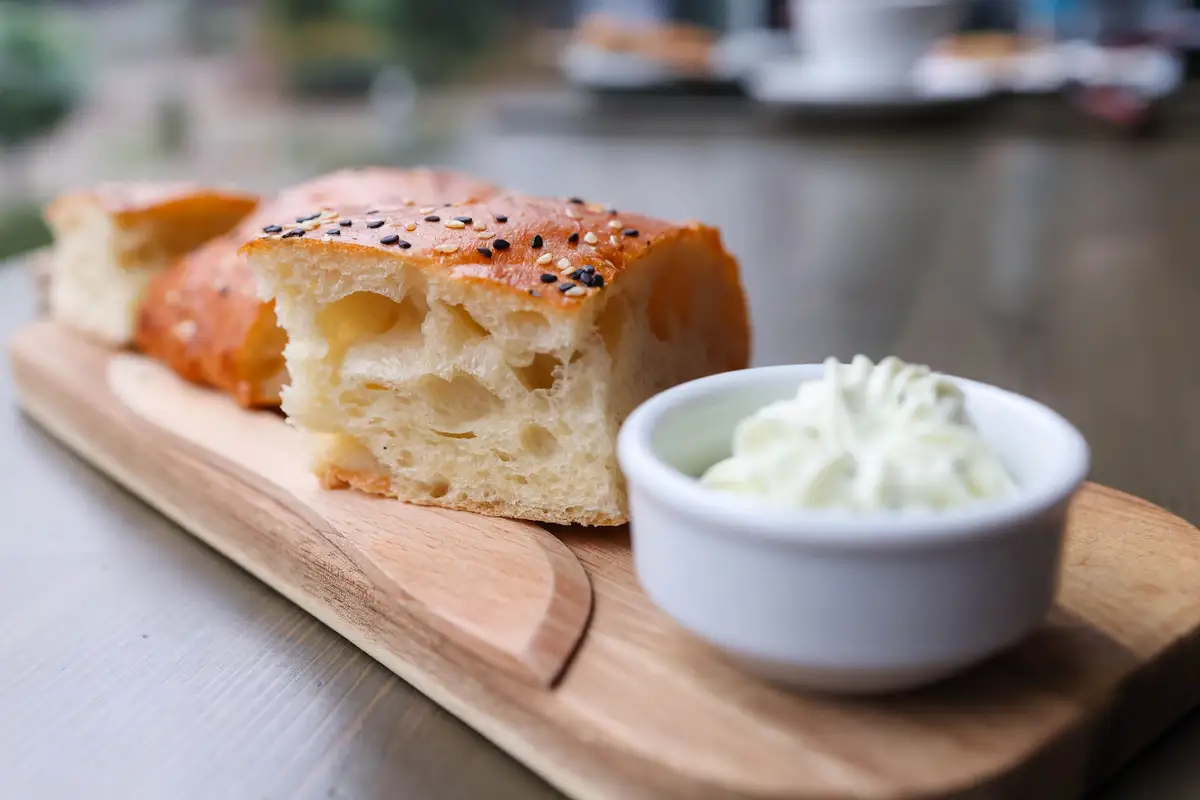
How we make focaccia, and how to reheat it
An 18-hour proof in the tray, a lot of olive oil, and the six minutes that bring back a crisp base the next day.
Order by 6 pm for tomorrow’s bake · Delivery across Puducherry and Auroville by 9 am
22 Rue Romain Rolland, White Town, Puducherry 605001
Tue–Sun · 7 am – 1 pm and 4 – 7 pm · Mon closed
Feeding times, the right flour and water, and what to do when it smells odd or you go away for a week.
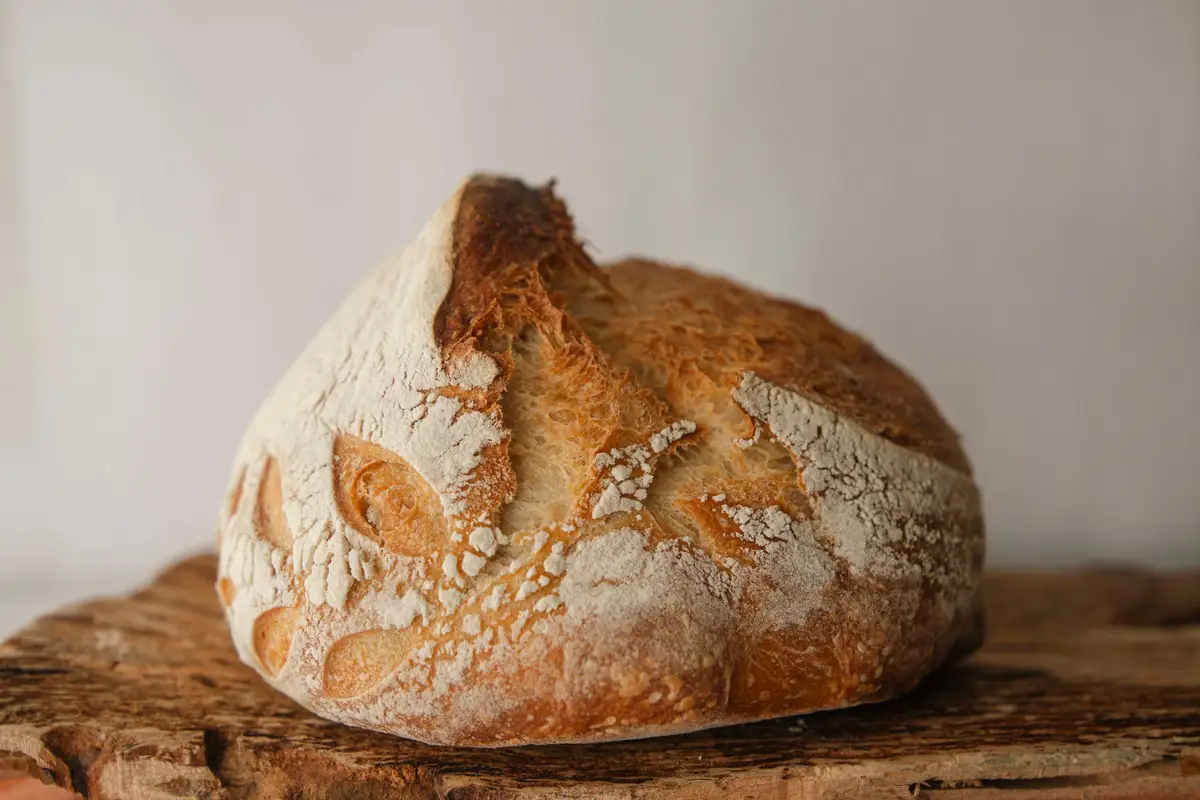
Every week a few people take home a jar of our starter, the same culture that raises all our loaves. It is hardy, but it is alive, and it needs a simple routine.
The starter is a mix of flour and water full of wild yeast and bacteria. To feed it, discard all but about 50 g, then add 50 g of wholewheat flour and 50 g of water at room temperature. Stir well, put the lid back loosely and leave it out. In Puducherry’s heat it will double in four to six hours; in an air-conditioned room it takes longer. When it has doubled, is domed and smells pleasantly sour, it is ready to bake with.
If you bake once a week, keep it in the fridge between bakes. Take it out the night before, feed it twice over the next day, and use it when it peaks. If you go away for two weeks, feed it, let it sit out for an hour, and put it in the fridge; it will be sluggish when you come back, so give it two or three feeds before you bake.
A grey liquid on top means it is hungry: pour it off and feed. A smell of nail polish means the same. Pink or orange streaks, or fuzzy mould, mean it is time to throw it away and come for a new jar, which we refill for ₹150. Message us a photo if you are unsure.
Keep reading
An 18-hour proof in the tray, a lot of olive oil, and the six minutes that bring back a crisp base the next day.
Cloth, not plastic. Cut side down. And when to slice and freeze, if four days is more than you need.
Three days, 27 layers, a lot of butter and a baker’s whole morning: what goes into the price.