Automatic or quartz?
How each kind of watch keeps time, and which suits the way you live.
Watchmakers in Fort since 1958 · Free battery and strap fitting for life
27 Perin Nariman Street, Fort, Mumbai 400001
Mon–Sat · 10.30 am – 7.30 pm · Sun closed
The right way to wind, set the time and change the date, and the one hour of the night to avoid.
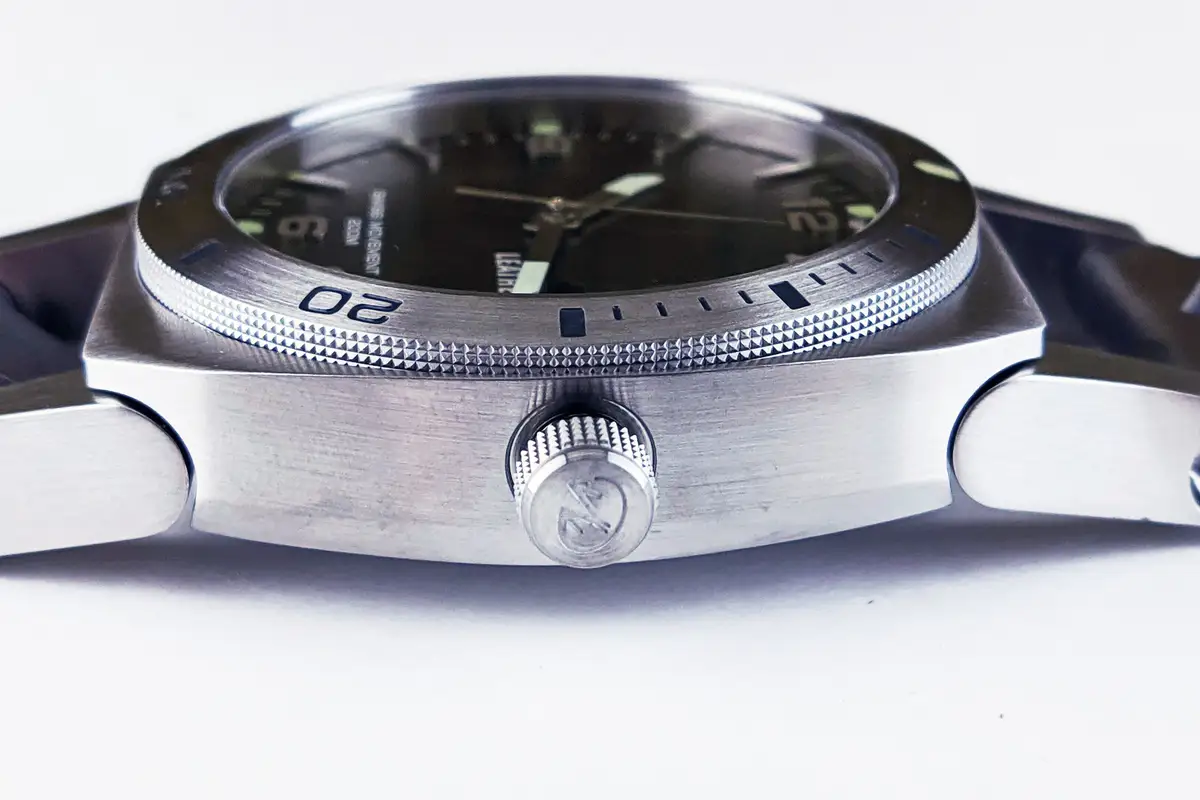
Mechanical watches are easy to look after, but a few habits at the crown make a big difference to how long they last.
To wind a hand-wound watch, unscrew the crown if it is a screw-down type, then turn it clockwise with your thumb and finger, gently, about thirty to forty turns, until you feel resistance. Stop there. Do it at the same time every morning; a full wind lasts most watches 38 to 48 hours. An automatic winds itself as you wear it, but if it has been in a drawer and stopped, give it twenty to thirty turns before you put it on. This gives the mainspring a start so the watch keeps good time from the first hour.
To set the time, pull the crown out to the last position and move the hands forwards, not backwards. To change the date, use the middle position. The one rule to remember: do not change the date between 9 pm and 3 am. During those hours the date wheel is already moving, and forcing it can break a small tooth. Set the hands to 6.30 first, change the date, then set the correct time.
Always push the crown back in and, if it screws down, tighten it fully before you wash your hands. An open crown is the most common way water gets in. If the crown feels gritty or wobbles, bring it in; a new crown costs far less than a rusted movement.
Keep reading
How each kind of watch keeps time, and which suits the way you live.
Salt air, monsoon damp and air-conditioned offices are hard on watches. A few habits help.
A full service takes a watch apart into more than a hundred pieces. Here is what we do with them.