Oil for Karthigai Deepam lamps
Which oil to use in clay agal vilakku and brass lamps, how much you need, and how to get a steady flame.
Pressed this week in Salem · Free delivery in Salem and Namakkal above ₹1,000
48 Omalur Main Road, Swarnapuri, Salem 636004
Mon–Sat · 7 am – 7 pm · Sun 7 am – 12 pm
Bottles, light, heat and how much to buy at a time, so your oil smells as good in month five as in week one.
Unrefined oil is alive with the smell and taste of the seed, and that is also what makes it more sensitive than refined oil. Stored well, our groundnut and gingelly oils keep their flavour for six months. Stored badly, they can turn stale in two.
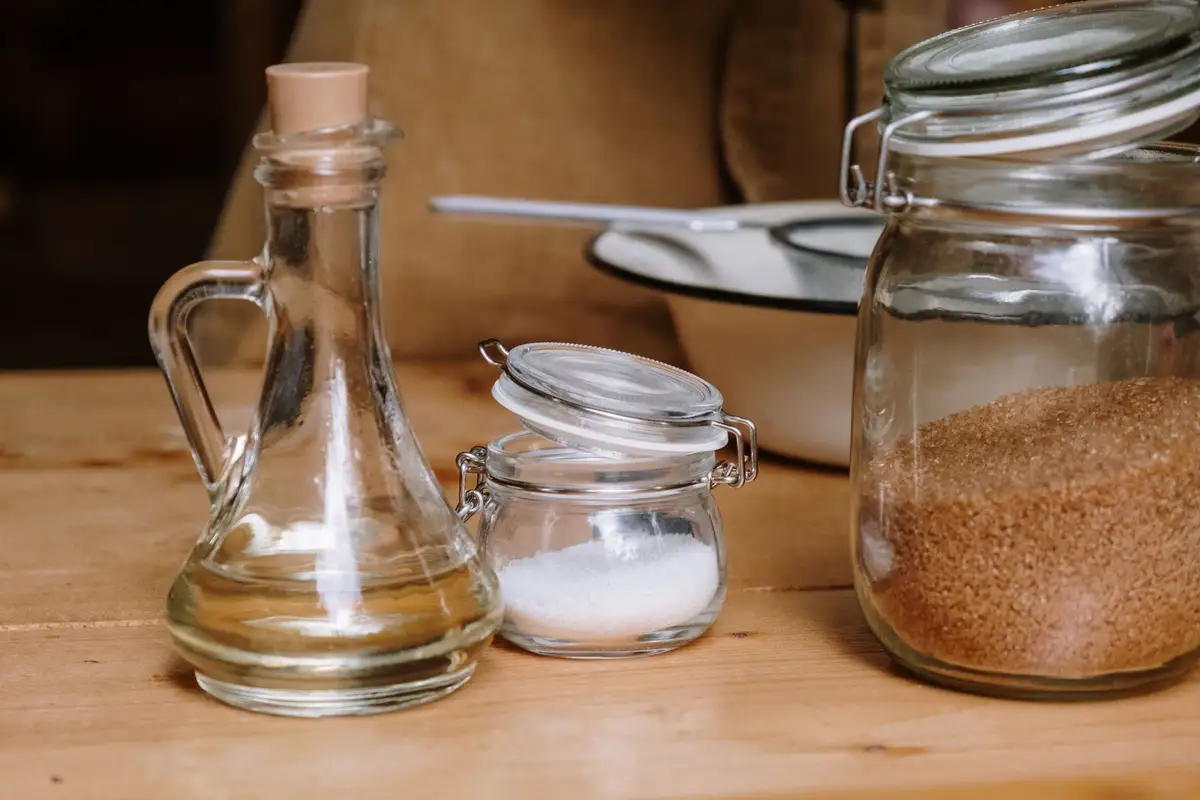
Light is the first enemy. Keep oil in a dark cupboard, not on the windowsill or the open shelf beside the stove. Our oil goes out in glass, steel or tamper-sealed PET; if you buy in plastic for shipping, pour it into a steel or dark glass container when it arrives. Heat is the second. The space above or beside the stove gets very warm during cooking, which speeds up rancidity. Keep only a small daily-use bottle near the stove, and the main stock in a cool cupboard. In a Salem summer, when kitchens reach 38 °C, this matters more.
Air is the third. Close the cap after every use. When you refill the small kitchen bottle, do not top up old oil with new; finish it, wipe the bottle dry, then refill. Never let water in, so use a dry spoon or pour directly.
Buy in the quantity you will finish in two to three months. For a family of four cooking South Indian food daily, that is usually 3 to 4 litres of groundnut oil and 1 litre of gingelly a month. Our 2 × 5 litre family pack suits larger households or two families sharing.
Keep reading
Which oil to use in clay agal vilakku and brass lamps, how much you need, and how to get a steady flame.
Why unfiltered oil looks the way it does, and when you should actually be concerned.
A short tour of the villages and fields that grow the groundnut, sesame and copra we press each week.