Cloudy, solid or bitter: four worries about chekku oil
Why unfiltered oil looks the way it does, and when you should actually be concerned.
Pressed this week in Salem · Free delivery in Salem and Namakkal above ₹1,000
48 Omalur Main Road, Swarnapuri, Salem 636004
Mon–Sat · 7 am – 7 pm · Sun 7 am – 12 pm
Which oil to use in clay agal vilakku and brass lamps, how much you need, and how to get a steady flame.
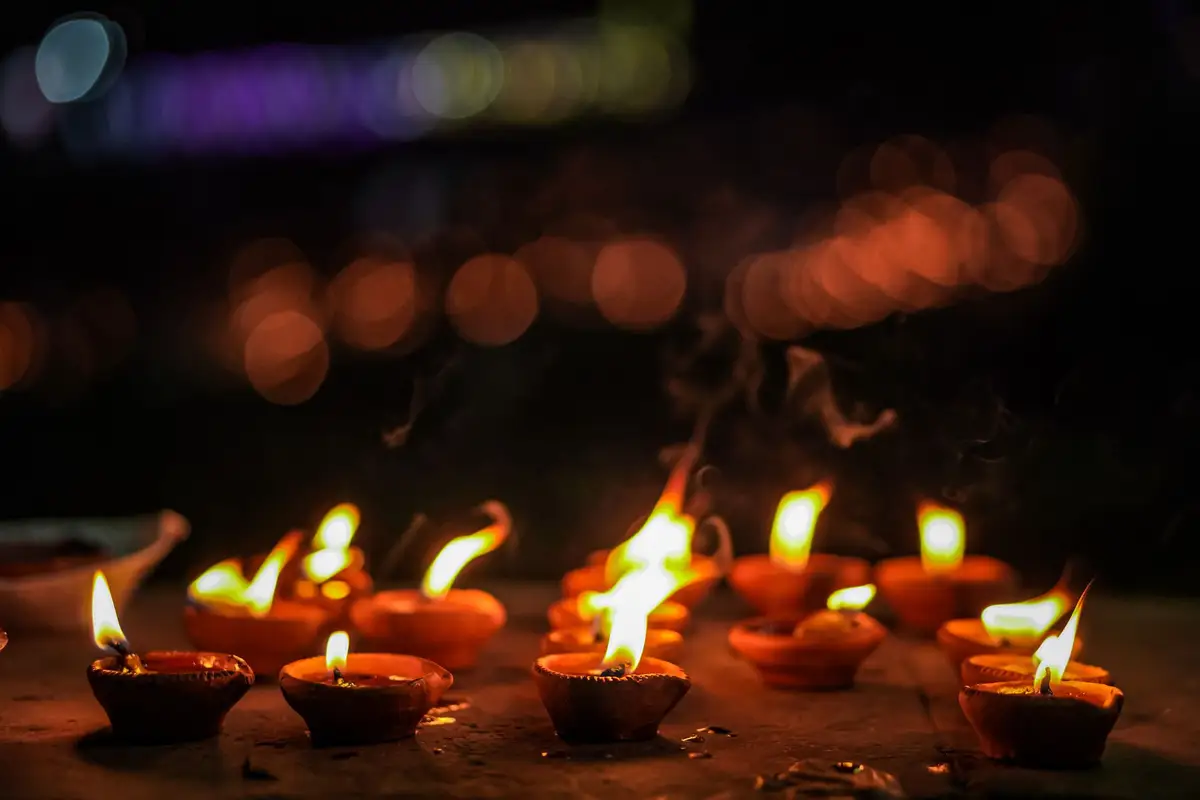
Karthigai Deepam falls in late November or early December, and across Salem every doorstep, wall and terrace is lined with small clay lamps. The oil you choose decides how well they burn and how long. Gingelly oil, nallennai, is the traditional choice for lamps in Tamil homes. It burns with a steady, bright flame and little soot, and its smell is gentle. Groundnut oil works but smokes slightly more. Coconut oil is used for lamps in many Kerala homes and burns cleanly, but it sets solid on a cool evening, so warm it first. Avoid used frying oil; it smokes and smells.
A small clay agal holds about 10 ml and burns for roughly an hour and a half with a cotton wick. If you light 30 lamps over three evenings and refill each once, you need about 2 litres of oil. A brass kuthu vilakku with five faces holds around 80 to 100 ml.
For a steady flame, soak new clay lamps in water for an hour and dry them, so the clay does not drink the oil. Use twisted cotton wicks, not too thick, with about 5 mm above the oil. Trim burnt wick tips between evenings.
We sell lamp oil in the weeks before the festival: gingelly oil pressed from second-grade sesame, cheaper than our cooking oil at ₹260 for a litre. Please keep it separate and do not cook with it.
Keep reading
Why unfiltered oil looks the way it does, and when you should actually be concerned.
A short tour of the villages and fields that grow the groundnut, sesame and copra we press each week.
Wooden chekku, rotary expeller and refined oil: three ways oil is made.