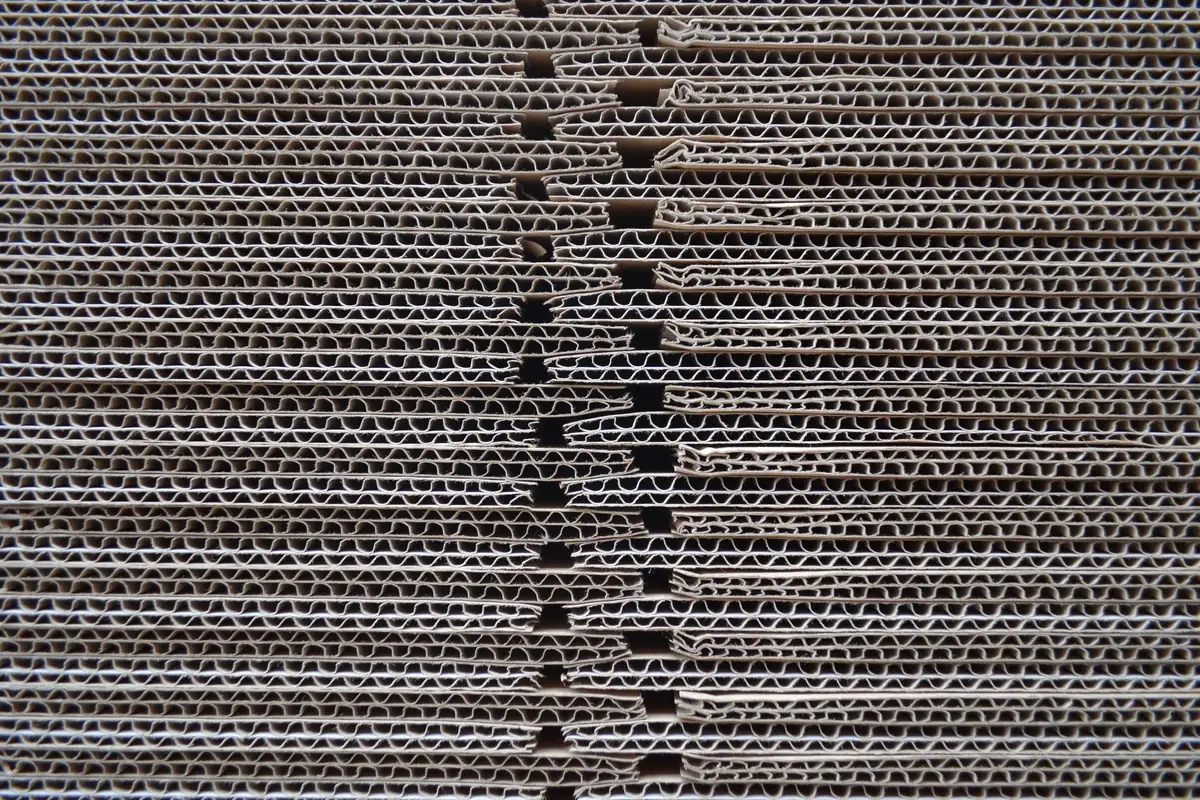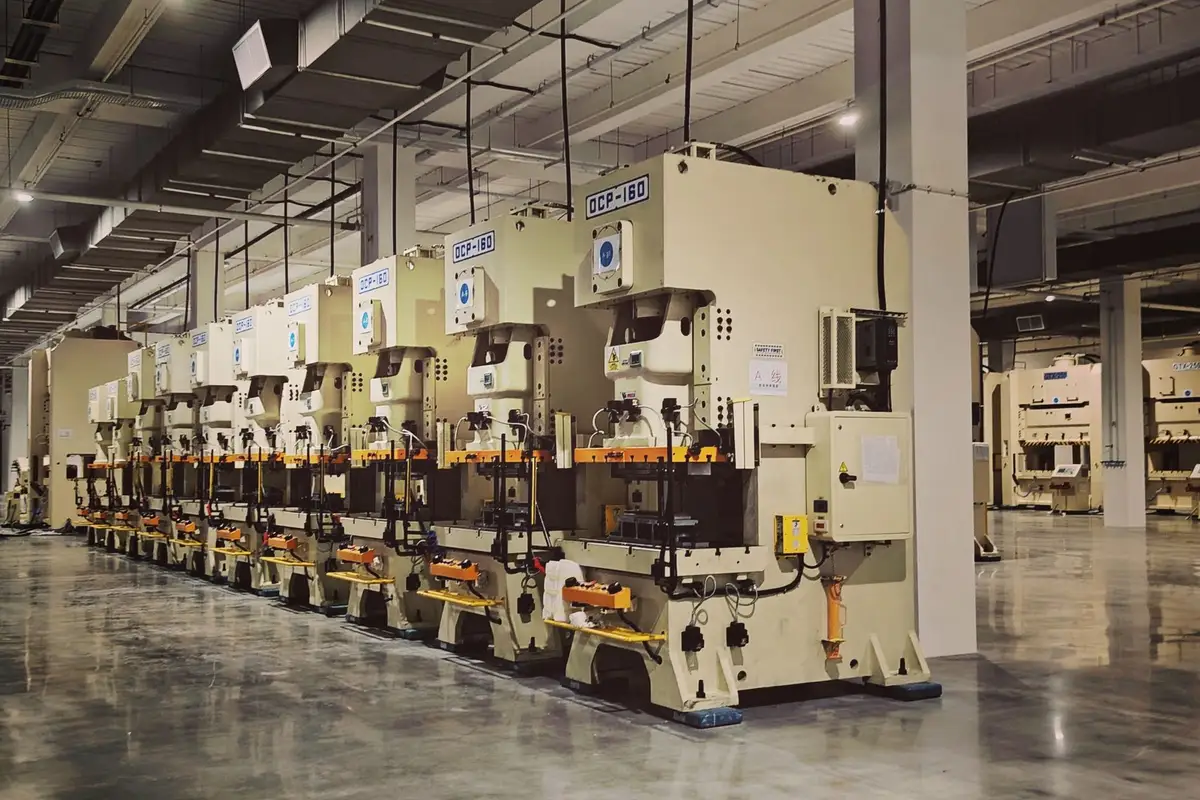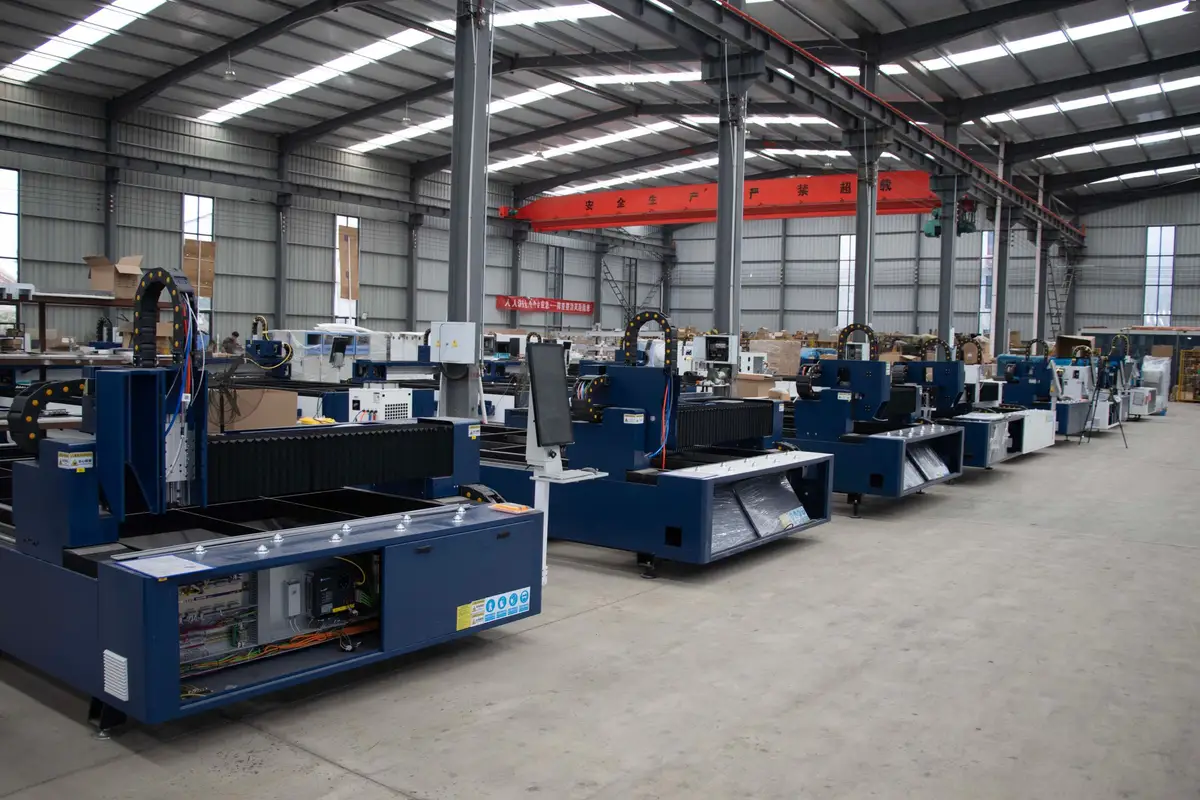
From kraft reel to pallet: a day on our corrugation line
Paper reels, steam, starch glue and a slotter: how a sheet of corrugated board becomes a carton in our Vatva shed.
Same-week delivery across Ahmedabad and Gandhinagar · Short runs from 500 boxes
Plot 412, Phase IV, GIDC Vatva, Ahmedabad 382445
Mon–Sat · 9 am – 7 pm · Sun closed
Board area, paper grade, ply, printing and quantity: the five things that decide what one box costs.
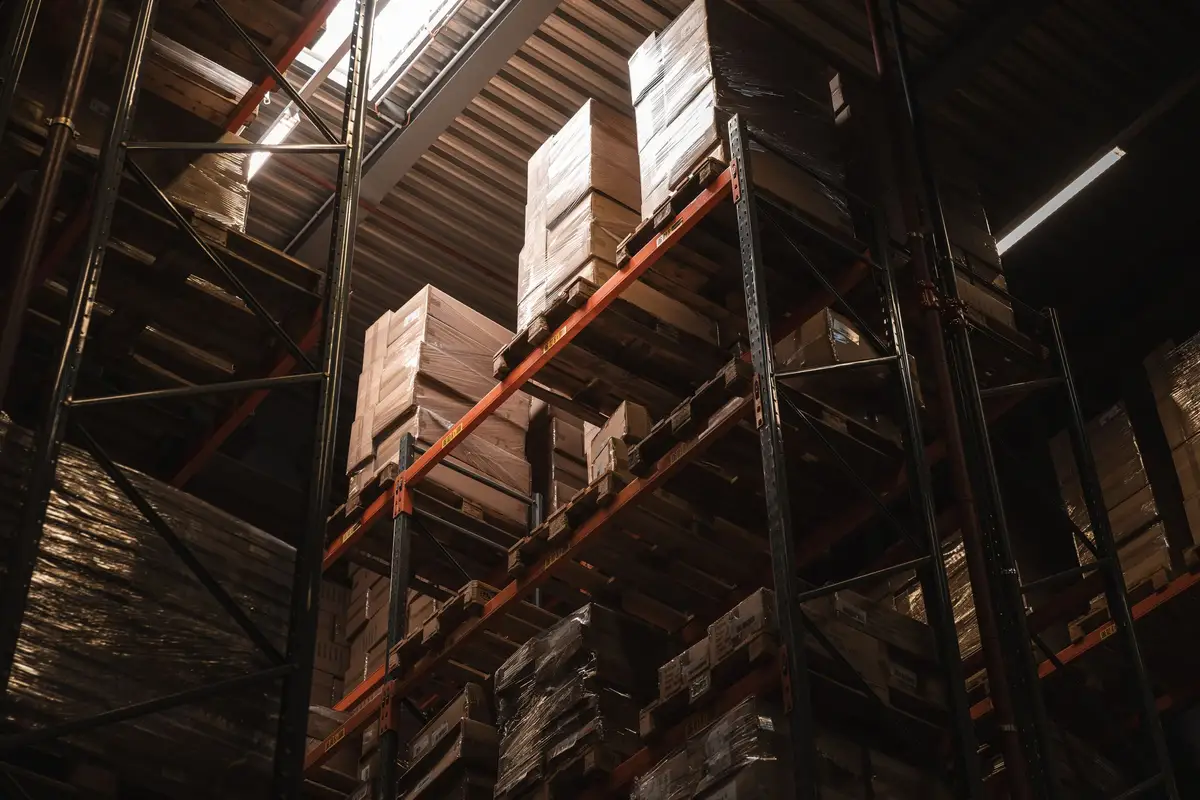
Buyers often send us a size and ask for a price per box. We can quote within a few hours, but it helps to know what goes into the number, because small changes can move it a lot.
Board area comes first. We work out the size of the flat blank, including the flaps and the glue joint, and multiply by the quantity. A 30 × 20 × 20 cm regular slotted carton needs a blank of about 0.37 square metres. Paper is roughly two-thirds of the cost of a plain box, so a box that is two centimetres too big on every side costs noticeably more for no benefit.
Ply and paper grade come next. A 3-ply box uses three layers of paper, a 5-ply box five. The outer liner can be ordinary kraft, a stronger high-burst kraft or a white-top paper for printing. Moving from 3-ply to 5-ply on our standard 30 × 20 × 20 cm box takes the price from about ₹18–22 to ₹32–38 at 1,000 boxes.
Printing adds a one-time plate charge of ₹2,500 to ₹6,000 and about ₹1 to ₹3 a box for one or two colours. Die-cut mailers add a cutting die. Quantity brings the price down: setting up a machine costs the same for 500 boxes as for 5,000, so a run of 5,000 often costs 15 to 20 per cent less per box than a run of 500. We quote every order with the board, paper and price per box shown separately.
Keep reading
Paper reels, steam, starch glue and a slotter: how a sheet of corrugated board becomes a carton in our Vatva shed.
Flute size decides cushioning, stacking strength and print quality. A plain guide to the four you will meet.
Ink colours, line thickness, logo size and the small artwork changes that make printing on kraft look clean.