Getting flexo printing right on brown board
Ink colours, line thickness, logo size and the small artwork changes that make printing on kraft look clean.
Same-week delivery across Ahmedabad and Gandhinagar · Short runs from 500 boxes
Plot 412, Phase IV, GIDC Vatva, Ahmedabad 382445
Mon–Sat · 9 am – 7 pm · Sun closed
Flute size decides cushioning, stacking strength and print quality. A plain guide to the four you will meet.
Every quote we send names a flute, usually with a letter. Most buyers do not ask about it, but the flute changes how a box behaves almost as much as the number of plies.
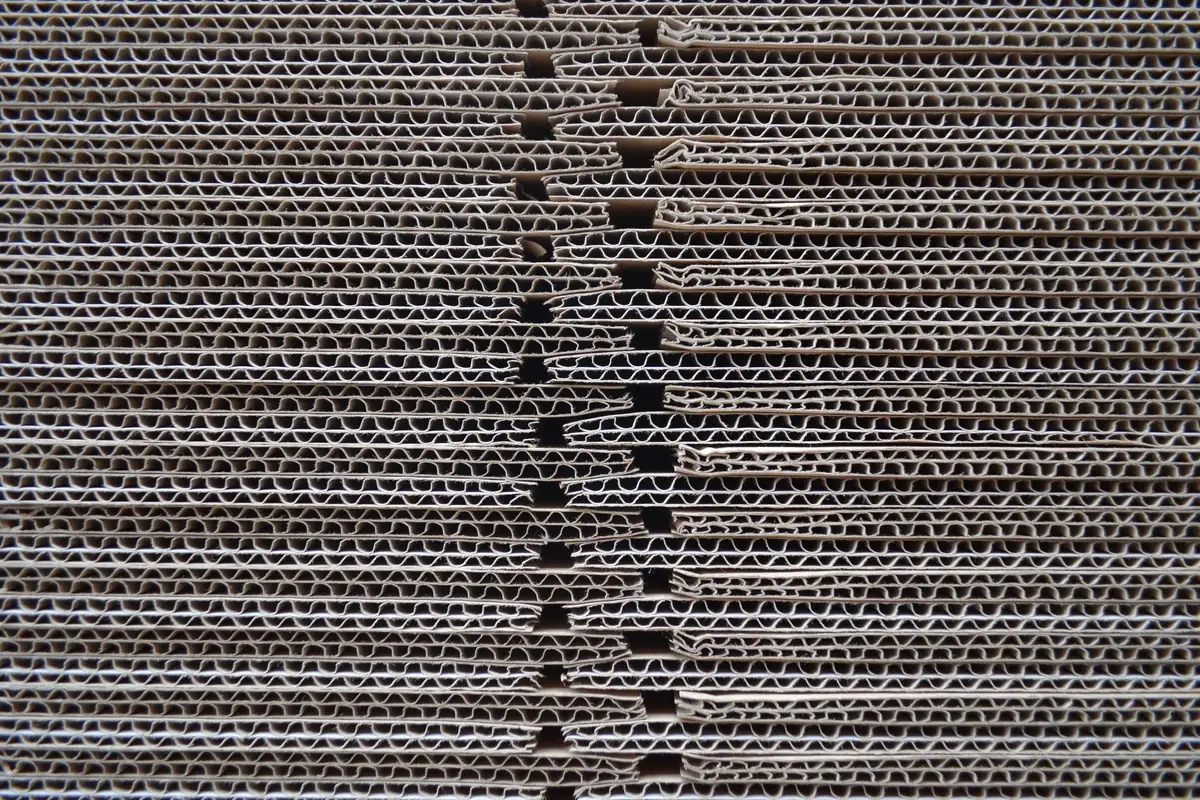
The flute is the wavy middle layer of corrugated board. Larger flutes are taller and wider waves; they give more cushioning and more stacking strength, but a rougher surface. Smaller flutes are thinner and flatter; they print better and fold more neatly, but cushion less.
A flute is the tallest, about 4.5 to 5 mm. It gives the most cushioning and is used for fragile goods. We use it less now, because C flute does most of the same work with less paper. C flute, about 3.5 to 4 mm, is the general-purpose choice and the one in most of our 3-ply shipping cartons. B flute, about 2.5 to 3 mm, is stiffer and resists crushing at the edges, so it suits heavy, compact products such as canned food, hardware and bottled goods.
E flute, about 1.2 to 1.6 mm, is the thin flute used in our mailer boxes. It takes good print, folds into crisp tuck-in lids and keeps an online parcel slim, though it is not meant for heavy loads. In 5-ply and 7-ply board, we often combine flutes, such as B and C, to get both crush resistance and stacking strength. Tell us what goes inside and how it travels, and we will suggest the flute.
Keep reading
Ink colours, line thickness, logo size and the small artwork changes that make printing on kraft look clean.
From Navratri to Diwali, demand for cartons doubles. When to order, how much to stock and what to agree early.
How our own trucks cover Ahmedabad, Sanand, Changodar and beyond, and what to plan for when boxes go further.