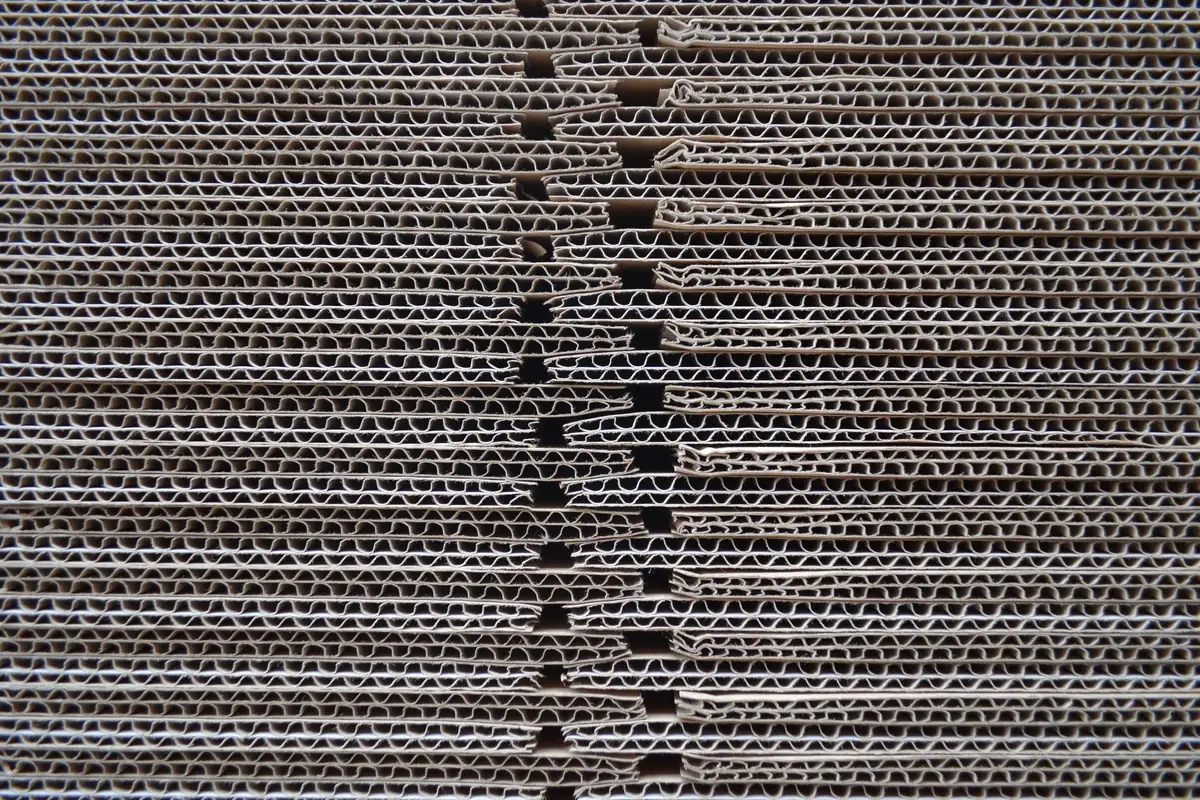
A, B, C and E flute: what the letters mean
Flute size decides cushioning, stacking strength and print quality. A plain guide to the four you will meet.
Same-week delivery across Ahmedabad and Gandhinagar · Short runs from 500 boxes
Plot 412, Phase IV, GIDC Vatva, Ahmedabad 382445
Mon–Sat · 9 am – 7 pm · Sun closed
Paper reels, steam, starch glue and a slotter: how a sheet of corrugated board becomes a carton in our Vatva shed.
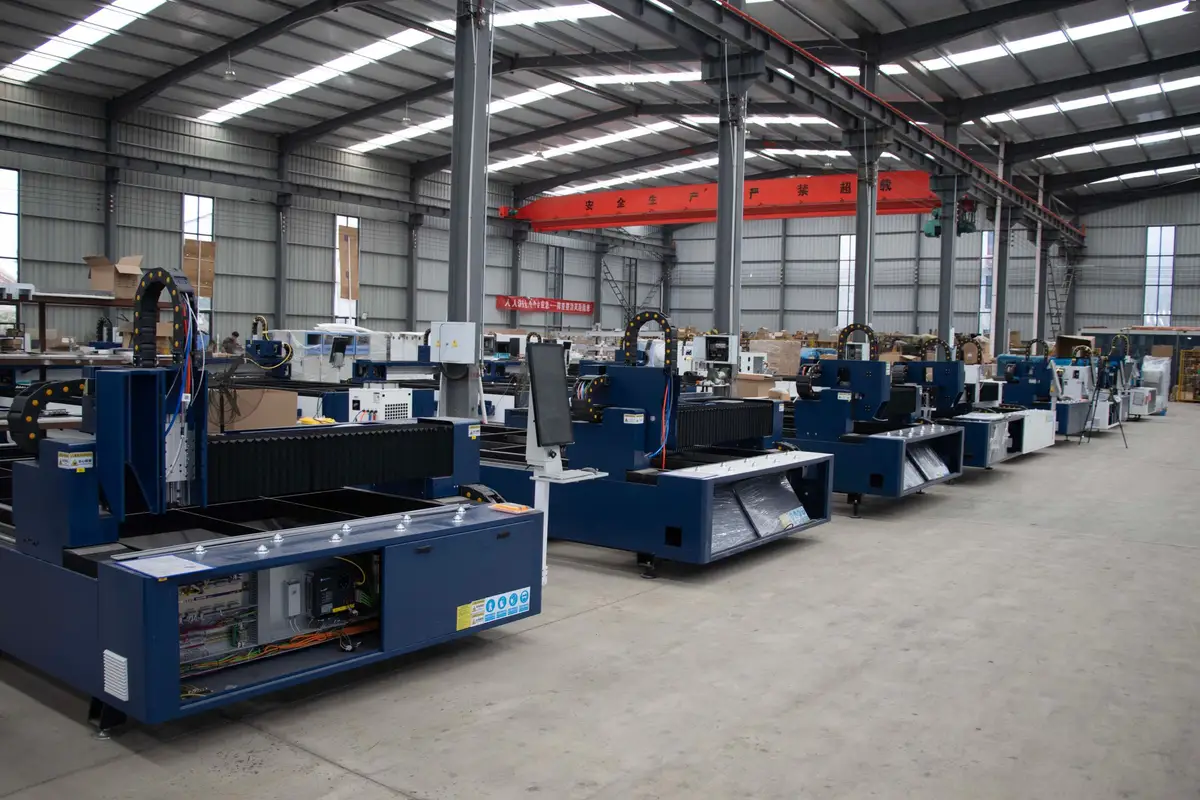
Our shed in Vatva runs two shifts, from 7 am to 11 pm. Here is how a carton is made, from the moment a paper reel is loaded to the moment boxes leave on a pallet.
It starts at the single facer. Two reels of kraft paper are loaded: one for the fluting and one for the liner. The fluting paper passes through heated, ridged rollers that press it into waves, and a line of starch glue is applied to the tips of each wave before the liner is pressed on. That is single-face board, the wavy layer with one flat sheet attached.
For 3-ply board, a second liner is glued on the other side and the board passes over steam-heated plates that set the glue. For 5-ply, two single-face boards are combined with a third liner. Sheets are cut to length at the end of the line and stacked to cool for a few hours, because warm board warps.
Next, the sheets go to the printer-slotter. In one pass, flexo plates print the design, rotary knives cut the flaps and creasing wheels mark the folds. Mailer boxes go to the die-cutter instead. Finally, boxes are joined at the manufacturer’s joint by stitching with wire or by gluing, bundled in 25s and stacked on pallets. Before any batch is dispatched, our lab tests samples for burst strength, compression and paper weight, and the readings go on the delivery note.
Keep reading
Flute size decides cushioning, stacking strength and print quality. A plain guide to the four you will meet.
Ink colours, line thickness, logo size and the small artwork changes that make printing on kraft look clean.
From Navratri to Diwali, demand for cartons doubles. When to order, how much to stock and what to agree early.